Accessing computers on the policy-based network remotely requires utilizing the UMD jumpbox for SSH connections and RDS gateway for Windows Remote Desktop connections.
Before logging into either system, you need to be given permission. Send an email to Todd Karwoski at karwoski@umd.edu to request access.
NOTE: The Global Protect VPN is required to access computers remotely, regardless of whether you are on campus or off campus.
These instructions adapted from the DivIT support documents below:
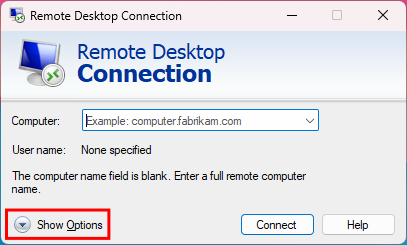
By default, the window is compact. Click the Show Options button in the bottom left to expand it.
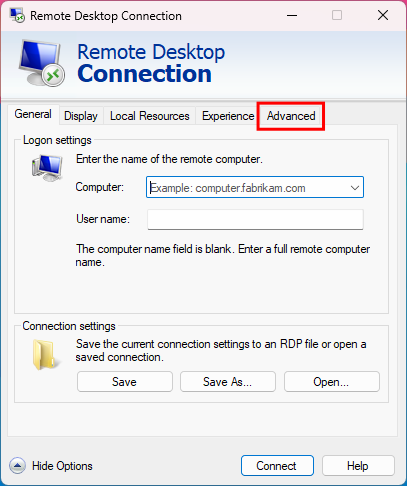
Click the Advanced tab.
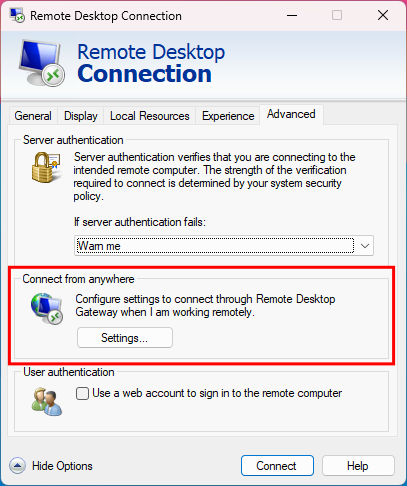
Click the Settings button in the Connect from anywhere section.
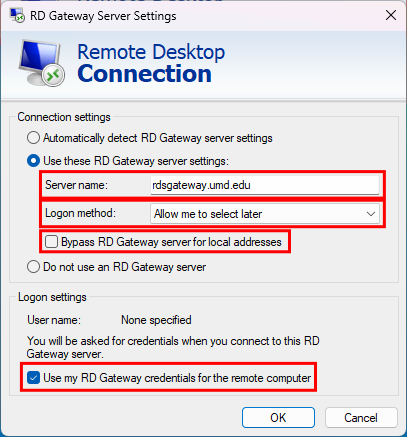
Enter the following information into the RD Gateway Server Settings window that appears:
Check the box to Use these RD Gateway server settings
Server name: rdsgateway.umd.edu
Logon method: Allow me to select later
UNCHECK the box next to Bypass RD Gateway server for local addresses
You can check the box next to Use my RD Gateway credentials for the remote computer if you don't log into remote computers with accounts other than your own. Otherwise, it will always use your UMD account to try logging into the remote computers and not ask for your login.
Click OK to save the settings and go back to the main window.
Click the General tab.
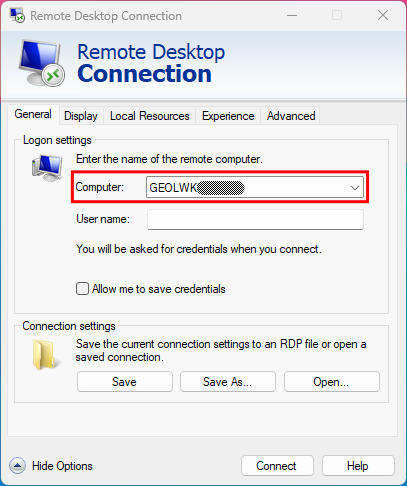
In the Logon settings section, enter the hostname of the computer you want to connect to.
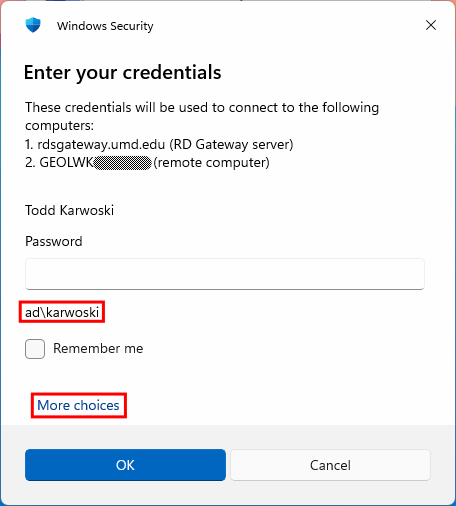
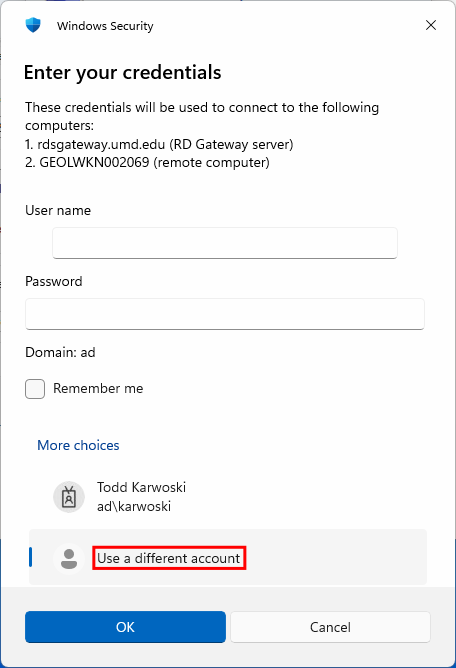
When you click Connect, you will see this login window. If you checked the box to use the RD Gateway credentials, this window will let you know it's going to use your login details for the gateway and the remote computer. If you didn't check that box, you will be asked to log into the RD Gateway server first and then to log into the remote computer. Note the username that is displayed. The username should be ad\DIRECTORY_ID. If not, click the More choices link and then the Use a different account button. The User name field is now blank and you can enter the correct username and password to connect.
Click OK and it should log in to the remote computer.
MacOS
Connect to the GlobalProtect VPN.
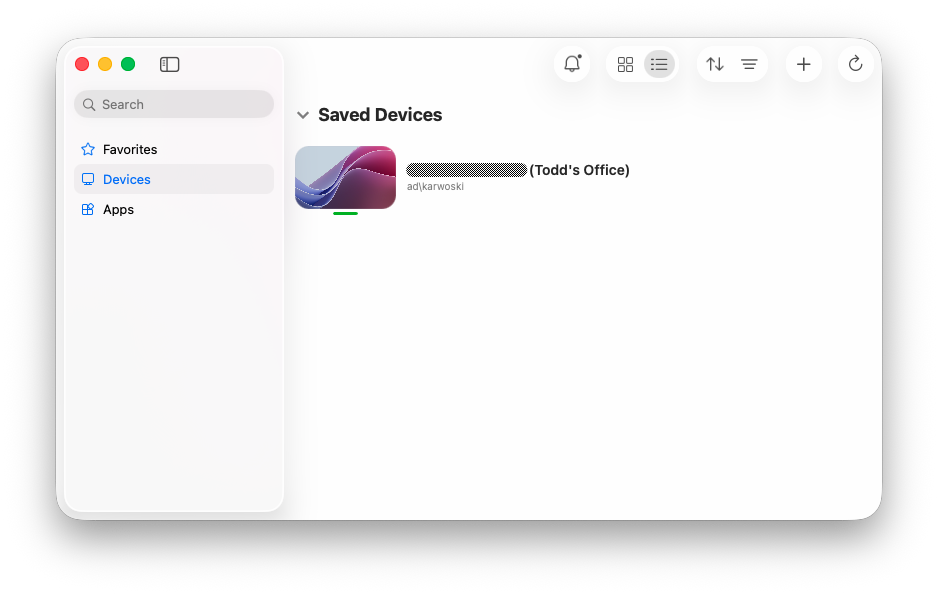
Open the Windows App. If you don't have it installed, you can install it from the Mac App Store.
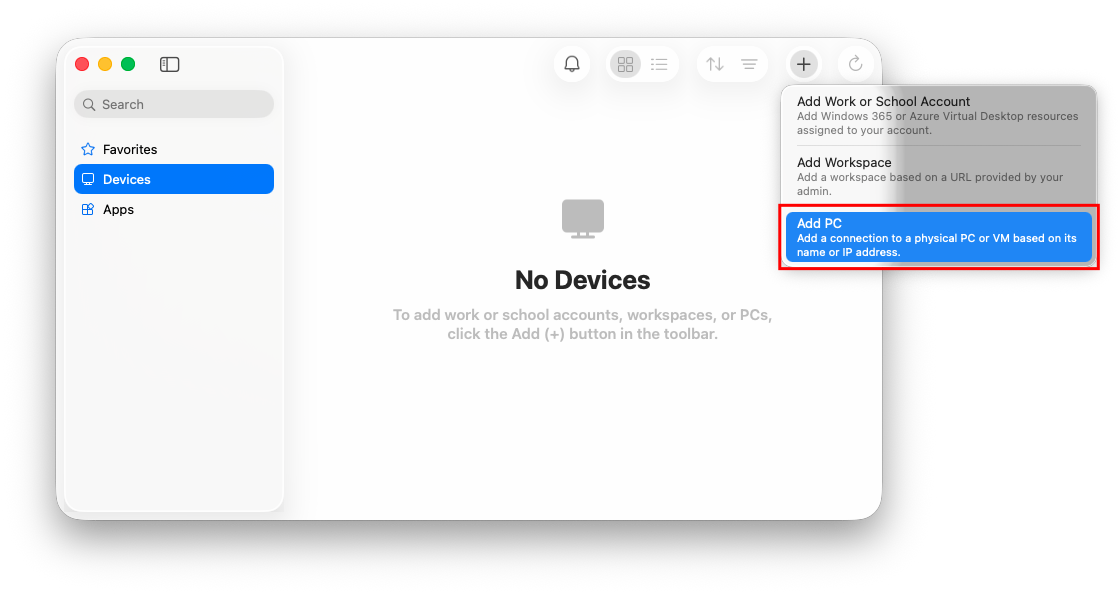
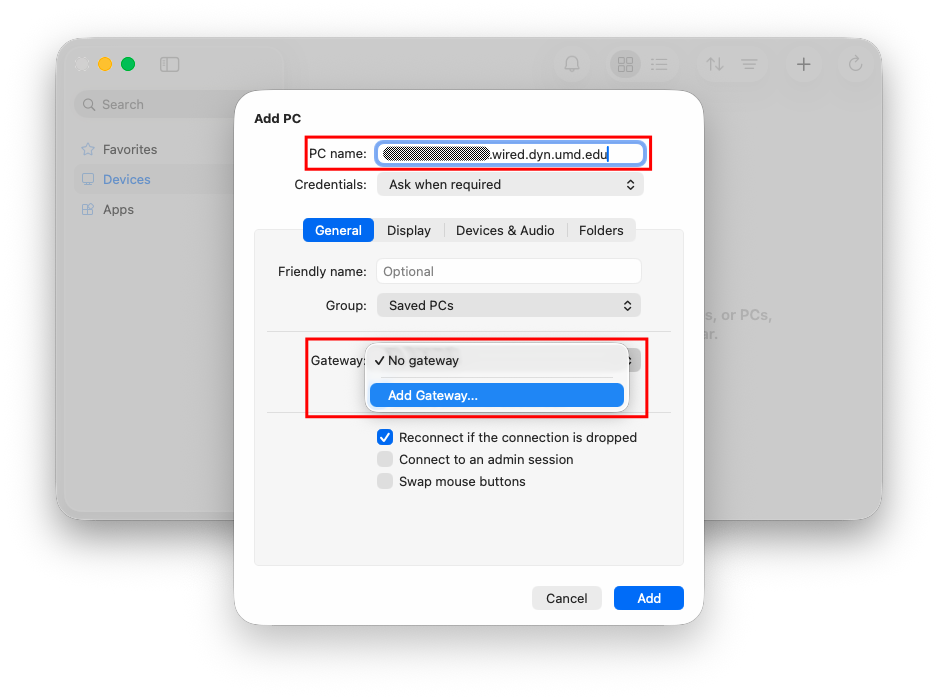
Click the plus sign in the top right corner and select Add PC
In the Add PC window, enter the name of the computer you are connecting to. Be sure to add .wired.dyn.umd.edu to the end of the computer name. In the Gateway section, click the dropdown that says No gateway and click Add Gateway.
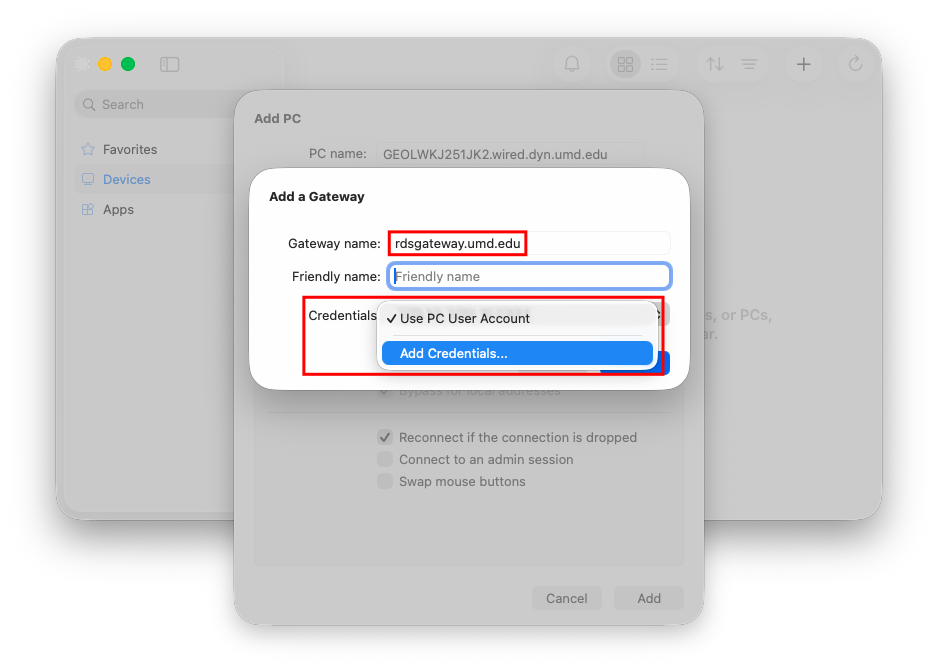
In the Add a Gateway window, under Gateway name enter rdsgateway.umd.edu and under Credentials change it from Use PC User Account to Add Credentials.
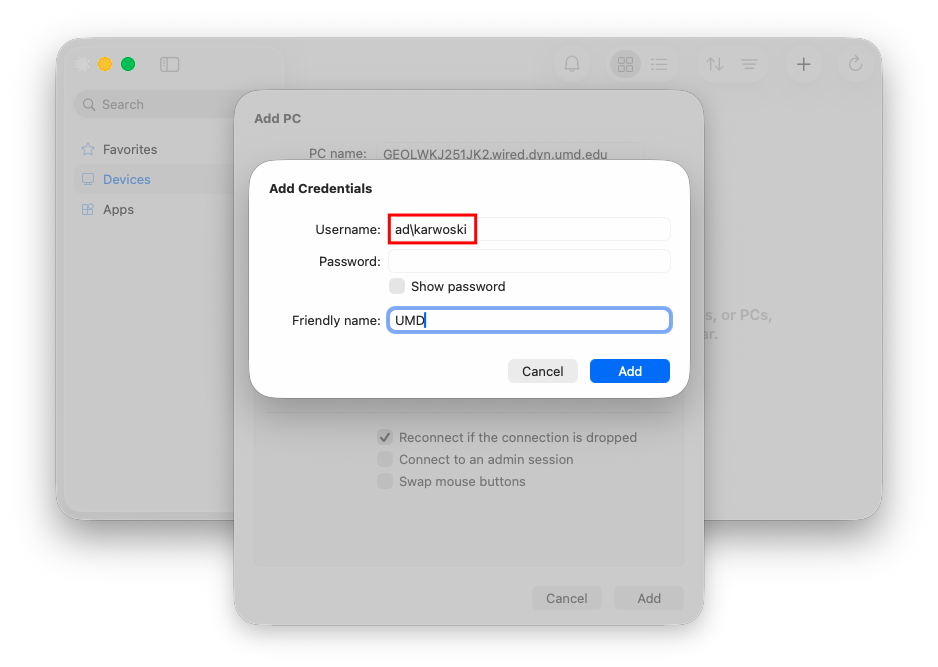
In the Add Credentials window, the Username is going to be ad\DIRECTORYID. Be sure to include the ad\ before your Directory ID. You can enter your password and give it a friendly name if you'd prefer.
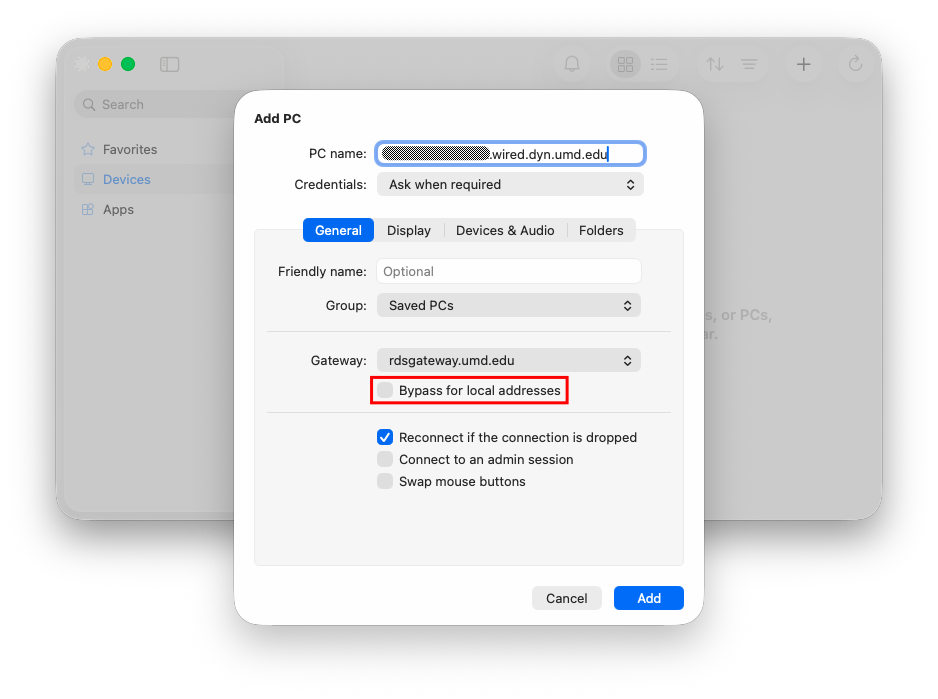
Click "Add" to get back to the "Add PC" settings window. Below the Gateway section, uncheck the box next to Bypass for local addresses. Even if you are on campus, you will need to log in through the gateway before connecting to your computer.
Click Add to finish configuring the connection.
In the main window, double click the icon to connect to your remote computer. Depending on if you saved your password in the settings or not, you will first need to login to the RDS Gateway server and then log in to your remote computer.
SSH
PuTTY
Connect to the GlobalProtect VPN.
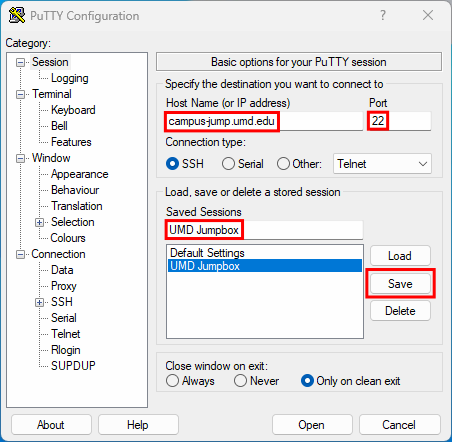
Open PuTTY and enter the following information:
Host Name: campus-jump.umd.edu Port: 22
If you want to save the connection information, enter a descriptive name in the box underneath Saved Sessions and click the Save button.
To make the connection, either double click your saved session or click the Open button.
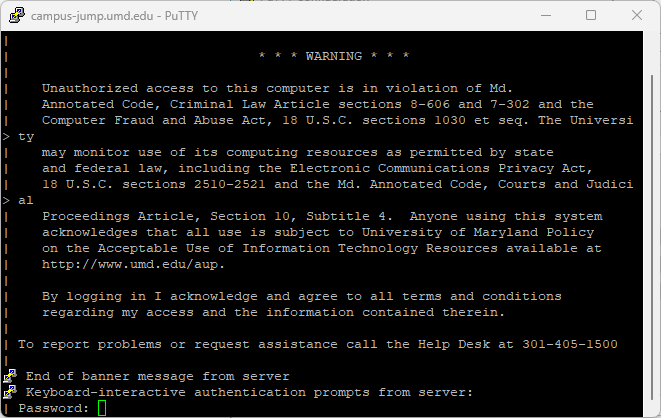
If you see a message about The host key is not cached for this server, you can click Accept. You will only see this message the first time you connect to the server.
The first prompt is to log into the jump server. Enter your Directory ID and press Enter.
Next you will enter your Directory password.
Once you have logged in, you will be asked for the hostname or IP address of the remote computer. When you enter the hostname, append .wired.dyn.umd.edu to the name. Otherwise, it won't connect and the window will disappear.
NOTE: If you need to login as a different user on the remote computer, enter USERNAME@HOSTNAME.wired.dyn.umd.edu.
You will be asked to accept the fingerprint of the remote computer. Type yes and press enter.
Enter your password for the remote computer and press enter.
You should now be logged into the remote computer.
To disconnect, simply type logout at the prompt and you will be disconnected.
Linux/MacOS Terminal
WinSCP
Connect to the GlobalProtect VPN.
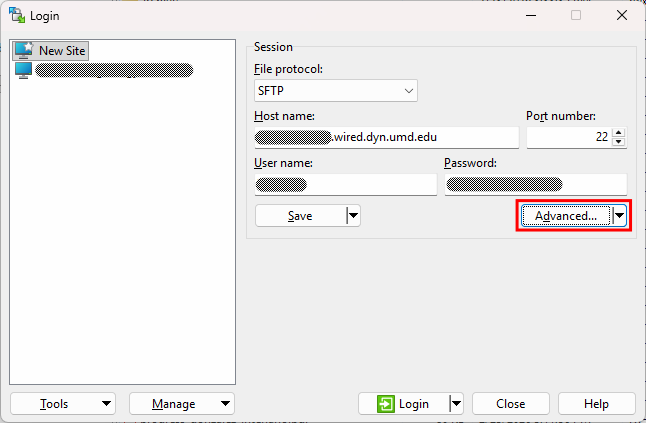
When you open WinSCP, you will see the login window. Enter the hostname of your remote computer followed by .wired.dyn.umd.edu . Click the Advanced button to configure the jump box settings.
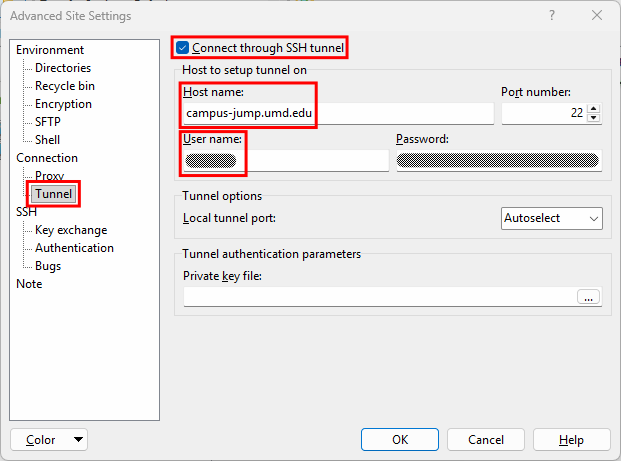
On the left side of the window, click Tunnel to configure the tunnel settings. Check the box next to Connect through SSH tunnel to enable edits to the configuration. Under Host name, enter campus-jump.umd.edu and then enter your Directory ID under User Name. You can leave the password blank.
Click OK to close the window to go back to the login window.
If you'd like to save the connection, click Save. Otherwise, you can click Login to make the connection.
You will be asked to enter your password twice: once for the campus-jump.umd.edu jumpbox and again for the remote computer.
Using Port Forwarding with Other Software
If the application you would like to use doesn't support the SSH tunneling through the jump box on its own, it's possible to make the jump box connection on your local computer and use it to tunnel the connection.
First, make sure you are connected to the GlobalProtect VPN.
Then, open a terminal window. On Windows, search for Powershell in the start menu. On MacOS, open the Terminal app and on Linux open a terminal window.
Type the following command into the terminal window and press enter:
You will be asked to enter your password twice: once for the jump server and again for your remote computer.
This command connects to the remote computer through the jump server. The -L 22:localhost:22 flag sets up a local port tunnel, forwarding traffic on your machine's port 22 to port 22 on the remote computer. The -N flag tells the remote computer to not give you a prompt.
Next, open the software you would like to use. For the server/computer address, enter localhost and then the username and password of the remote computer.
Once you are finished, close your application. In the Powershell window, press Ctrl-C to disconnect.