
|
Laboratory for Mineral Physics
|
| Campbell’s webpage |
We study the physical and chemical properties of materials under high pressure and high temperature conditions, to better understand the constitution, structure, and evolution of the Earth's interior. Seismological studies provide direct information on the properties of minerals in the Earth's interior, and petrological studies of mantle-derived rocks place strong constraints on the composition of the mantle. Developments in computational geodynamics offer continuing improvements in understanding processes internal to the planet. Mineral physics plays an essential role to all of these fields, by providing the material properties as a basis for seismological, petrological, and geodynamical interpretations of the Earth's interior. |
Students! There is a variety of research opportunities for both undergraduate and graduate students in the Laboratory for Mineral Physics. Interested students are encouraged to contact Andrew Campbell for more information. |
|
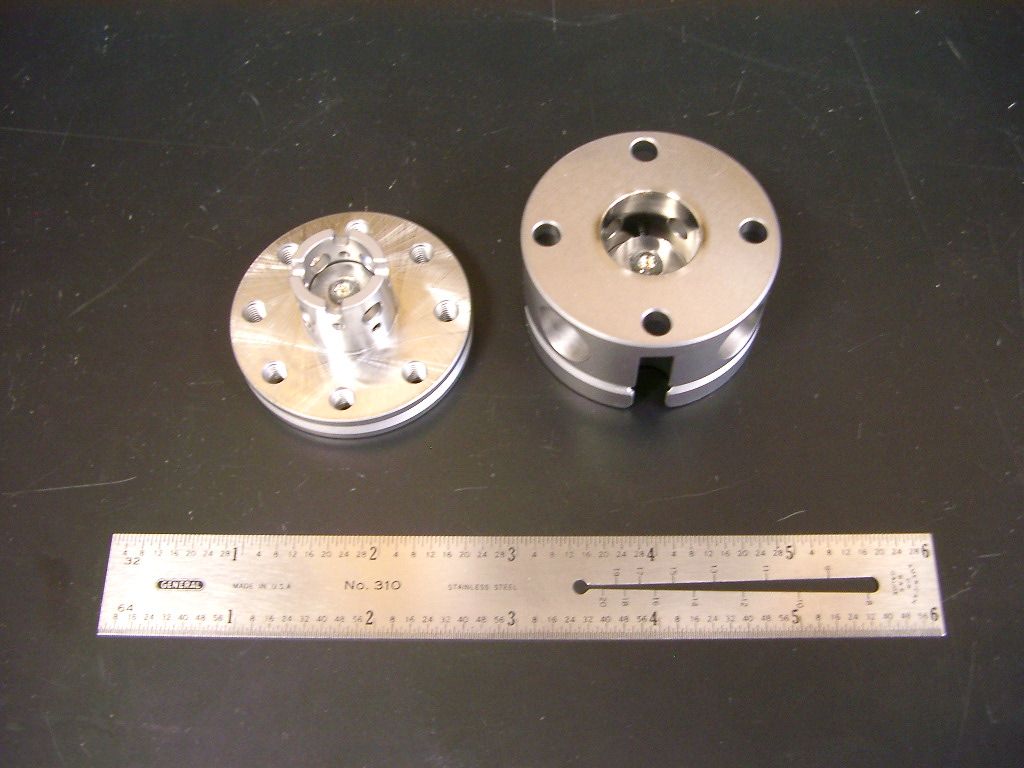
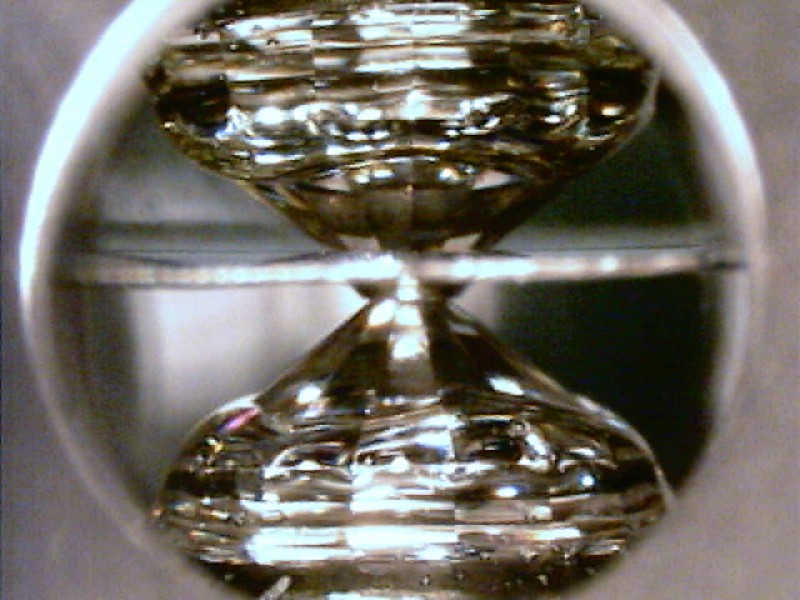
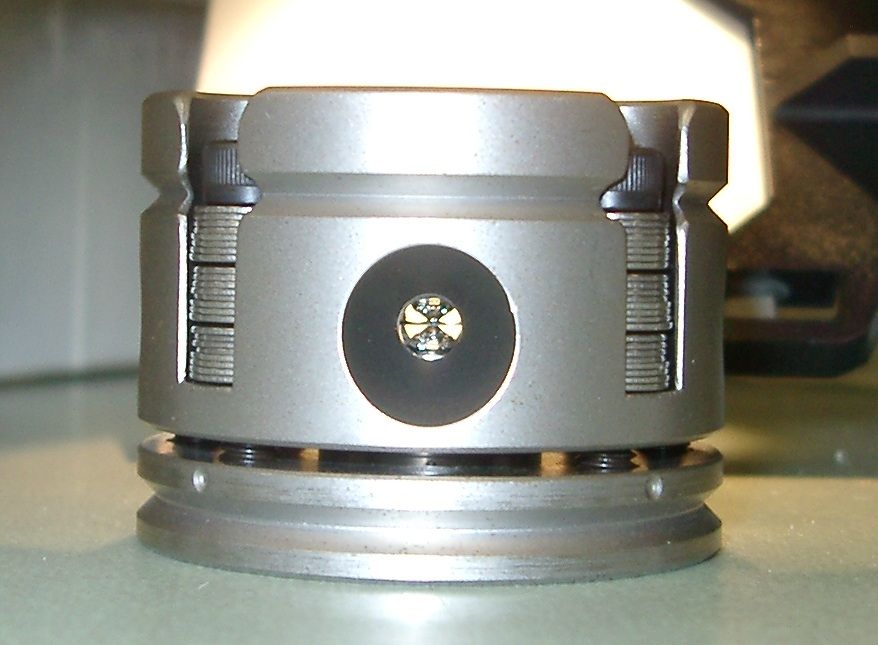
In the University of Maryland’s Laboratory for Mineral Physics, diamond anvil cells are used to generate high pressure conditions comparable to those in the Earth's mantle and core. The diamond anvils not only apply the pressure, but act as windows to the sample, allowing optical and X-ray access. The sample’s physical and chemical properties can be probed using a variety of laser spectroscopies and X-ray techniques.
|
|
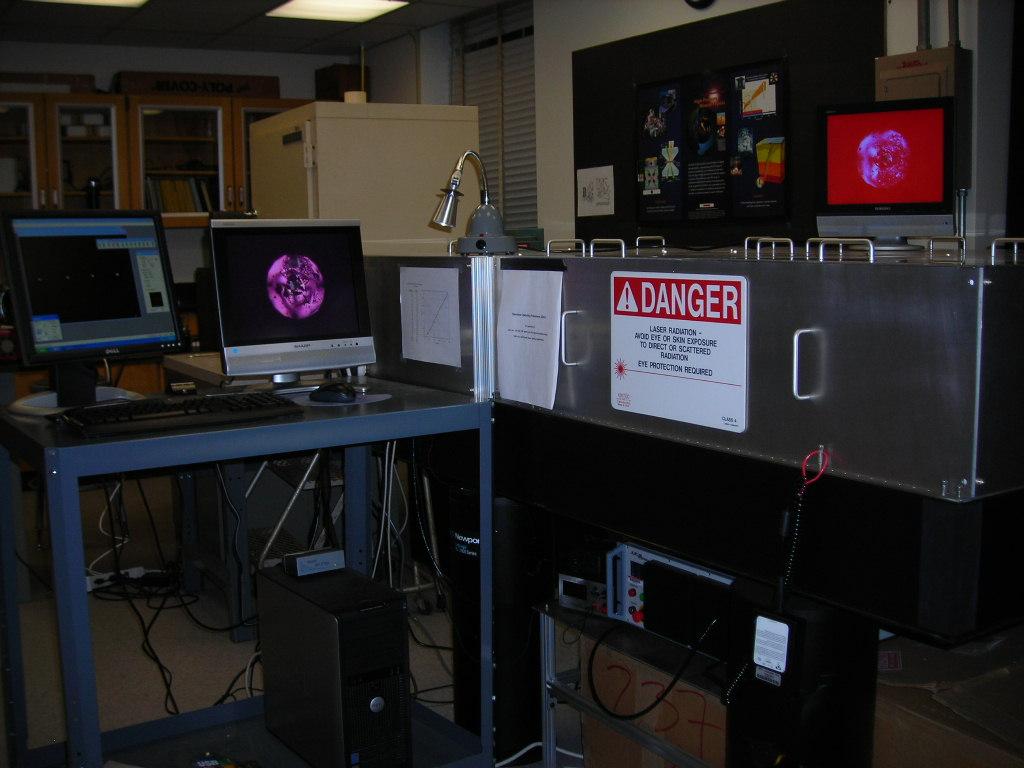
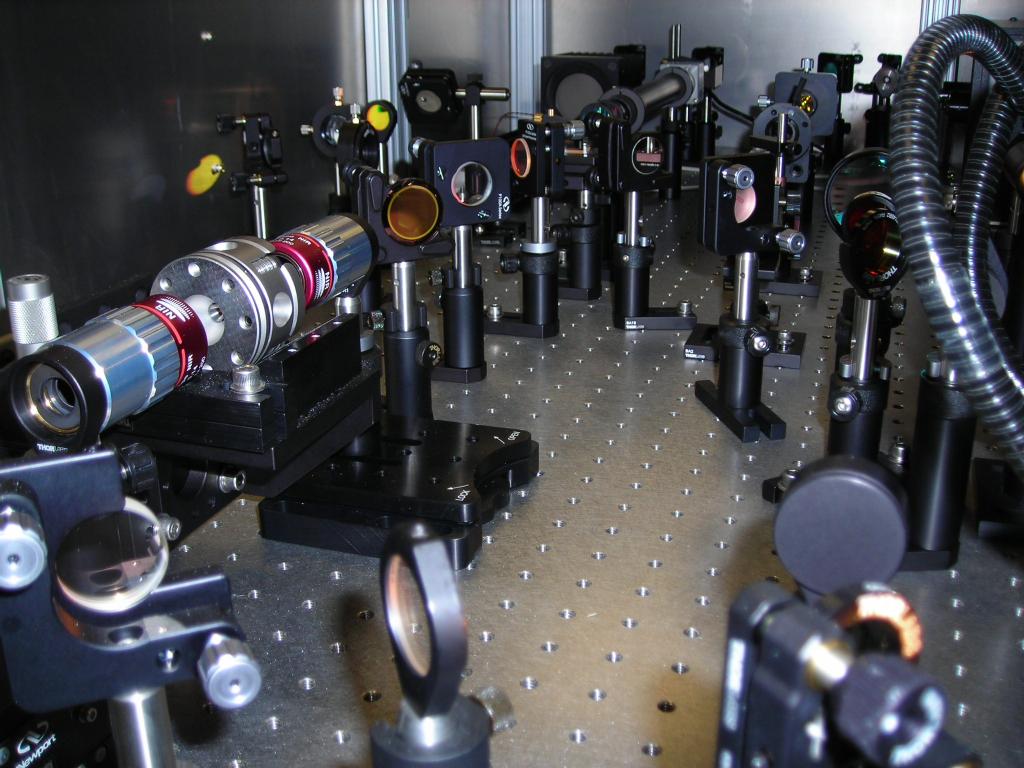
Optical systems in the laboratory include a ruby fluorescence system for pressure measurement, and a 1064 nm laser heating system that subjects diamond anvil cell samples to >3000 K. The application of fiber lasers for laser heating high pressure samples was pioneered in our lab, and their use has since spread to labs around the world.
|
|
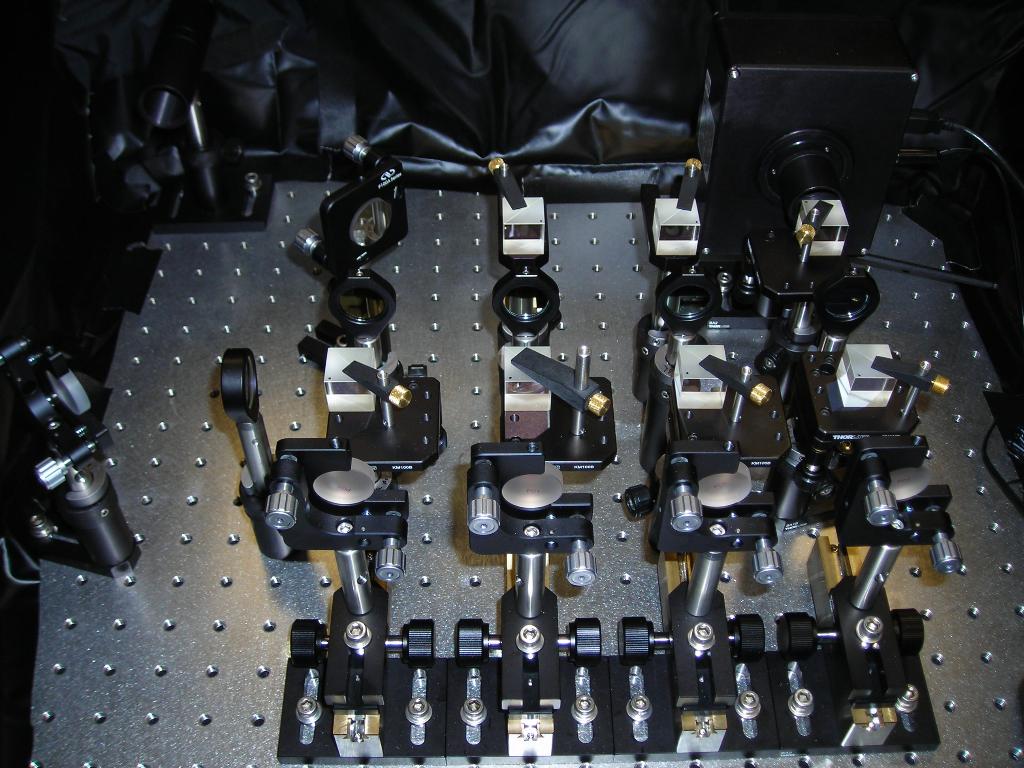
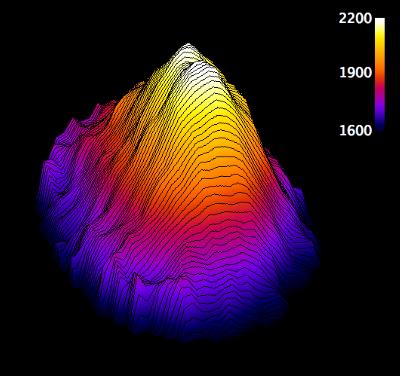
Our laser heating system is unique in its ability to measure 2D temperature distributions across the laser heated spot (below right). This is a great improvement over older systems that measure only a single temperature at a time, or a 1D profile at best. The multispectral imaging system (below left) was described by Campbell (2008).
|
|
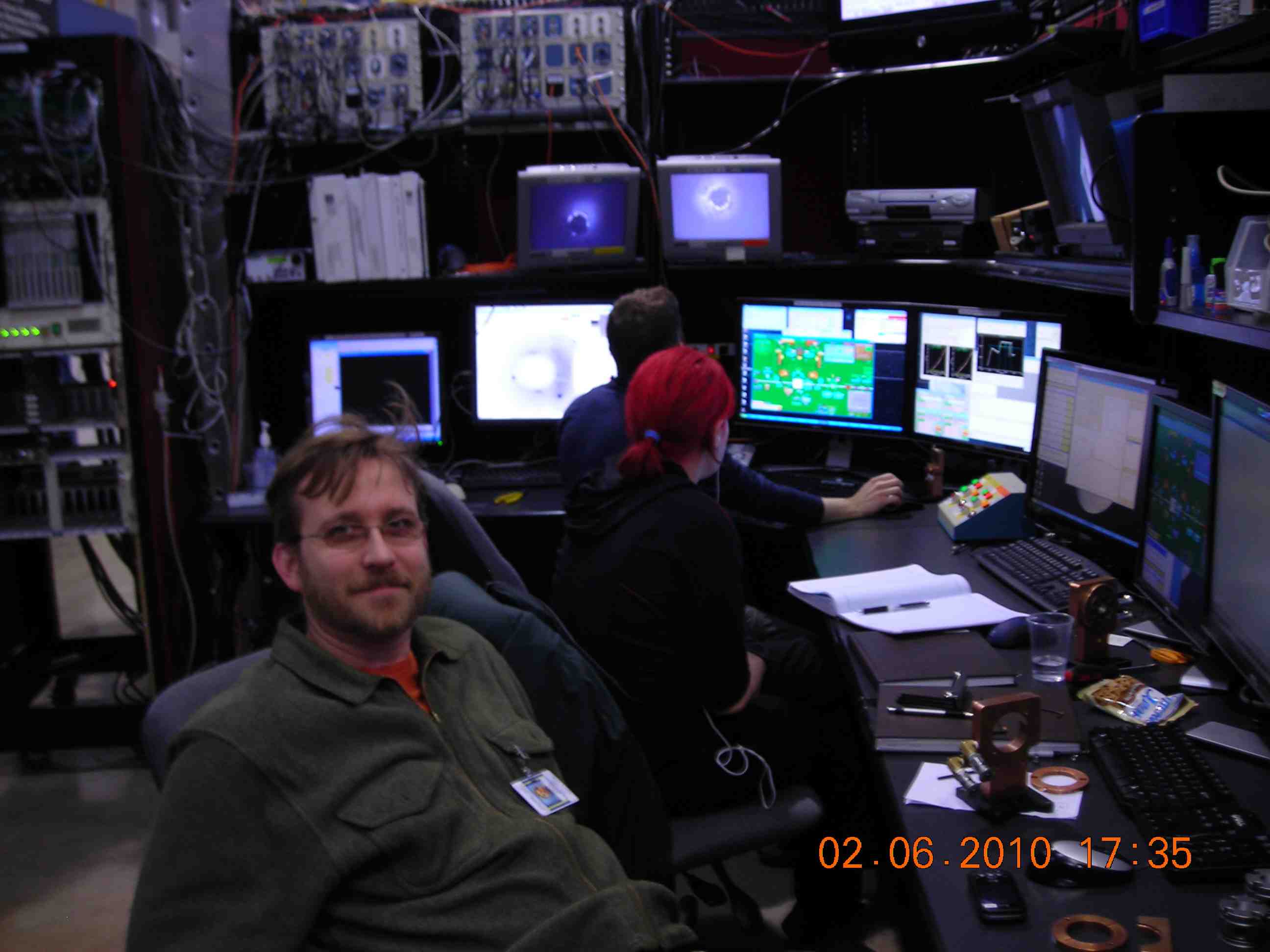
Synchrotron x-ray sources are an important tool in our research. We are regular users of the Advanced Photon Source and the National Synchrotron Light Source. |
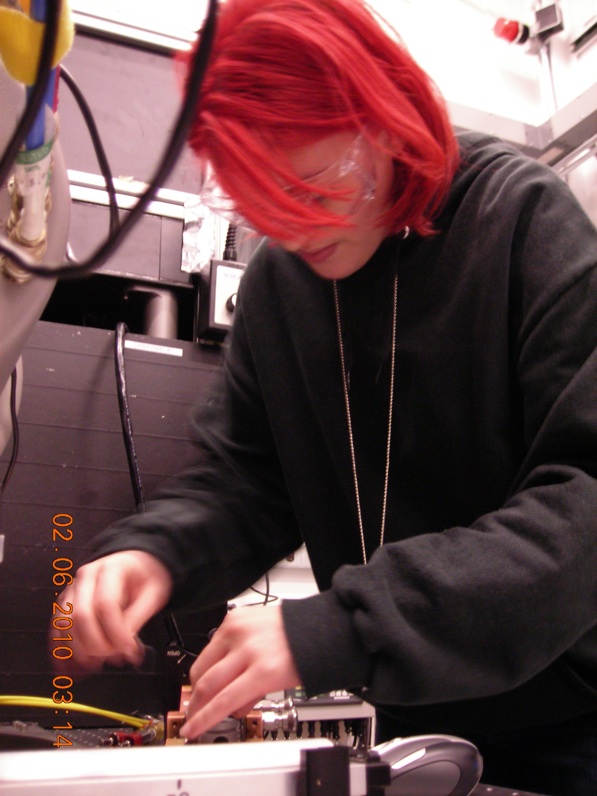
Happily collecting data at APS. |
Megabar Girl going to 162 GPa in the 13-ID-D hutch. |
|
Current topics of research Equation of state studies of metal-oxide systems, to improve understanding of oxygen fugacity buffers at high pressure Phase diagram and equation of state studies of candidate components of the Earth's core, to better constrain its composition Trace element partitioning studies between metal and melt at high and low pressures, to understand chemistry of planetary cores
|
Andrew Campbell
Laboratory for Mineral Physics
Department of Geology
University of Maryland