News & research notes
Lab news and research notes
53 posts from 2012 to 2026: new papers explained, people joining and moving on, awards and fieldwork.
2026
A Molten Layer Above Mars’s Core
When we publish papers, we hope they can get read, cited, or even built upon. It’s rare that a paper gets argued with in print and at length, which is probably a sign that the paper was worth writing! A couple of years ago, Henri Samuel, at the Institut de Physique du Globe de Paris,
The Gradiometer Has Finite Size
There are something like a hundred million unexploded landmines and pieces of ordnance in the ground worldwide, most of them small, shallow, and made of enough metal to have a magnetic signature. But reliably finding them with a magnetometer is far from easy. Heidi Myers, a former Ph.D. student …
A Method Built for Mars, Focused Back onto the Moon
On Earth, a straightforward way of measuring the thickness of the crust beneath a seismometer is to look for converted waves — a P wave that turns into an S wave at the crust-mantle boundary. The method is simple, reliable, and used everywhere. On the Moon it has never really worked for P-to-S …
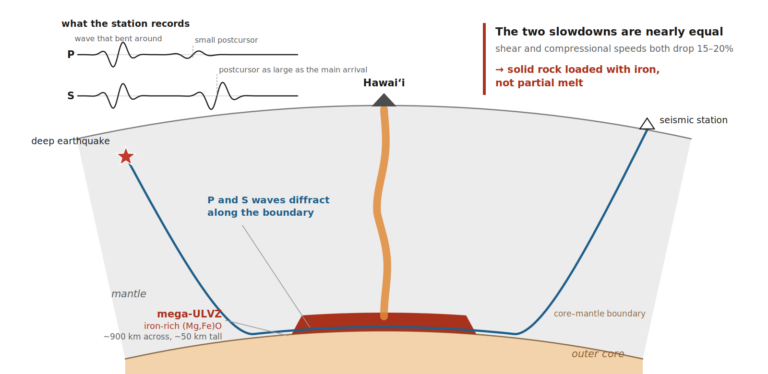
An Iron-Rich Root Beneath Hawai’i
Sitting at the very base of the mantle, directly beneath Hawai’i, is a patch of rock where seismic waves slow down dramatically. Structures like this — ultralow-velocity zones, or ULVZs — are found in many places along the core-mantle boundary, but the ones beneath major hot spots are exceptionally …
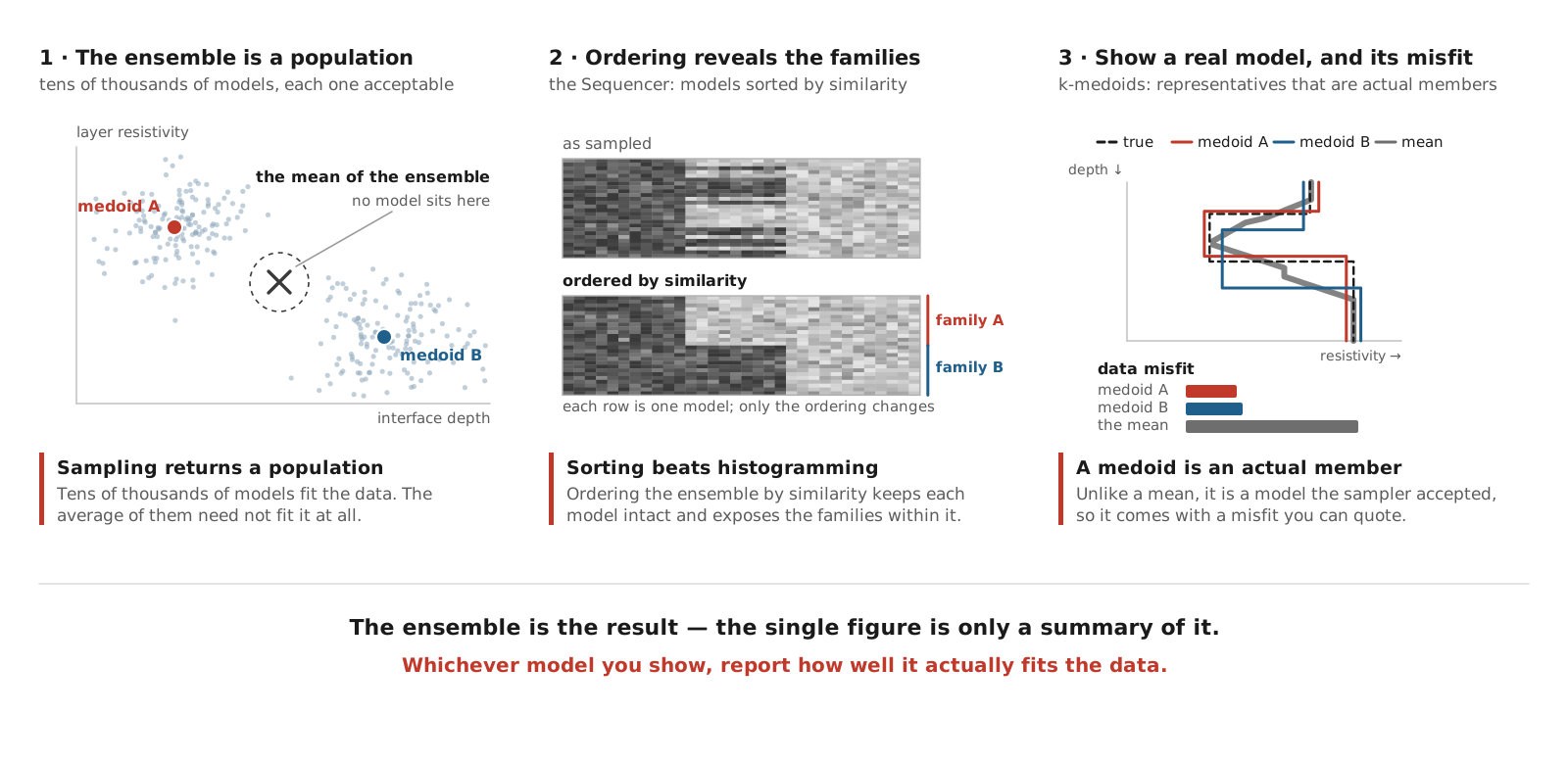
When the Average Isn’t a Solution
Bayesian sampling methods have entered the geophysical toolkit due to their versatility and power at quantifying uncertainty. Our lab has spent a decade contributing to them: transdimensional deconvolution of receiver functions, self-parameterizing inversions of surface waves, Bayesian tomography …
Rehearsing for the Moon
Three papers led by Jingchuan Wang (formerly a postdoc at Maryland, currently at Caltech) appeared in 2025 — one in JGR: Planets, one in Geophysical Research Letters, one in Earth and Space Science. They describe fieldwork at sites hundreds of miles apart and they read, at first glance, like three …
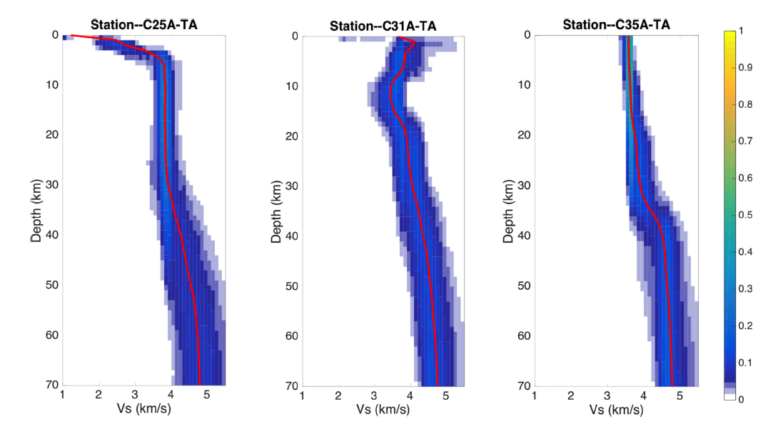
A Hidden Fault and Missing Aftershocks Beneath Delaware Bay
Eight years ago, the day after a magnitude 4.2 earthquake struck east of Dover, Delaware, graduate students from this lab were in the field installing seismometers alongside collaborators from the Carnegie Institution for Science, the Delaware Geological Survey, the U.S. Geological Survey, Lehigh …




2023
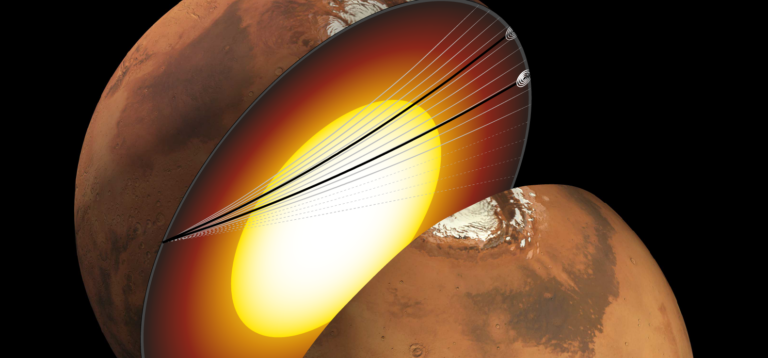
Constraints on Martian Core from First Observations of SKS Waves
Mars has a liquid iron alloy core at its center. Using seismic data gathered by the InSight mission, we have made the first observations of seismic waves traveling through Mars’ core. We use the travel times of core-transiting seismic waves, relative to ones which remain in the mantle, to constrain …
2022
Congratulations to Prof. Ross Maguire
We wish Prof. Ross Maguire all the best as he transitions to his new position as an Assistant Professor at the University of Illinois, Urbana-Champaign!
2021
Dr. Doyeon Kim Takes an Oberassistent Position at ETH-Zurich
Congratulations to Dr. Doyeon (DK) Kim, who has taken an Oberassistent position at the Swiss Federal Institute of Technology (ETH) in Zurich. We wish him the best of luck and look forward to many years of collaboration.
Dr. Pritwiraj Moulik Becomes Associate Research Scholar at Princeton University
We wish Pritwiraj (Raj) Moulik the best of luck in his new position as Associate Research Scholar at Princeton University!
Dr. Kristel Izquierdo moves to Purdue University
After successfully defending her Ph.D. dissertation, Dr. Izquierdo has moved to Purdue University where she will be a postdoc in their Planetary Science group. We wish Kris the best of luck and lots of exciting discoveries!
2019
Dr. Chao Gao moves to Houston
We wish Chao the best of luck in his new position at CGG in Houston, TX.
Dr. Erin Cunningham begins postdoc at CERI
We wish Erin the best of luck as she ventures on the next step of her scientific journey as a postdoc at CERI!
Spurious Low Velocity Zones in Joint Inversions of Surface Waves and Receiver Functions
Low-velocity layers within the crust can indicate the presence of melt and lithologic differences with implications for crustal composition and formation. Seismic wave conversions and reverberations across the base of the crust or intracrustal discontinuities, analysed using the receiver function …
First Tomographic Model of the Inner Core!
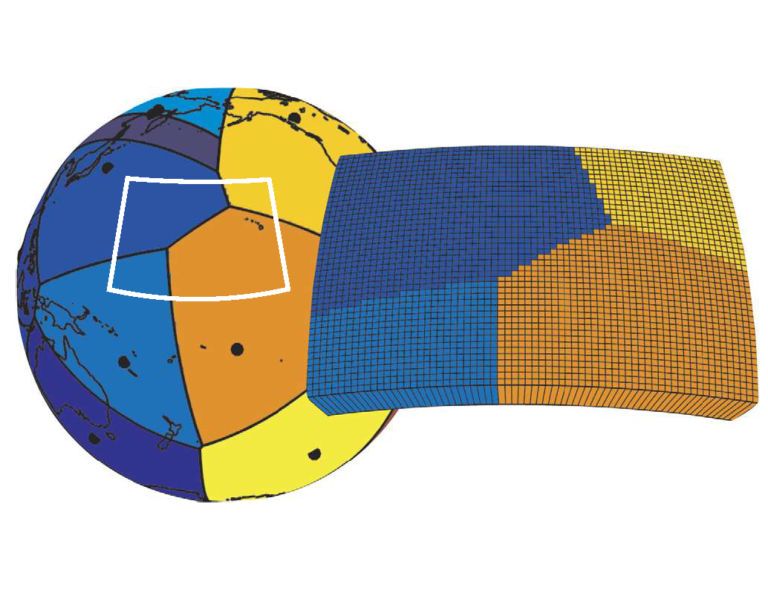
With collaborators Scott Burdick at Wayne State University and Lauren Waszek at New Mexico State University — both former Maryland postdocs — we just published the first tomographic model of Earth’s inner core in Earth and Planetary Science Letters. Seismic body wave and normal mode analyses have …
2018
Improved Model of Outer Core 1D Structure
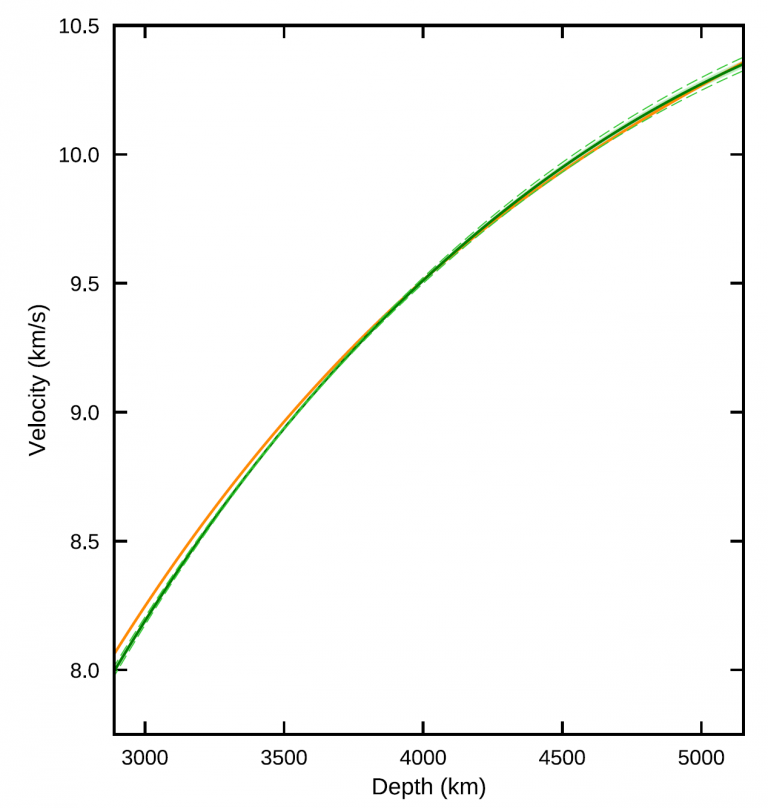
We have published a new model of 1D structure of the outer core, parameterized using two different equations of state: Irving_Cottaar_Lekic_2018 Brief highlights: We infer the seismic properties and equation of state of the outer core using Earth’s oscillations We address a longstanding discrepancy …
Prof. Olugboji moves to U. Rochester
We wish Prof. Olugboji the very best of luck as he starts his new position of Assistant Professor at the University of Rochester.
Our paper about the properties of the Outer Core is published in Science Advances
Link to the article: http://advances.sciencemag.org/content/4/6/eaar2538 Link to a nice write-up about how the project came together: https://www.princeton.edu/news/2018/06/27/seismologist-jessica-irving-uses-massive-earthquakes-unlock-secrets-outer-core
Congratulations to Tolu!
We congratulate Dr. Tolu Olugboji for being selected a Fellow of the Next Einstein Forum, which recognises Africa’s best young scientists and technologists. In March, Tolu presented his research in Kilagi, Rwanda. Check out the photos from the ceremony, below.
Quaking the Delaware
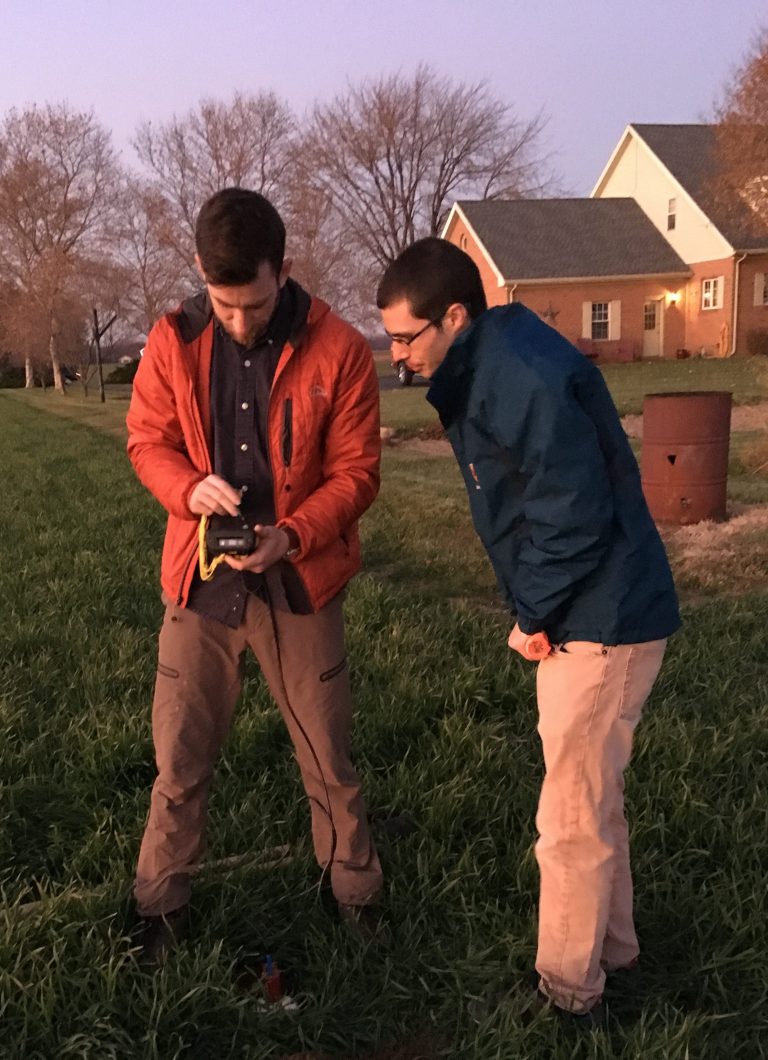
Graduate students at the University of Maryland Seismology Lab sprung into action following the M4.1 earthquake that struck Dover, Delaware on November 30, 2017. The very next day, they were out in the field, deploying seismometers that would be recording aftershocks for the next 6 weeks. Thank you …
2017
Things to consider when interpreting Sp receiver functions…
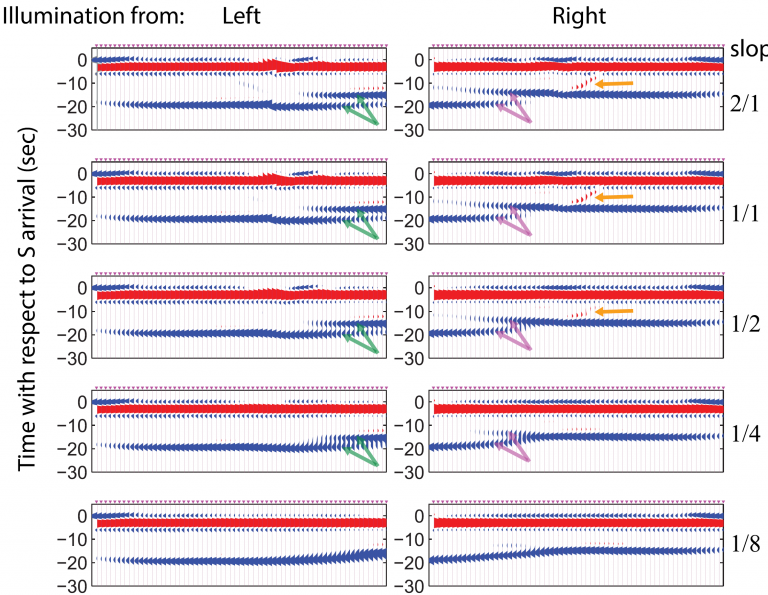
Conversions of shear waves (S) to compressional waves (P), often analyzed as Sp receiver functions, are useful for studying upper mantle layering, and have been used to map upper mantle seismic impedance interfaces in various tectonic settings. Recently, common conversion point stacking of Sp …
About those amplitudes…
It is well known, at least among tomographers, that our images of the Earth’s interior are washed out. Lateral variations in seismic velocities are likely to be weaker in our models than in the actual Earth due to explicit and implicit regularization needed to obtain a solution to our …
Improvement in P-wave tomography due to EarthScope
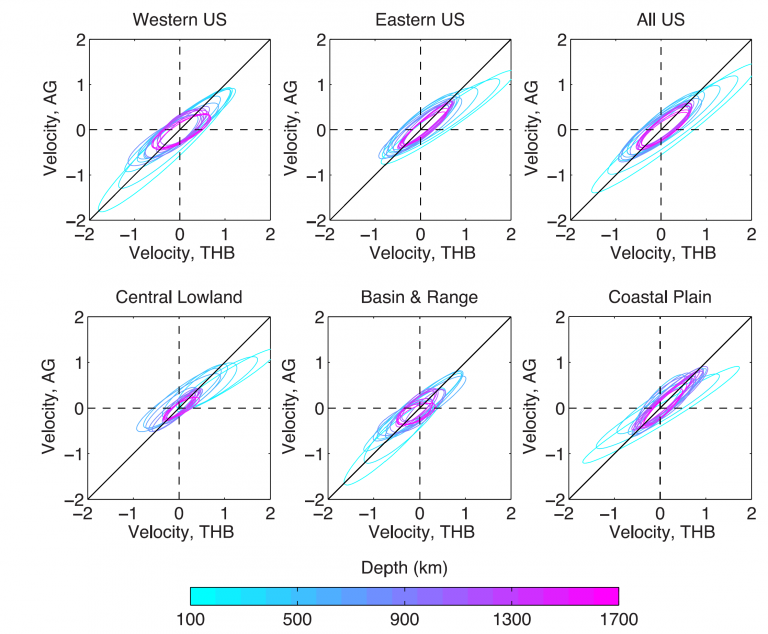
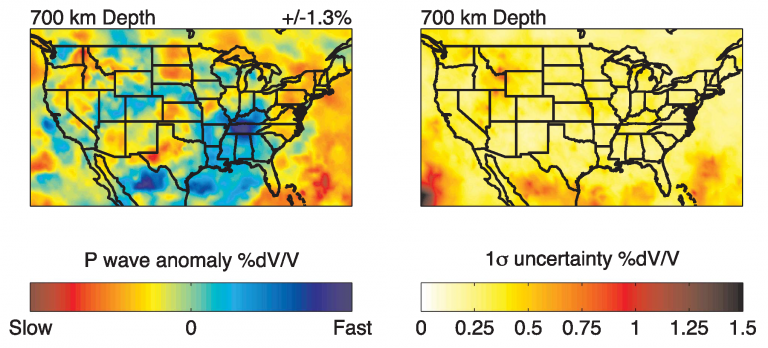
The EarthScope project has been described as the Apollo program of the solid Earth community. It has enabled an unprecedented investment in seismic instrumentation, and the creation of a uniform and high-quality network covering the United States. Data collected by this network transformed our …
Congratulations and Best of Luck to Sutton Chiorini!
Sutton Chiorini, who has been an undergraduate researcher in our lab for three years, has graduated and started a Master’s program at Miami University of Ohio. We wish her the best of luck in her future studies and research and will miss her engaging presence, excitement, and (s)warmth!
Congratulations and Farewell to Prof. Scott Burdick
Dr. Scott Burdick joined the lab in October, 2015, as an NSF Postdoctoral Fellow. Over the course of the past three years, we have benefitted from his creativity, insight, and comradery. Now, we wish Scott the best of luck as he begins the next chapter of his life as an Assistant Professor at Wayne …
Pair of IRIS summer interns joins the group
This summer, we had the pleasure of hosting two summer undergraduate interns: Anant Hariharan from Cornell, and Brittany Washington from Rugters, Newark. While Anant worked on analyzing the lengthscales of heterogeneity in mantle models constructed from long and short period data, Brittany …
2016
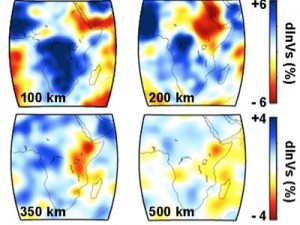
Reference Model of LLSVP Morphology
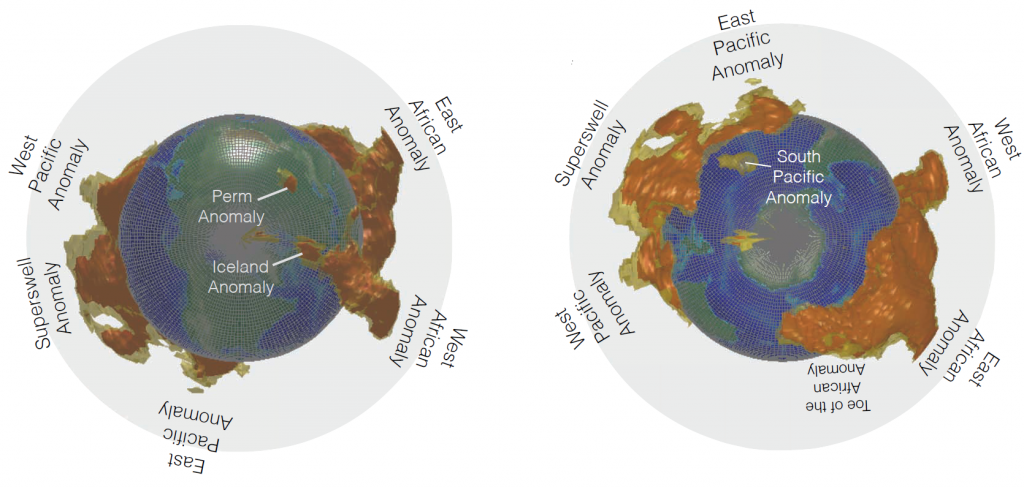
Using depth-dependent clustering analysis of global Vs and Vp tomographic models, we have constructed a new reference model for LLSVP shape and volume. We obtain new, much larger estimates of the volume/mass occupied by LLSVPs—8.0 % ±0.9 (μ ± 1σ) of whole mantle volume and 9.1 % ±1.0 (μ ± 1σ) of …
Congratulations to Anthony Mautino
This month, Anthony Mautino obtained his MS in Geology with a thesis about characterizing spherical Couette flows with acoustic normal mode splittings. Here, we are gathered to celebrate Anthony’s achievement, as well as bid farewell to Andrew Eagon who was a summer intern in the lab from …
3D Reference Earth Model
REM-3D is a project funded by the National Science Foundation and carried out by Raj Moulik, Ved Lekic, Barbara Romanowicz, and Adam Dziewonski. If you have questions, please do not hesitate to contact us. You might find the answer you are looking for in our new FAQ section. The aim of the project …
Dr. Pritwiraj Moulik joins Maryland Seismology as a Postdoctoral Fellow
We are pleased to welcome Raj Moulik to the lab, and look forward to working with and learning from him in the coming years! Raj will be leading the NSF-funded 3D Reference Earth Model project. You can learn more about him here.
Viscosity increase in the Earth’s mid mantle
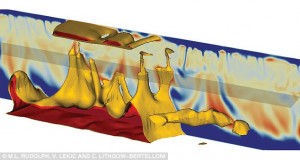
Together with collaborators Max Rudolph at Portland State University and Carolina Lithgow-Bertelloni at University College London, we used a novel inversion framework to detect the presence of an increase in viscosity in the Earth’s mid mantle. As Science magazine put it: A mysterious mid-mantle …
A viscosity jump detected in the Earth’s mid mantle
Together with collaborators Max Rudolph at Portland State University and Carolina Lithgow-Bertelloni at University College London, we used a novel inversion framework to detect the presence of an increase in viscosity in the Earth’s mid mantle. As Science magazine put it: A mysterious mid-mantle …
2015
Lekic named 2014 Packard Fellow
From https://www.packard.org/2014/10/2014-packard-fellowships-in-science-and-engineering-awarded-to-eighteen-researchers/ 2014 Packard Fellowships in Science and Engineering Awarded to Eighteen Researchers October 15, 2014 (Los Altos, CA) – Today, the David and Lucile Packard Foundation named 18 of …
2014
Dr. Tolulope Olugboji joins Maryland Seismology as a Postdoctoral Fellow
We are pleased to welcome Tolu Olugboji to the lab, and look forward to working with and learning from him in the coming years!
Dr. Scott Burdick, NSF Postdoctoral Fellow, joins Maryland Seismology!
On September 1st, 2014, we welcomed Scott Burdick to the Maryland Seismological Laboratory. Scott graduated with a Ph.D. from MIT, where he has developed new techniques for seismic tomography and imaging. We look forward to working with and learning from Scott!
Seismologist Nicholas Schmerr joins Maryland faculty!
Seismological research and education at the University of Maryland, College Park has been strengthened and expanded with the hire of Nicholas Schmerr. Nick’s expertise in body wave seismology, planetary geophysics, and characterization of mantle discontinuities broadens the range of research …
Seismological Society of America Early Career Award
Ved Lekic received the Charles F. Richter Early Career Award at the 2014 Seismological Society of America Annual Meeting held in Anchorage, Alaska. http://www.seismosoc.org/awards/richter_award.php
Graduate student recognition!
Chao Gao (center), a first year Ph.D. student in our lab, was recognized for completing the International Teaching Fellows program run by the Center for Teaching Excellence and the Graduate School at the University of Maryland.
First student paper from Maryland Seismological Lab!
The first paper authored by a student from the Maryland Seismological Lab has been accepted for publication in the prestigious Geophysical Journal International. Jesse Kolb, who led the study that presented a new method in reliable deconvolution for receiver functions, was an undergraduate …
Lithospheric Structure of the Western United States
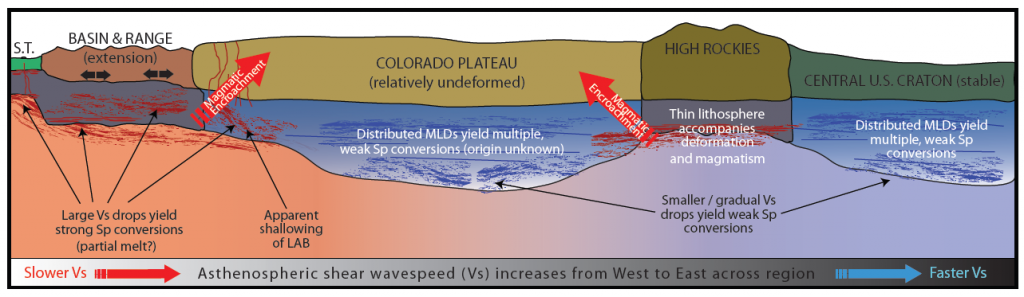
Using data from the EarthScope Transportable Array, we observed and modeled conversions of S waves to P waves across velocity contrasts within the lithosphere across the Western United States. You can read more about our findings in Lekic and Fischer, 2013 and Hopper et al. 2014, but this cartoon …
2013
Waveform tomography reveals a new structure beneath the Earth’s oceans.
Together with Barbara Romanowicz and Scott French at the Berkeley Seismological Laboratory, we have developed a new method for imaging the Earth’s interior at higher resolution. This method has yielded new images, published today in the journal Science, that reveal a previously unknown finger-like …
Welcome to our new doctoral students!
This Fall, Ms. Erin Cunningham and Mr. Chao Gao have joined the Maryland Seismological Laboratory. Stay tuned for updates on their interests and research under the “People” tab.
Reference Earth Model Workshop
We are pleased to host a CIDER workshop focused on developing a new seismic reference model for the Earth’s mantle. The workshop will be taking place in the Crist Boardroom of the Riggs Alumni Center on April 26th, and at the UMUC conference center on April 27th.
New Lab Members!
Two new Ph.D. students will be joining the lab this Fall: Ms Erin Cunningham and Mr Chao Gao.
Nature Citation
Our recent EPSL paper on geoneutrinos was highlighted in Nature!
American Geophysical Union
Three undergraduate researchers from our lab – Erin Cunningham, Jesse Kolb, and Alex Kandell – presented their research findings at the American Geophysical Union Fall Meeting in San Francisco.
Ved Lekic
At the broadest level, I seek to understand the state, dynamics, and dominant processes of the solid Earth, as well as those of other planets and satellites. Accurate seismic imaging is a crucial first step toward this goal. I believe that we stand at a threshold of a transformation in seismology …
2012
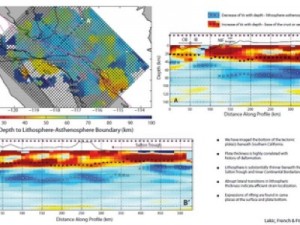
Lithospheric thinning beneath rifted regions of Southern California
Conversions of teleseismic shear (S) waves to compressional (P) waves across velocity interfaces (such as the Moho or the lithosphere-asthenosphere boundary) allow us to map out variations in plate thickness across Southern California. Anomalously thin lithosphere is observed beneath rifted …
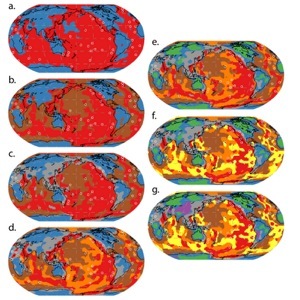
Cluster analysis of upper mantle tomography
When cluster analysis is used to classify the profiles of shear velocity (Vs) into N groups whose members are similar, the geographic extents of these groups mirrors the surface expression of tectonics. When N = 2 (panel a), one cluster corresponds to oceanic regions and the other to continental …
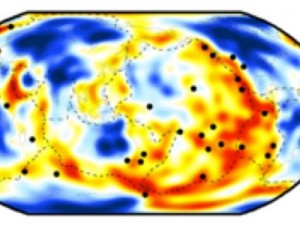
Full waveform tomography with the spectral element method
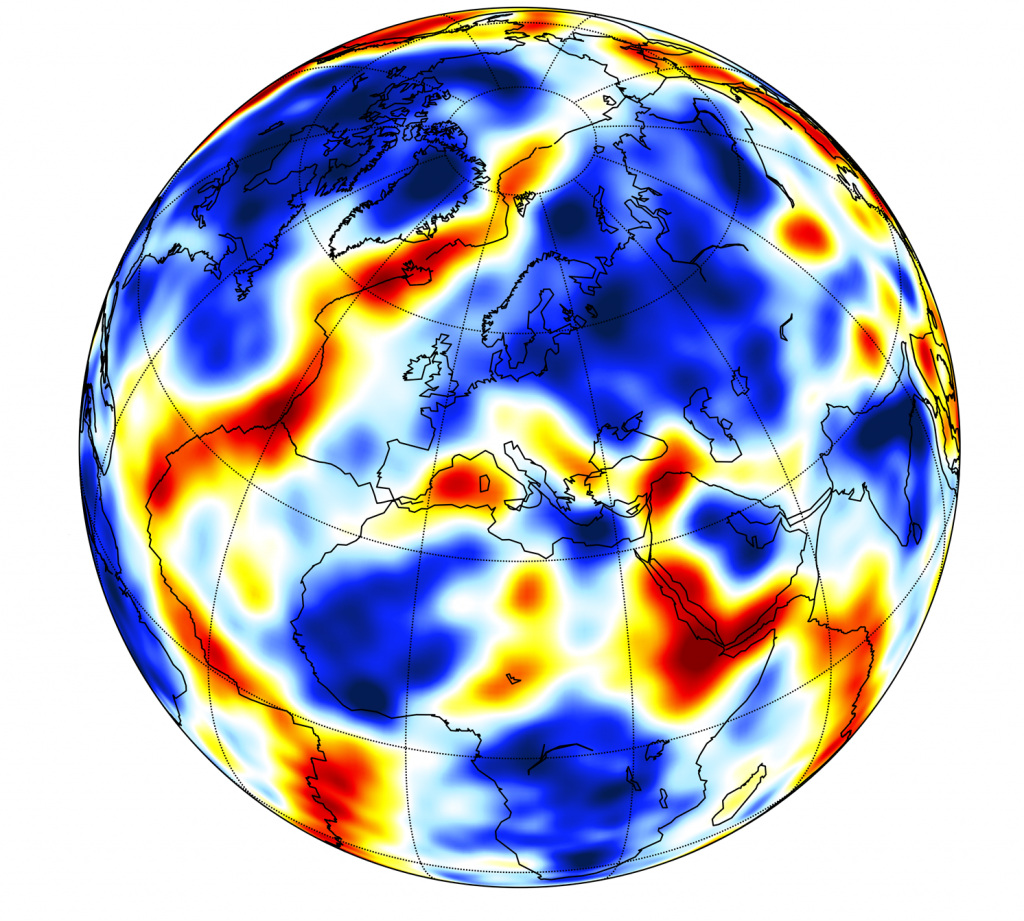
Map of lateral variations in the velocity of seismic shear waves (S-waves) at a depth of 125 km. Warm colors denote slower wavespeeds, and are thought to indicate warmer temperatures and/or the presence of melt or water. Cool colors denote faster wavespeeds, and indicate cool regions, such as the …
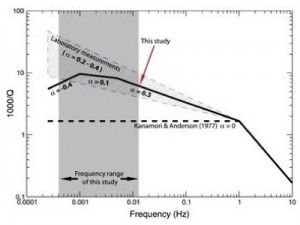
Frequency dependence of seismic attenuation
Preferred model (solid line) of frequency dependence of attenuation within the absorption band compared with constraints from laboratory studies (hachured region) and the frequency-independent assumption (dashed line). In our model, α is approximately 0.3 at periods shorter than 200 s, decreasing …
Lithospheric structure beneath continental rifts
Isotropic shear wavespeed variations in the upper mantle from the SEMum model [Lekic and Romanowicz, 2008]. The model is developed using the spectral element method to perform full waveform modeling. Note the structural complexity in the uppermost 100-200 km which must be corrected for in order to …