Course information

Meeting time
10:00–10:50 am, MWF
Location
Animal Science Building(142 ANS), Gannon Auditorium, Room 0408
Instructor
Dr. Thomas R. Holtz, Jr. (he/him), Principal Lecturer
Office
Chemistry Building (091 CHM), Room 1225B
Office hours
Wednesdays 2:00–3:30 pm, or by appointment
Email
tholtz@umd.edu

Reminder: It is your responsibility to read and understand the syllabus. If you have questions, contact the instructor.

Syllabus

Course description

Welcome to GEOL 104 Dinosaurs: A Natural History. This course focuses on dinosaurs, their evolution, and our understanding of their fossil record. Students examine the geologic record and tools used to determine ages and environments; evolutionary history and extinctions; dinosaur biology and behavior; and survival as birds.

This course examines how scientists study the age, environments, evolution, origin, biology, behavior, and extinctions of dinosaurs and the other inhabitants of their world. We will explore several big themes:

  • The scale of geologic and evolutionary time
  • Biological evolution and the origin, evolution, and diversification (and occasional extinction) of branches of the Tree of Life
  • The nature of scientific knowledge, and how diverse lines of evidence are used to reconstruct events of the ancient past
  • What an understanding of dinosaurian biology, behavior, ecology, and extinction can reveal about modern environmental conditions

Learning outcomes

  • Identify major dinosaur clades and their primary attributes (anatomy, behavior, stratigraphic and geographic distribution, etc.)
  • Interpret cladograms to determine evolutionary relationships and specializations.
  • Assess claims about behavior, physiology, and extinction patterns using fossil evidence.
  • Furthermore, as DSNS (Distributive Studies Natural Sciences) course, all students who complete this course should be able to:
    • Demonstrate a broad understanding of scientific principles and the ways scientists in a particular discipline conduct research.
    • Apply quantitative, mathematical analyses to science problems.
    • Solve complex problems requiring the application of several scientific concepts.
    • Look at complex questions and identify the science and how it impacts and is impacted by political, social, economic, or ethical dimensions.
    • Critically evaluate scientific arguments and understand the limits of scientific knowledge.
    • Communicate scientific ideas effectively.

Required Resources

  • Course site (this page) and ELMS/Canvas.
  • Book: There is no textbook for this course: instead, there are extensive online lecture notes. There may be some occasions when some extra lecture material will be presented as Panopto videos on ELMS; please watch these by the date announced.
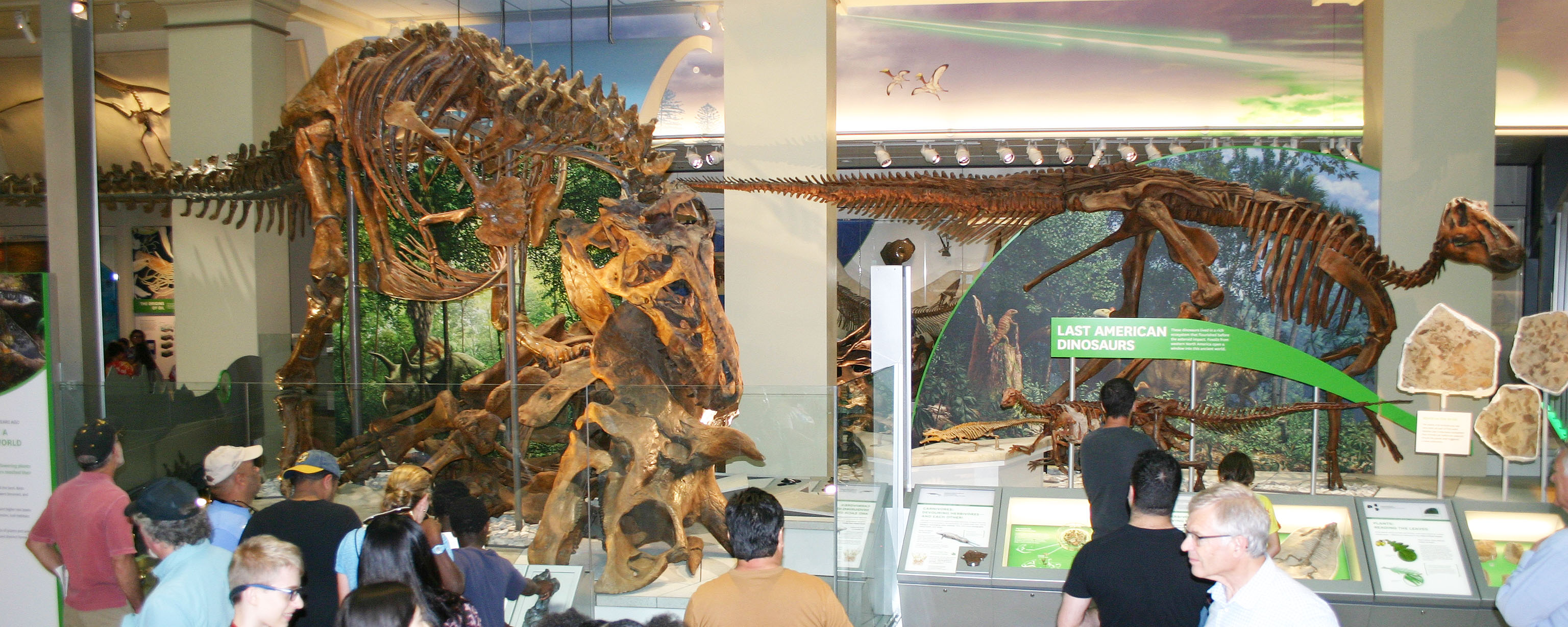
  • There is one required self-guided field trip to the Smithsonian Institution's National Museum of Natural History. Although the museum is free, you would need to transport yourself there. The Archives/Navy Memorial Metro Station is the closest, and (like the College Park Station) is on the Green Line.
  • Total Estimated costs of required course materials: $10 round trip Metro fare from the College Park Station to Archives/Navy Memorial Station.

Course outline

3 lectures per week (Monday, Wednesday, Friday). 1 online homework (or exam) per week. 1 required self-guided Smithsonian exhibit assignment.

Lectures lost due to University late openings or cancellations or instructor absence will be made up as Panopto video recordings on the ELMS page.

Attendance in lecture is expected. The individual PowerPoints will not be provided to students, although there are detailed lecture notes online and Panopto recordings of the lectures will be available on ELMS. Furthermore, the Questions of the Day (QotDs) will only be provided during lecture. If you want to achieve a good grade in the course, the time to start working towards that is from the very beginning! Keep up with the material as it is presented rather than "cramming" to study it right before exams.

NOTE: Attendance means more than mere presence: it means "paying attention". Please take out your ear buds and refrain from texting/web-browsing/doing homework/etc. in class.

Since we have the Questions of the Day each lecture, you should have a smartphone, tablet, or laptop (best option!) available when you are in class and lab. However, during classtime, please refrain from email, social media, online shopping, streaming videos, and other such communication outside the scope of the course, or from working on material for other courses. In other words, please restrict your computer use to the activities of THIS class.

See the lecture schedule and links to the online lecture notes.

Open lecture notes (opens in a new tab)

Major assignments & grading

Grading structure

Grading structure (percent of course grade)
Item Percentage
Midterm Exam I23%
Midterm Exam II23%
Final Exam23%
Online Weekly Homework10%
Questions of the Day (QotDs)10%
Smithsonian Self‑Guided Field Trip Project10%
Pre‑/Post‑Course Survey1%
Total100%

Midterm Exams (23% each): Two online exams on October 6-7 and November 10-11, respectively. For each of these there will be a section comprised of true/false, matching, multiple choice, and similar type questions, as well as a few short answer questions. These exams are open note but timed (60 minutes) and are subject to the University's Honor Pledge; you may not seek help from students or other people in doing these, nor use AI assistance. If you encounter a technical problem, please contact ELMS@umd.edu for help (and Dr. Holtz so that he is aware of your situation).

Final Exam (23%): A online final exam during the regularly scheduled exam season. It is cumulative for the entire course but focuses on the material since the second midterm. Format and rules are the same as the mid-term exams, but you have 120 minutes in which to complete it. The exam will be held December 20-21.

Online Homework (10% total): There will be a series of online homework assignments (generally one per week in which there is not also an exam), administered through ELMS. These homework assignments are open-note, but they ARE subject to the Honor Pledge: you may not seek help from other people or AI in doing these. Questions asked include true/false, matching, multiple choice, short answers, and in some cases longer answers. In some cases you may be asked to upload an image for your answer. The exact questions asked are randomized, so that no two student's quizzes will be identical. The lowest homework grade will be automatically dropped; if you miss a homework for any reason, it will be accommodated in this fashion. However, only one homework at most will be dropped.

Homework assignments are normally due at 11:59 pm on Mondays. However, please give yourself sufficient time in which to complete the assignment.

Questions of the Day (QotD) (10% total): During each lecture there will be one or more brief question shown on the board. Depending on the question, you might submit your answer on your own to ELMS, or after discussing it with a classmate nearby. You will have only a short window in which to answer the question. The format of the question can be true/false, fill-in-the-blank, multiple choice, or more open-ended. In some cases, we'll review your submissions as a point of in-lecture discussion. For the pre-recorded Panopto lectures, the QotDs will be Panopto quizzes.

The lowest five (5) grades of your QotDs will be automatically dropped. This is how absence from lecture will be handled. In other words, you don't separately ask for an excused absence for these. NOTE: facilitating fellow students who are not present in answering these questions remotely is absolutely an Honor Code violation and will result in action taken against you and the student receiving the at-a-distance help. Individual these are low-point assignments, so it is much better to lose a few points than to risk a course grade of "XF" on your University transcript!

Smithsonian Self-Guided Field Trip Report (10%): To take advantage of our proximity to the Smithsonian Institution National Museum of Natural History and its excellent display of fossil materials, there is an assignment requiring you to go to that museum and answer a series of questions based on your observations. There is no single formal field trip; you may go on your own or in small groups. The project is due online NOVEMBER 16.

Pre-/Post-Course Survey (1% total): In order to effectively assess the learning in the course, an online pre-course survey will be administered in the first week of class, followed by a post-course survey during the last week. You will not be graded on the specific answers on these surveys, but you will be graded for participating in the survey.

Extra Credit: No separate extra credit assignments as such planned for this course, although individual exams and homework assignments may have extra credit questions which add up in the final course grade.

All assessment scores will be posted on the course ELMS page. If you would like to review any of your grades (including the exams), or have questions about how something was scored, please email me to schedule a time for us to meet and discuss.

Late work will not be accepted for course credit so please plan to have it submitted well before the scheduled deadline. (Please contact me as soon as possible if some issue came up that prevented your timely submission of an assignment.) I am happy to discuss any of your grades with you, and if I have made a mistake, I will correct it as soon as possible. Any formal grade disputes must be submitted in writing and within one week of receiving the grade.

Final letter grades are assigned based on the percentage of total assessment points earned. To be fair to everyone I have to establish clear standards and apply them consistently, so please understand that being close to a cutoff is not the same as making the cut (89.99 ≠ 90.00). It would be unethical to make exceptions for some and not others.

Final Grade Cutoffs: The numbers given represent the thresholds that must be passed in order to reach that grade (for example, A+ is 97.000... and any number greater). There is no rounding for letter grades; the thresholds must be passed. F is any grade below D-. Thresholds: 97, A+; 93, A; 90, A-; 87, B+; 83, B; 80, B-; 77, C+; 73, C; 70, C-; 67, D+; 63, D; 60, D-; < 60, F.

The Final Grade is the algebraic sum based on the numerical grades.

Policies

Academic Integrity

The University's Code of Academic Integrity is designed to ensure that the principles of academic honesty and integrity are upheld. In accordance with this code, the University of Maryland does not tolerate academic dishonesty. Please ensure that you fully understand this code and its implications because all acts of academic dishonesty will be dealt with in accordance with the provisions of this code. All students are expected to adhere to this Code. It is your responsibility to read it and know what it says, so you can start your professional life on the right path. As future professionals, your commitment to high ethical standards and honesty begins with your time at the University of Maryland.

It is important to note that course assistance websites, such as CourseHero, or AI generated content (such as ChatGPT, Grok, TerpAI, and the like) are not permitted. Material taken or copied from these sites can be deemed unauthorized material and a violation of academic integrity. These sites offer information that might be inaccurate, and most importantly, relying on restricted sources will hamper your learning process, particularly the critical thinking steps necessary for college-level assignments.

Additionally, students may naturally choose to use online forums for course-wide discussions (e.g., Group lists or chats) to discuss concepts in the course. However, collaboration on graded assignments is strictly prohibited unless otherwise stated. Examples of prohibited collaboration include: asking classmates for answers on quizzes or exams, asking for the questions on QotDs when you are absent, etc. Please visit the Office of Undergraduate Studies' full list of campus-wide policies and reach out if you have questions.

Finally, on each exam or assignment you must write out and sign the following pledge: "I pledge on my honor that I have not given or received any unauthorized assistance on this exam/assignment." If you ever feel pressured to comply with someone else's academic integrity violation, please reach out to me straight away. Also, if you are ever unclear about acceptable levels of collaboration, please ask! To help you avoid unintentional violations, the following table lists levels of collaboration that are acceptable for each graded exercise. Each assignment will contain more specific information regarding acceptable levels of collaboration:

Assignment Open Notes? Learn Online? Gather/Generate Content with AI? Ask Friends? Work in Groups?
Pre-/Post-Course Survey No No No No No
Online Weekly Homework Yes Yes No No No
Questions of the Day (QotDs) No No No No No
Smithsonian Self-Guided Field Trip Project Yes Yes No No Yes
Midterm Exams Yes No No No No
Final Exam Yes No No No No

AI Use is Prohibited

AI assistance (TerpAI, ChatGPT, Gemini, Grammarly, etc.) is not permitted for coding, research, writing, editing, or any other part of the assignment process. Even though you may use these tools in the future, this approach will help you build a solid understanding of the subject matter. Please note that these systems are NOT search engines and are not designed to deliver factual information: instead, they are created to delivery a facsimile of human communication, without regards to its truth. The point of assignments is for you to be able to develop your skills in marshalling arguments and understanding the concepts and techniques covered in this program, not for you to simply provide me with answers I already know. If you have questions or suggestions for potential exceptions, please contact me, and I would be happy to talk more.

Course-related campus-wide policies

It is our shared responsibility to know and abide by the University of Maryland's policies that relate to all courses, which include topics like:

  • Academic integrity
  • Emergency preparedness
  • Student resources and services
  • Accessibility and accommodations
  • Attendance and excused absences
  • Grades and appeals
  • Copyright and intellectual property

Please visit the website for the Office of Undergraduate Studies' full list of campus-wide policies and follow up with me if you have questions.

UMD course-related policies (opens in a new tab)

Resources & accommodations

Accessibility & Disability Service (ADS)

The University of Maryland is committed to creating and maintaining a welcoming and inclusive educational, working, and living environment for people of all abilities. The University of Maryland is also committed to the principle that no qualified individual with a disability shall, on the basis of disability, be excluded from participation in or be denied the benefits of the services, programs, or activities of the University, or be subjected to discrimination. The Accessibility & Disability Service (ADS) provides reasonable accommodations to qualified individuals to provide equal access to services, programs and activities. ADS cannot assist retroactively, so it is generally best to request accommodations several weeks before the semester begins or as soon as a disability becomes known. Any student who needs accommodations should contact me as soon as possible so that I have sufficient time to make arrangements.

For assistance in obtaining an accommodation, contact Accessibility and Disability Service at 301-314-7682, or email them at adsfrontdesk@umd.edu. Information about sharing your accommodations with instructors, note taking assistance and more is available from the Counseling Center.

Student resources

Student Resources and Services
Taking personal responsibility for your own learning means acknowledging when your performance does not match your goals and doing something about it. I hope you will come talk to me so that I can help you find the right approach to success in this course, and I encourage you to visit UMD's Student Academic Support Services website to learn more about the wide range of campus resources available to you.

In particular, everyone can use some help sharpening their communication skills (and improving their grade) by visiting UMD's Writing Center and schedule an appointment with the campus Writing Center.

You should also know there are a wide range of resources to support you with whatever you might need (UMD's Student Resources and Services website may help). If you feel it would be helpful to have someone to talk to, visit UMD's Counseling Center or one of the many other mental health resources on campus.

Basic Needs Security
If you have difficulty affording groceries or accessing sufficient food to eat every day, or lack a safe and stable place to live, please visit UMD's Division of Student Affairs website for information about resources the campus offers you and let me know if I can help in any way.

Veteran Resources
UMD provides some additional supports to our student veterans. You can access those resources at the office of Veteran Student life and the Counseling Center. Veterans and active duty military personnel with special circumstances (e.g., upcoming deployments, drill requirements, disabilities) are welcome and encouraged to communicate these, in advance if possible, to the instructor.

Notice of Mandatory Reporting

Notice of mandatory reporting of sexual assault, sexual harassment, interpersonal violence, and stalking: As a faculty member, I am designated as a "Responsible University Employee," and I must report all disclosures of sexual assault, sexual harassment, interpersonal violence, and stalking to UMD's Title IX Coordinator per University Policy on Sexual Harassment and Other Sexual Misconduct.

If you wish to speak with someone confidentially, please contact one of UMD's confidential resources, such as CARE to Stop Violence (located on the Ground Floor of the Health Center) at 301-741-3442 or the Counseling Center (located at the Shoemaker Building) at 301-314-7651.

You may also seek assistance or supportive measures from UMD's Title IX Coordinator, Angela Nastase, by calling 301-405-1142, or emailing titleIXcoordinator@umd.edu.

To view further information on the above, please visit the Office of Civil Rights and Sexual Misconduct's website.

Participation & helpful thoughts

Participation

  • Given the interactive style of this class, attendance will be crucial to note-taking and thus your performance in this class. Attendance is particularly important also because class discussion will be a critical component for your learning.
  • Each student is expected to make substantive contributions to the learning experience, and attendance is expected for every session.
  • Students who miss a class are responsible for learning what they miss from that session.
  • Additionally, students must complete all readings and assignments in a timely manner in order to fully participate in class.
  • Since we have the Questions of the Day each lecture, you should have a smartphone, tablet, or laptop available when you are in class. However, during classtime, please refrain from email, social media, online shopping, streaming videos, and other such communication outside the scope of the course, or from working on material for other courses. In other words, please restrict your computer use to the activities of THIS class.
  • As part of the nature of the course, there will be a lot of memorization (less than a foreign language class, but more than that found in more mathematically-oriented introductory science classes). This will include lots of anatomical, geological, and paleontological terms, as well as evolutionary and temporal relationships. If you have difficulty memorizing, this may not be the class for you. Also, if there are words or concepts with which you are not familiar, feel free to ask Dr. Holtz (in class, after class, over email, etc.) for an explanation or clarification.

Misunderstanding the Course and Assignments

Over the years, some students have expressed misunderstandings about the nature of the course and the graded items in it. Here are some of the more common misunderstandings and responses:

  • "This is a 100-level GenEd class; it is supposed to be easy!": Keep in mind that Organic Chemistry and Calculus are also 100-level GenEd classes... Like any course, it will involve learning and applying new information and skills. If you keep current with the lectures and assignments and ask for clarification when you don't fully understand it, you should do fine. But learning is an active verb; you need to make the effort to master the information if you expect to get a good grade.
  • "I spent XXX hours on this assignment/studying for this exam, so my grade should be higher!": You are being graded on the results of the assignment, rather than the effort you put into it as such. If you find that your results are not what you'd hoped, you might try new styles of studying. For instance, you might try forming a study group with other students, asking each other questions about the material. There is no single best way to study: each of us has different strengths and weaknesses. You might consult the Office of Undergraduate Studies website on Academic Success for tips and resources if you want more help.
  • "Dr. Holtz included material in the lecture and the lecture notes that weren't on the exam!": Guilty as charged!! Perhaps the single most common misunderstanding about a University education is that the lectures and assignments exist for you to pass the exam. (It isn't your fault for this misunderstanding; quite frankly much of K-12 education is, sadly, structured this way!!) Instead, University courses exist for you to increase your knowledge about the discoveries, insights, ways of thinking, and approaches to understanding to the diverse subjects we teach. Exams, homework, and other graded assignments exist so that we can assess that learning is going on. Towards this end, these will always cover just a subsample of what we teach.
  • "I'm not a Geological, Environmental, and Planetary Sciences major; how am I supposed to know these things?": You aren't expected to know the course material in advance. (If you already knew the subject, there wouldn't be much point in taking a class!) I try to provide sufficient material to bring everyone up to speed on the subjects we cover. (And an aside: except for the subjects of rock formation, sedimentology, geologic time, plate tectonics, and fossilization, the material of this course is far outside what most GEPS majors learn. In fact, if you master the details of this class, you will know more about this subject than most of the faculty in my Department!)
  • "I didn't have time enough on the exam to look up the answer to every question." The goal of the exam is not to check your ability to look things up. Ideally you would do the entire exam without looking up any answers. You are provided with an exam review sheet in advance which lists the key concepts and materials you should understand for the exam; if you go into the exam knowing this material, you should be fine.

Last modified: 5 August 2026