
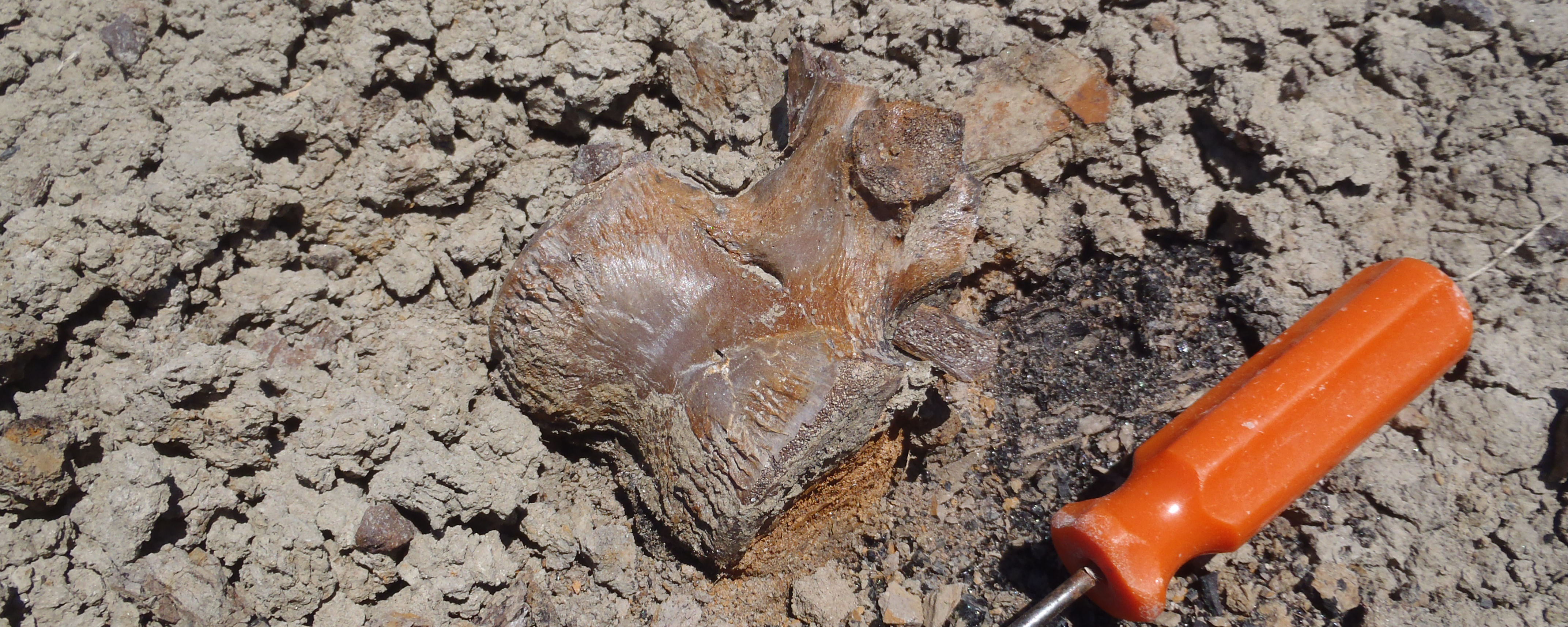
Key Points
- Fossils are the physical remains or traces of their behavior preserved in the rock record.
- Trace fossils (such as footprints, burrows, nests, and coprolites [fossilized feces] are the record of behaviors of extinct animals.
- Body fossils (such as teeth, bones, shells, wood, leaves, pollen, etc.) were once part of a living thing.
- Taphonomy is the process by which parts of a living thing are buried and preserved as fossils.
- Different environments of deposition are better at preserving different types and sizes of fossils.
- Depending on the taphonomic history, a fossil might be complete, or only fragmentary, or anything in between.
- After burial, different diagenetic processes may alter the composition of the original hard parts of the body.
- Normally the soft tissue (flesh and so forth) decays after death, but in some diagenetic conditions they might be preserved (either unaltered, as carbonized stains, as permineralized material, or as impressions.)
What are Fossils?
Fossils: The physical traces of past life.
Or, more fully, a fossil is any remain of an ancient organism or its behavior preserved in the rock record.
(Derived from the Latin word "fossilium": that which is dug up. Originally used for anything found in the ground, but by the 19th Century had come to mean traces of past life.)
Fossils are the only direct evidence of past life, although indirect evidence exists in the form of the evolutionary and biogeographic distribution of modern organisms.
Two major types of fossils:
- Trace fossils: the record of organisms' behavior preserved in rock.
- Body fossils: the physical remains of an organism preserved in rock.
Trace fossils are, essentially, biologically-generated sedimentary structures. They include:
- Footprints and trackways
- Burrows
- Feeding marks
- Coprolites (fossilized feces)
- Nests
- And more
- Represent activities of the animal while alive, rather than part of the dead creature
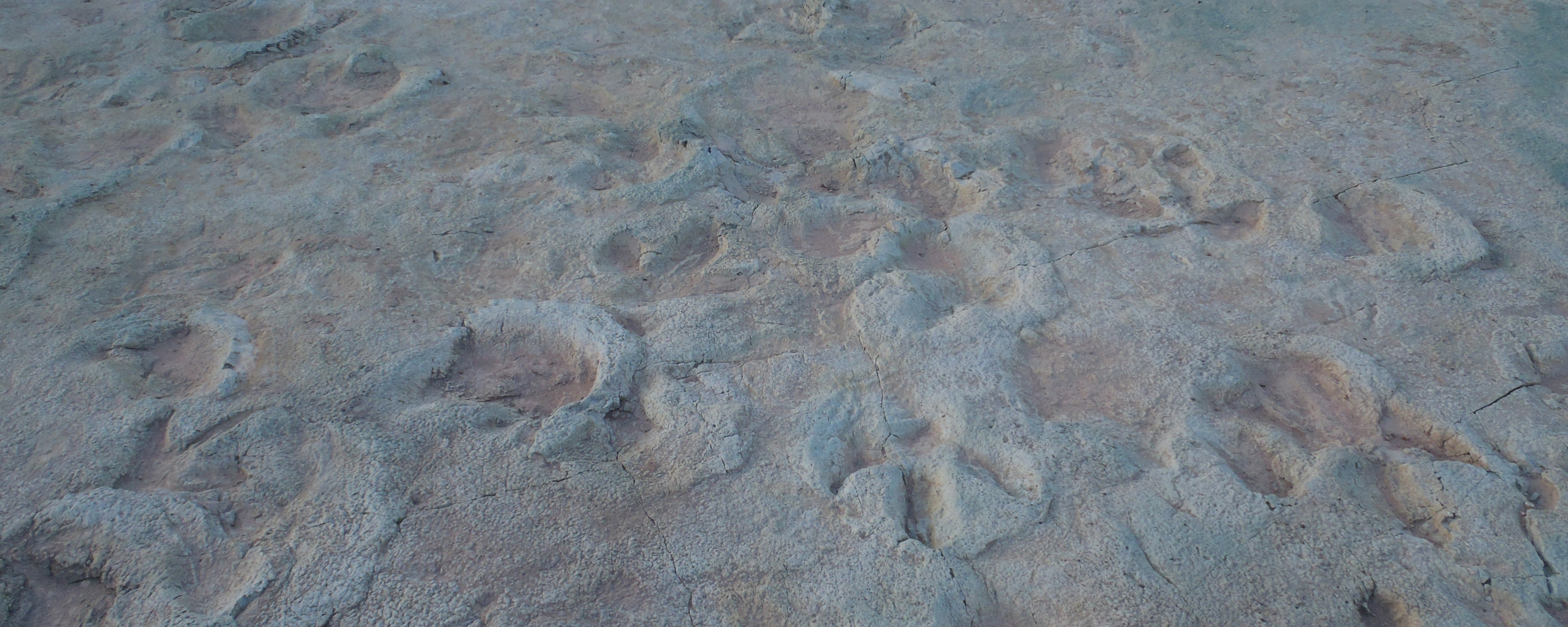


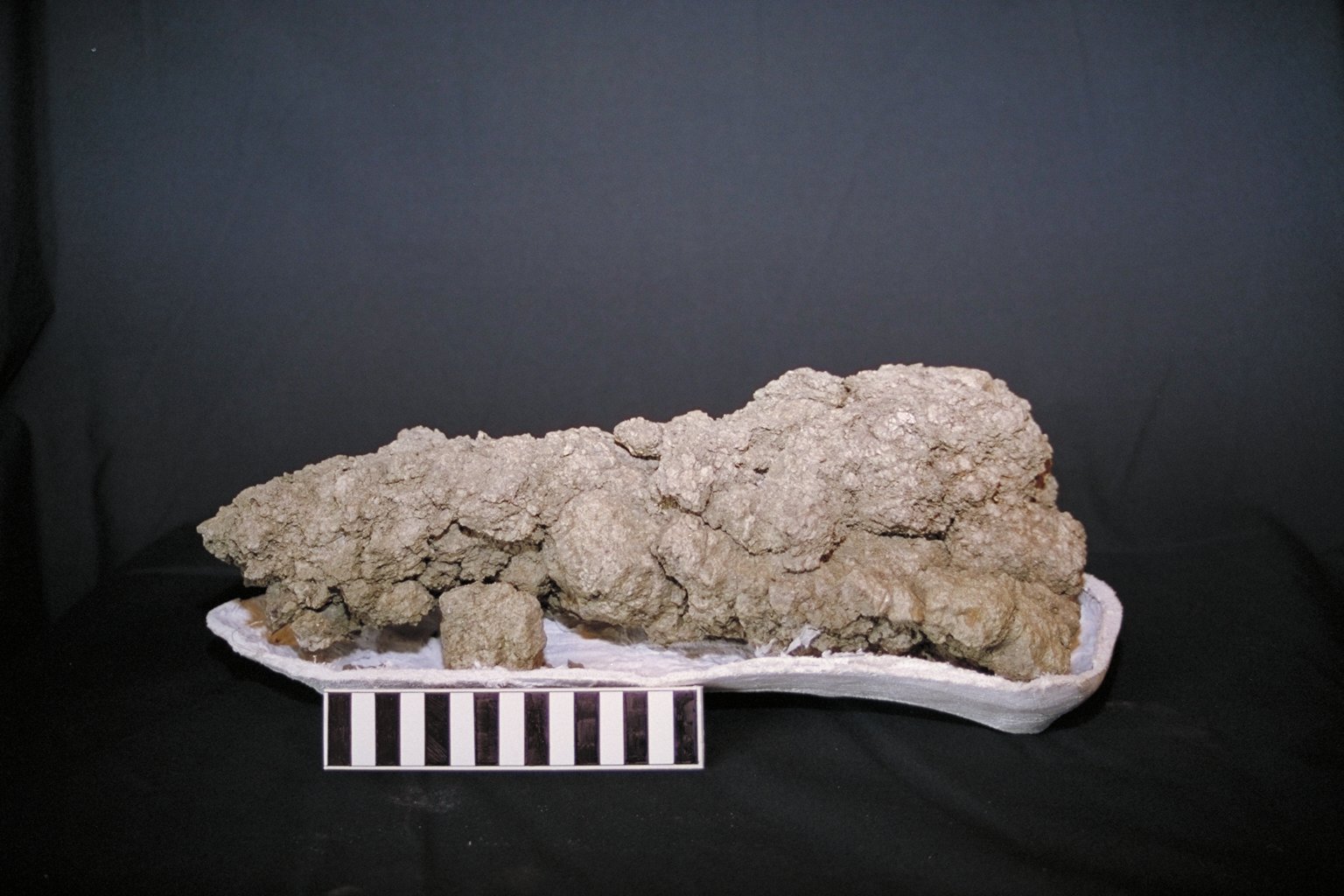

Preservation of trace fossils is just like other sedimentary structures: must have rapid burial, and preserved by lithification of the rock itself.
Body fossils: can be preserved in a variety of ways.
In general, only organisms with hard parts can be preserved: shells, bones & teeth, wood, etc.
For vertebrates (such as dinosaurs), body fossils are primarily bones and teeth
Bone:
- A structural unit of vertebrate anatomy: humerus, scapula, metatarsal, etc.
- A composite material: calcium phosphate (hydroxylapatite) grains in a protein (collagen) matrix
- A living tissue: store for various nutrients (calcium, phosphate, etc.), modified and reused throughout life
But the rest of the vertebrate is soft tissue (and in many organisms there are NO hard parts), and so these are only preserved in rare instances.
Bone (like shell and wood) is not solid material, but porous. Pore space is occupied by organic material in life. Upon death, organic material begins to decay.
In order for bones and teeth to become fossilized (turned into a fossil):
- Animal must die (in the case of bones) or lose teeth
- Body must be buried by sediment before decay, weathering, scavengers, etc., destroy the remains
- The vast majority of living things wind up inside other living things (i.e., are eaten or decayed). Only a tiny fraction are buried.
- Environment of deposition becomes important. High energy environments (like river channels) bury quickly, but are likely to destroy smaller bodies. Low energy environments (lakes, lagoons, etc.) might preserve small corpses, but are not quick enough to bury large animals before they decay/are scavenged.
- Larger bodies (or in this case the modern equivalent: cars!) can be covered by rivers at flood stage:
- VAST majority of fossils are broken up bones or teeth. A small fraction are complete isolated bones or teeth. A smaller fraction still are a few bones in articulation (still connected). A very small fraction are nearly complete skeletons.
Taphonomy
The study of burial and fossilization is called taphonomy. There are various modes of preservation after the bone is buried:- Unaltered bone: simple burial, some weathering. Organic material may be lost (but see below), but original hard parts are all still present with nothing added. Relative rare in dinosaur fossils, especially as one gets further back in time.
- Unaltered soft tissue preservation have been found inside some unaltered bone; seem to require very particular groundwater conditions to preserve proteins, etc.
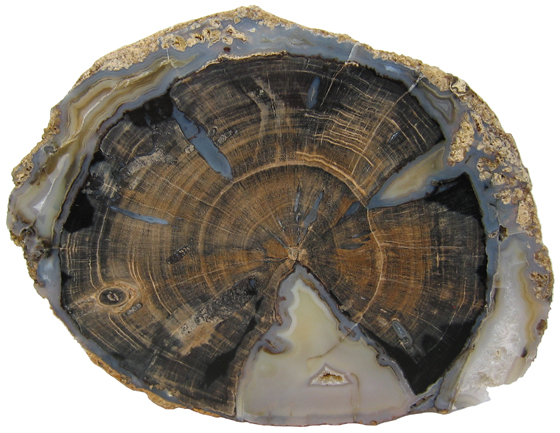
- Permineralized: most common mode of preservation of dinosaur body fossils!
- Pore space is filled in with ground water: some dissolved minerals precipitate in pores (probably some contribution by bacterial activity)
- Is the same process as going on in cementation of the sediment around it
- Original hard parts remain, but extra material added to pores
- Because the new material is added, fossil will break like rock and be colored like the mineral that filled in the poor space
- "Petrified" wood is actually permineralized wood
- In some cases, soft tissues can be permineralized, but this seems to be very rare
- Recrystallization: very common in calcitic fossils, but not so common in vertebrate bone. After burial, calcite crystals reorder and grow into each other. Original mineralogy remains, but structure is lost.
- Replacement: grades from permineralization.
- Partial to complete replacement of crystals of one mineralogy with another, controlled by hard part material and by dissolved material in ground water
- Carbonization: organic material is "distilled" under pressure.
- Many material is lost, but carbon film left behind
- Mode of preservation of coal
- Also preserves soft tissues of some animals (like the feathers of some dinosaurs or the body outline of ichthyosaurs) and plants
- Bacterially controlled
- Impressions of dinosaur skin can form if the body was pressed into the mud before either decay set in or the mud hardened
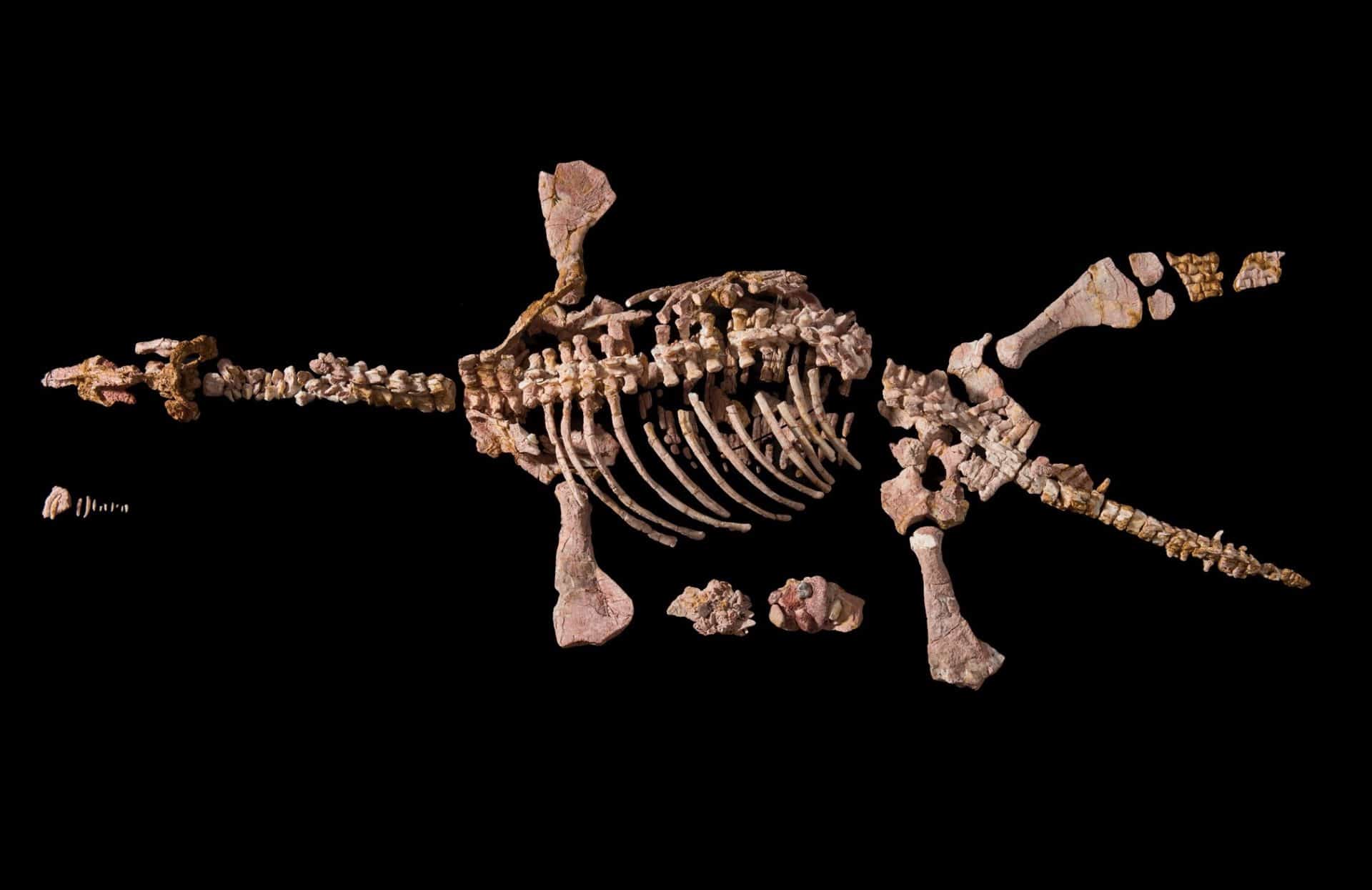
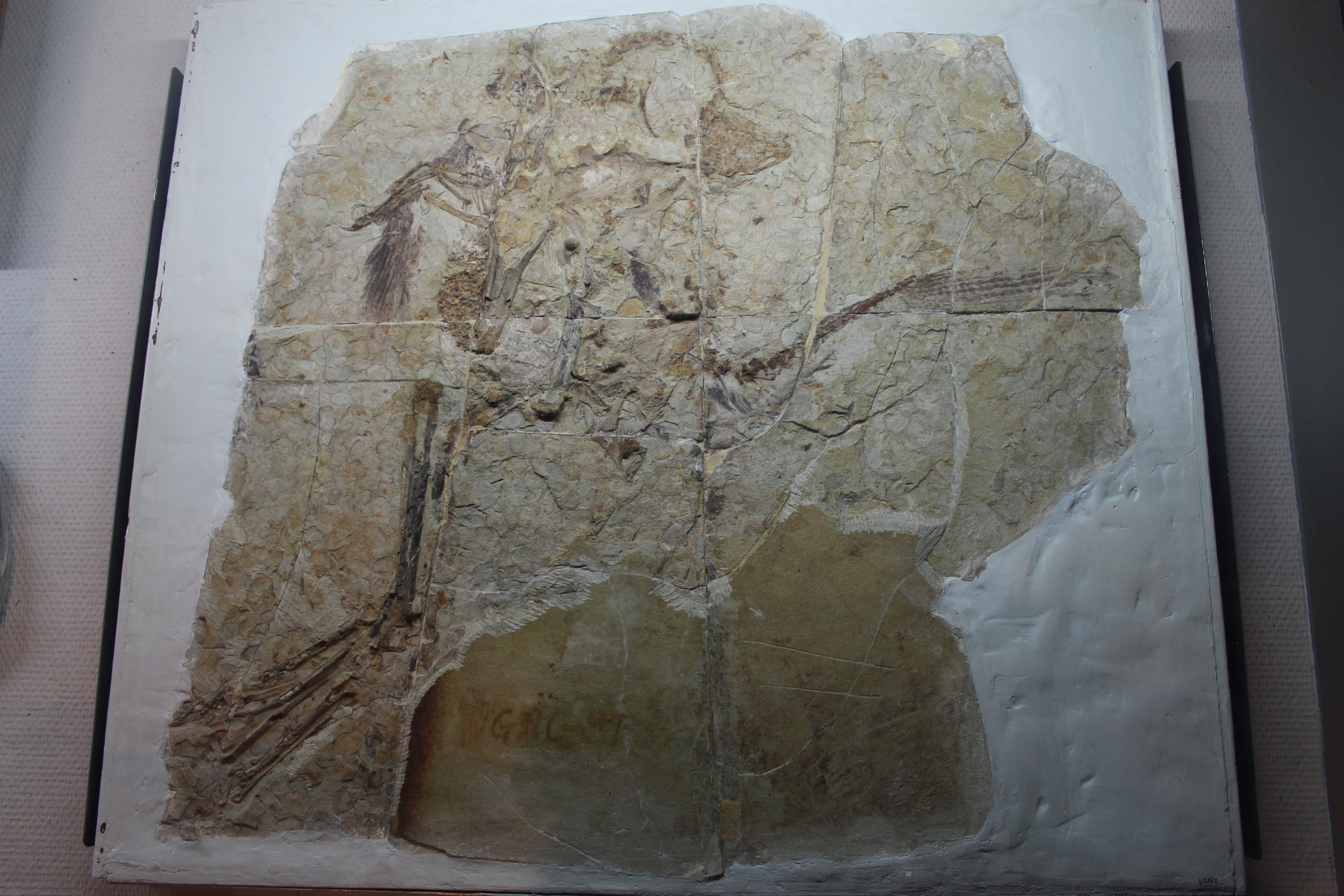


Different organisms have different potential for fossilization:
- Hard parts vs. no hard parts
- Single hard parts (e.g., gastropods & cephalopods) vs. two hard parts (e.g., brachiopods & bivalves) vs. many well-connected parts (e.g., arthropods & echinoderms) vs. many parts connected only by soft tissue (e.g., vertebrates)
- Microscopic to sediment-sized to immense
- Lived in erosive environments (e.g., mountains) vs. depositional environments
- Lived in accessible vs. inaccessible environments (e.g., lowlands and continental shelves vs. deep oceanic basins)
Supplementary Videos