
Key Points
- Marginocephalia is a clade of herbivorous ornithischians characterized by an expansion of the bones at the rear of the skull. There are two major clades within it: Pachycephalosauria and Ceratopsia
- Pachycephalosaurs are currently only known definitively from the Cretaceous of Asia and North America. They were obligate herbivores, and recognized by a thickening of the skull roof (possibly for combat between individuals) and spike ornaments along the edge of the skull.
- Ceratopsians first appear in the earliest Late Jurassic and make it to the end of the Cretaceous. They all share a rostral bone: a single bone anterior to the paired premaxillae.
- Primitive ceratopsians were facultative bipeds. These include the Chaoyangsauridae and Psittacosauridae. The more derived Neoceratopsia is characterized by a frill at the back of the head.
- A series of basal neoceratopsian forms lie outside the large, derived, speciose Ceratopsidae. Ceratopsids (as well as some of their immediate outgroups) were obligate quadrupeds. Ceratopsidae is characterized by a shearing dental battery, the presence of horns on the postorbitals and snout, and a series of small bones along the edge of the frill.
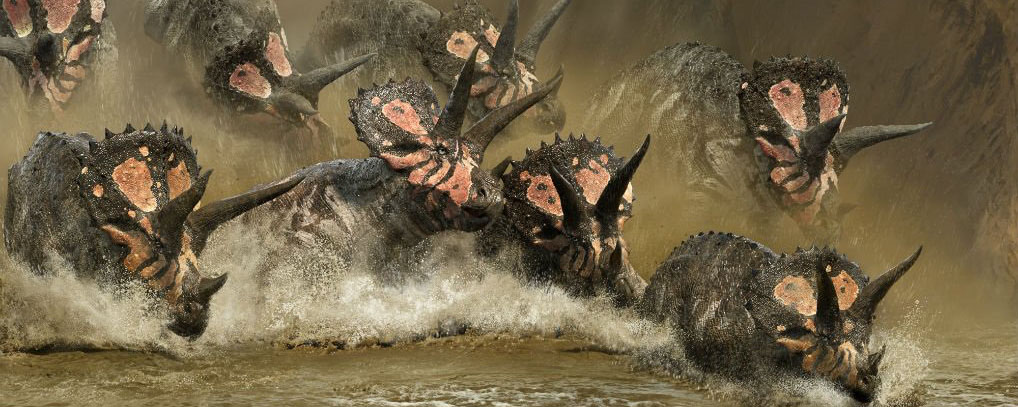
- Ceratopsids are limited to the end of the Cretaceous and (with a few exceptions) to western North America. It is divided into two clades: Chasmosaurinae and Centrosaurinae. In both clades there is evidence for herd living.
Marginocephalia, the Ridge-Headed Dinosaurs
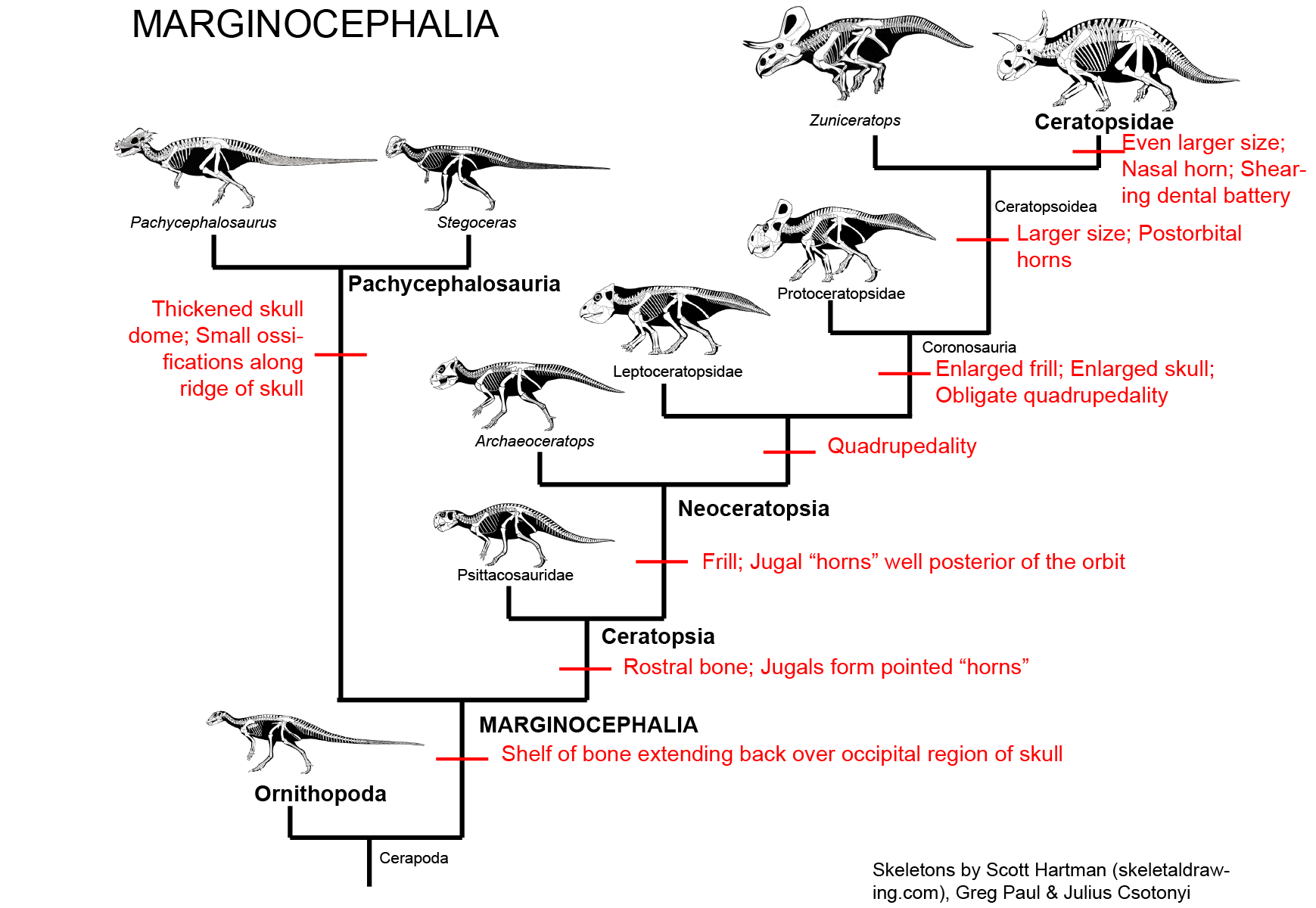
Simplified cladogram of Marginocephalia
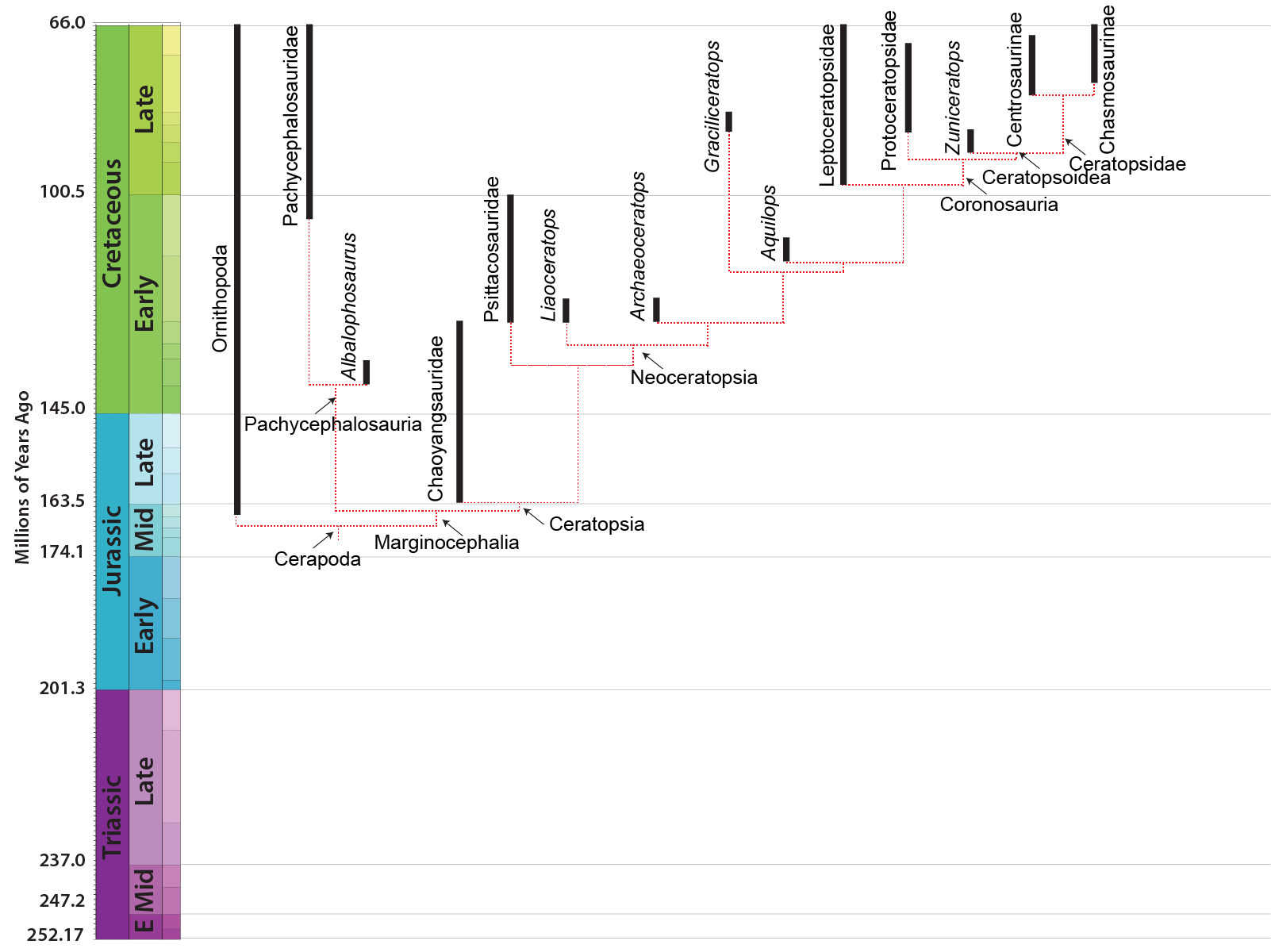
More detailed phylogeny of Neornithischia, with a focus on the Marginocephalia
The fifth major clade of ornithischians (after Heterodontosauridae, Thyreophora, Thescelosauridae, and Ornithopoda) is Marginocephalia ("ridged heads"). Like ornithopods and thescelosaurids, marginocephalians are neornithischians; collectively, Ornithopoda and Marginocephalia make the clade Cerapoda. There are two main clades of marginocephalians: thick-skulled Pachycephalosauria ("thick headed lizards") and beaked (and later frilled (and eventually horned)) Ceratopsia ("horned faces"). The bipedal pachycephalosaurs and psittacosaurid ceratopsians were once included in Ornithopoda, but are now recognized as closer to the horned dinosaurs (Ceratopsidae) and their more primitive frilled-but-hornless relatives (the rest of Neoceratopsia).
Various postcranial shared derived characters unite Pachycephalosauria and Ceratopsia, but the most distinctive specialization is the one that gives this clade its name:
- Shelf of bone extending back over the occipital region of the skull
In the pachycephalosaurid pachycephalosaurs and the ceratopsid ceratopsians there is the shared attribute of extensive bone growth and remodeling of the skull at the fully adult stage: however, this trait is not seen in basal ceratopsians, so it is likely convergently evolved between these two clades.
At present there are no dinosaurs known which are closer to marginocephalians than to the ornithopods, but we can infer that such proto-marginocephalians did exist. When Heterodontosauridae was thought to be a clade of ornithopods, there was the mystery of the missing Late Triassic, Jurassic, and early Early Cretaceous marginocephalians. Now that the oldest known ornithopods are only Middle Jurassic, and we now have Middle-Late Jurassic marginocephalian fossils, there is no big gap in time.
Marginocephalians:
- Had a relatively restricted distribution: all but a few are from Asia and western North America, and most of those few "outsiders" are not definitely marginocephalians
- Are known from diverse environments: from desert to swamps to lake shores
- Remained relatively small (smaller than adult humans) until the later Late Cretaceous
- First appear in the latest Middle Jurassic, and persist until the end of the Cretaceous
Pachycephalosauria, the Dome-Headed Dinosaurs
Pachycephalosaurs (aka boneheads aka domeheads aka buttheads aka headbangers) are specialized by the presence of:
- Thickened skull roof
- Row of small osteoderms around the ridge of the skull
as well as a few postcranial features. Pachycephalosaurs were persistently bipedal (the only major group of herbivorous dinosaur with no trend towards quadrupedality). Their hands and arms were relatively small, so they probably didn't use them for terribly much.

Stenopelix of the Early Cretaceous of Germany was often considered to be a basal member of Pachycephalosauria based on some limb and pelvic characters. Its skull is unknown, so we cannot determine if it had evolved the thickened skull roof of later pachycephalosaurs. Interestingly, it was the only currently known Early Cretaceous pachycephalosaur, and the only member of the clade from outside Asia or western North America. Of note, however, is that recent studies find it is not a pachycephalosaur, but instead a basal ceratopsian (specifically a chaoyangsaurid): if this is upheld with additional analyses, this would remove the only non-Asiamerican pachycephalosaur from the record. Alternatively, one of these recent study found in some scenarios that the Early Cretaceous Japanese Albalophosaurus to be a pachycephalosaur; this extremely fragmentary form was sometimes considered a basal ceratopsian or even a non-pachycephalosaur, non-ceratopsian marginocephalian.

However, one of the latest hypotheses is that some of the Late Jurassic neornithischian material called "Drinker" may actually be basal pachycephalosaurs, based on the shape of the denticles on its teeth and the presence of ornamentation on its jugals. If so, this would confirm the expectation of a Jurassic early pachycephalosaur.
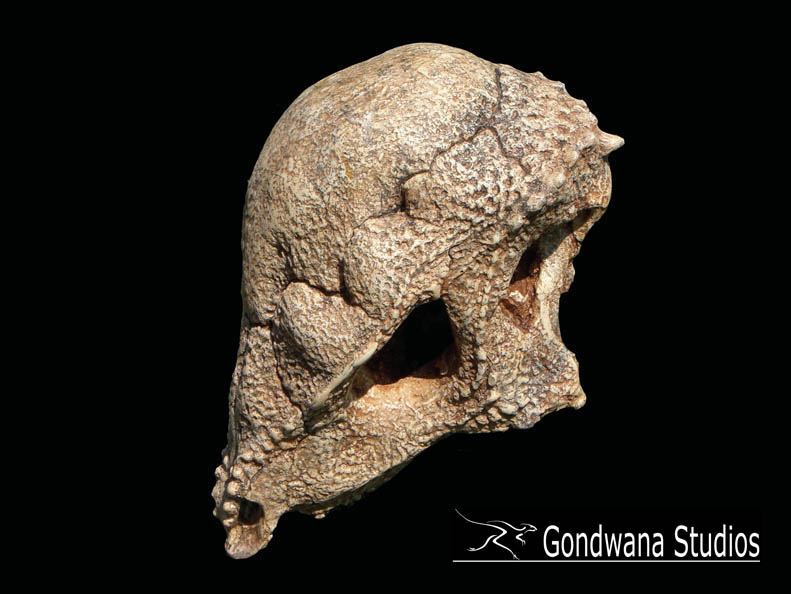
The more specialized Pachycephalosauridae are characterized by a tall thickened dome formed by the frontals and parietals. Paleontologists have debated whether these dinosaurs butted heads together in the manner of modern bighorn sheep, or if the domes may have been more for visual display. There does seem to be some sexual dimorphism in the size and development of the dome.

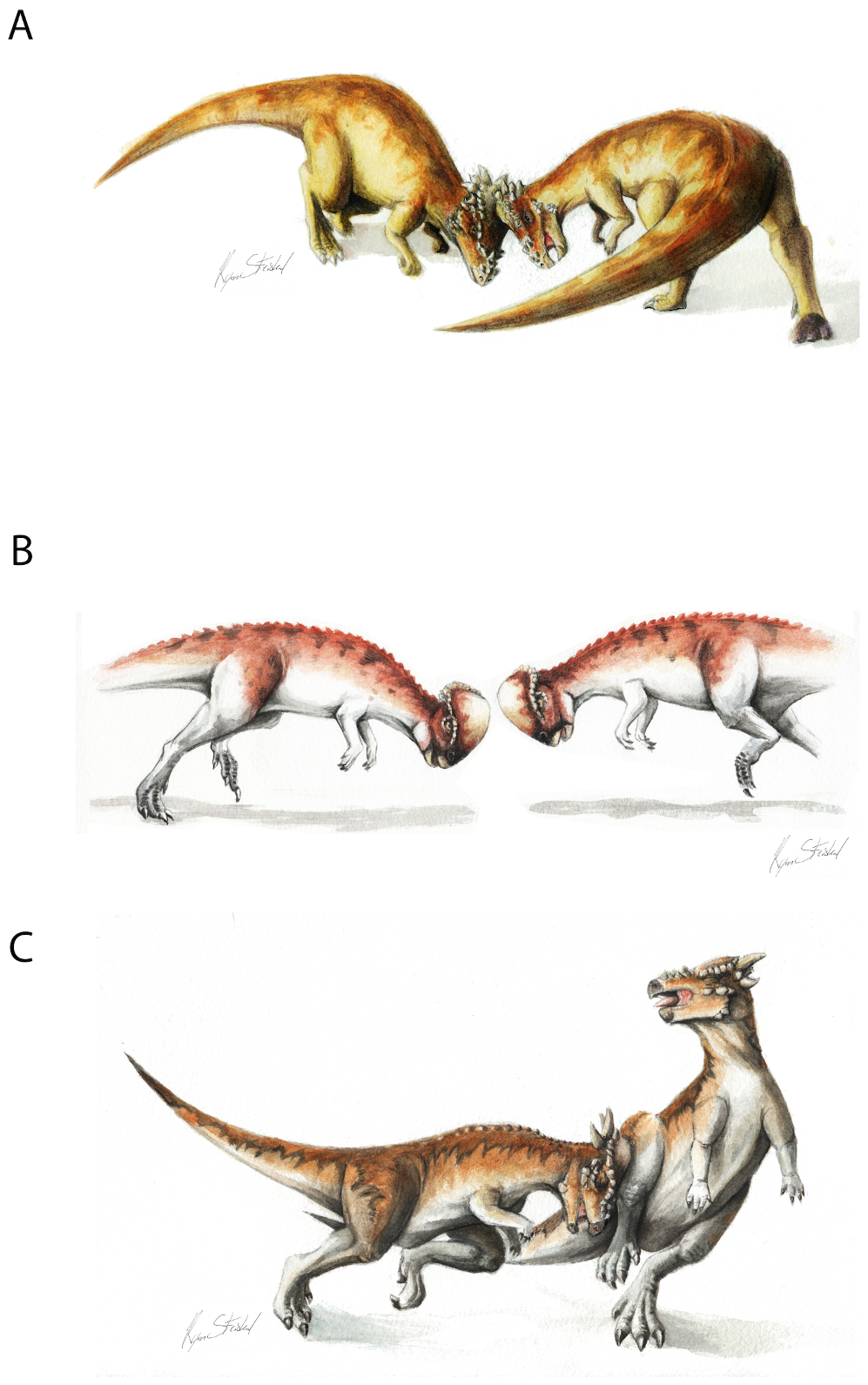
Newly discovered Zavacephale from the late Early Cretaceous of China (known from a nearly complete skeleton!) is the oldest definitive member of this group.

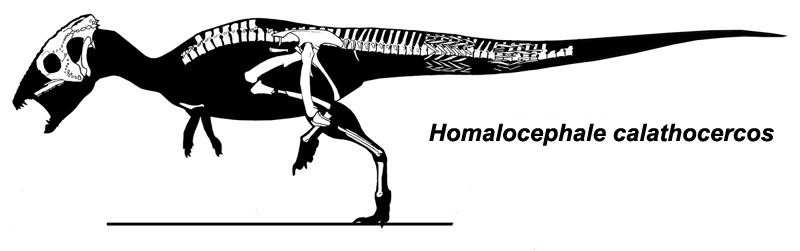
It was once thought that flat-topped specimens (such as Homalocephale of Mongolia) were a group of primitive pachycephalosaurs. However, some recent work suggests that these are interspersed among more domed-forms, and in some cases may simply be subadults which had not grown their adult dome. Recent work suggests that Stegoceras and close kin form a radiation of small North American pachycephalosaurids, and the rest form a clade "Pachycephalosaurinae" comprised of both Asian (such as Homalocephale, Prenocephale, Tylocephale, and Goyocephale) and western North American taxa. In particular, there is a clade (or species!) of latest Cretaceous (67-66 Ma) western North American large bodied (4-5 m, and thus bigger than humans) long-snouted spike-fringed and spike-nosed forms: Stygimoloch, Pachycephalosaurus, and Dracorex (which is quite like just a subadult of one or the other of the previous two.) In fact, these three may just represent juvenile ("Dracorex"), subadult ("Stygimoloch"), and adults (Pachycephalosaurus: this name has priority) of the same species. The latest work, however, indicates that the short-spined Pachycephalosaurus specimens are all stratigraphically older than the long-spined Stygimoloch ones, so these may be distinct taxa.



Ceratopsia, the Parrot-Beaked Dinosaurs
While material of the pachycephalosaurs are rather limited, the ceratopsian fossil record is very good. The last few decades have seen an explosion of discoveries in primitive ceratopsians, extending the stratigraphic range of this group and giving us a more complete picture of the transformations from a basal neornithischian to the derived Ceratopsidae.
Ceratopsians are united by some important cranial specializations, including:
- The rostral bone: a single midline bone anterior to (and joining) the two premaxillae; it represents a sort of upper jaw mirror image of the predentary, and like the predentary the rostral supported a horny beak
- Jugals pointed laterally to form horn-like projections

The oldest and most primitive known ceratopsian is Yinlong from the latest Middle Jurassic (or earliest Late Jurassic) of China. Its skull shows the large size of the temporal (jaw muscle) region, indicating that this dinosaur had begun to evolve the powerful bite that characterizes ceratopsians. Other early forms are Late Jurassic Chinese Chaoyangsaurus and Xuanhuaceratops: collectively, all these seem to form a clade Chaoyangsauridae.
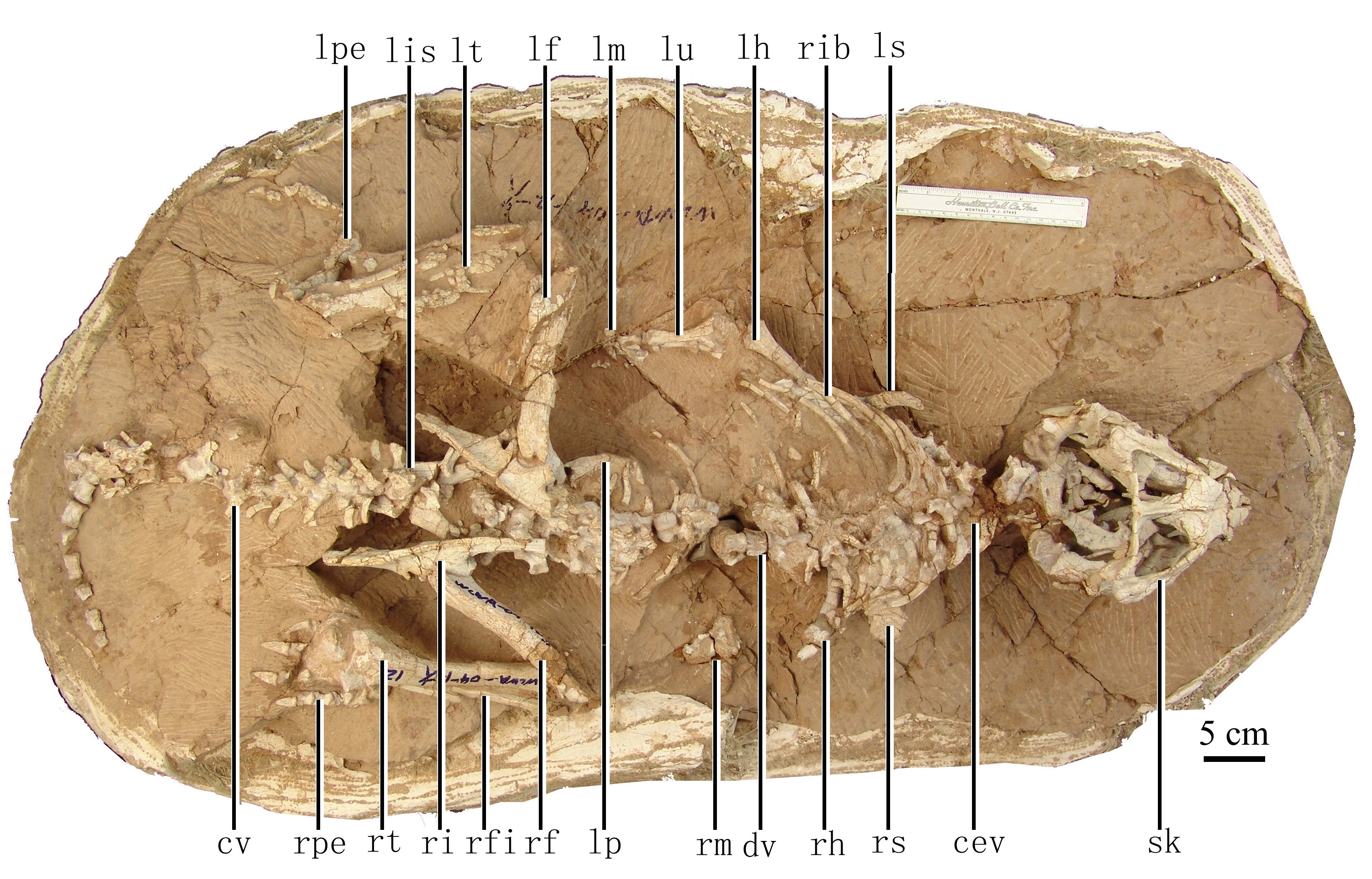

The next oldest ceratopsians are the Psittacosauridae ("parrot lizards") of Early Cretaceous Asia. These are actually some of the most common dinosaur fossils of Early Cretaceous Asia: in particular, the several species of Psittacosaurus. These include Psittacosaurus babies found together (but the specimen was artificially modified to put an adult with them!), and many complete skeletons including one with scales and apparently some form of hollow quills sticking out of its tails.


(Note: we do not yet know the homology of the quills of Psittacosaurus. If (and it remains an "if") they represent homologs to the quills of the hadrosauroid Haolong) and the fuzz of the basal neornithischian Kulindadromeus and the heterodontosaurid Tianyulong, they may indicate that ornithischians in general had some expression of quill or fuzz structures ancestrally.)
Some have considered the psittacosaurids to be facultative quadrupeds, but a recent study showed that their hands could not be placed in a position to support weight. Thus, they retained the ancestral bipedal condition. However, that is true of the ADULTS; recent work shows that hatchlings were quadrupedal, but becoming bipedal as juveniles and adults (not unlike certain common modern intelligent primates...).
Neoceratopsia, the Frilled Dinosaurs
The remaining ceratopsians form the clade Neoceratopsia. This group is further modified from the ceratopsian condition by the presence of a frill: itself just an elaboration of the ridge of typical marginocephalians. In earlier forms the frill is short, and its expansion was probably primarily for increased muscle attachment of the supratemporal muscles. Another neoceratopsian trait is that the jugal "horns" point well posteriorly of the orbit.
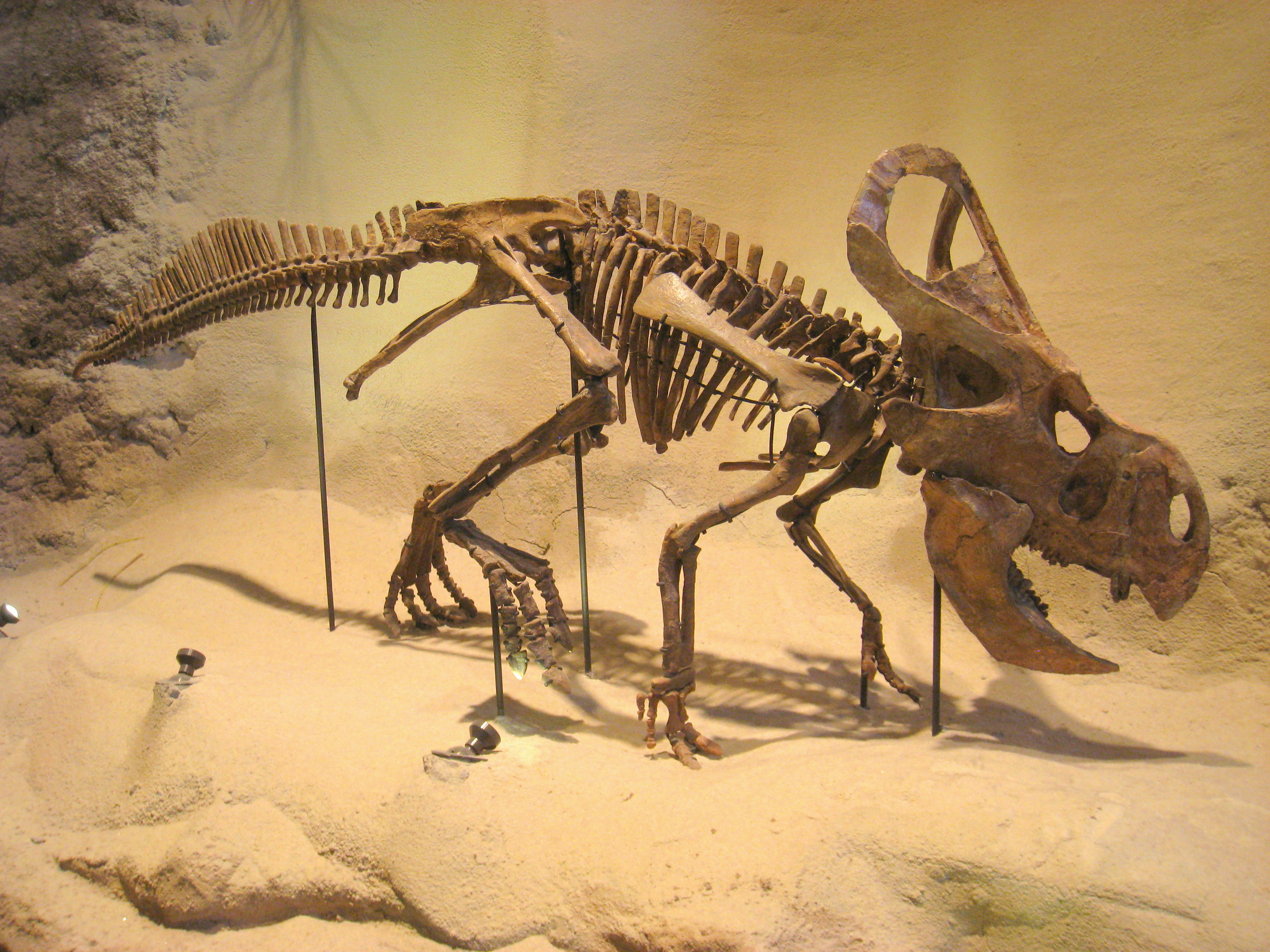
A number of primitive Asian Early Cretaceous neoceratopsians have recently been described: Liaoceratops, Archaeoceratops, Auroraceratops, and Yamaceratops. In addition to the Asian taxa, there is the recently discovered Aquilops of the American West. These forms were still bipedal.


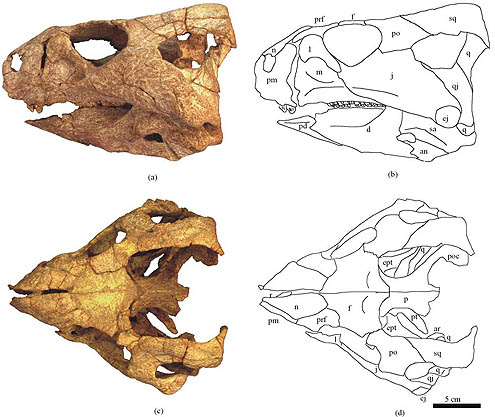

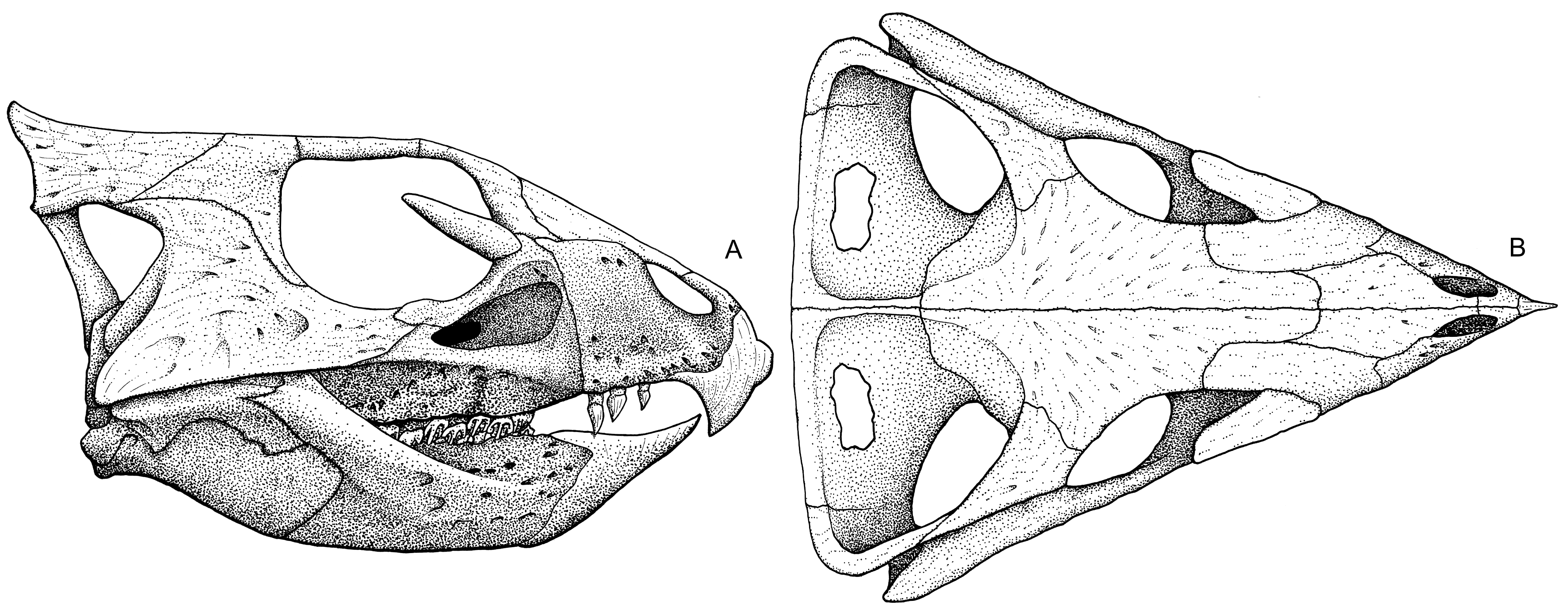

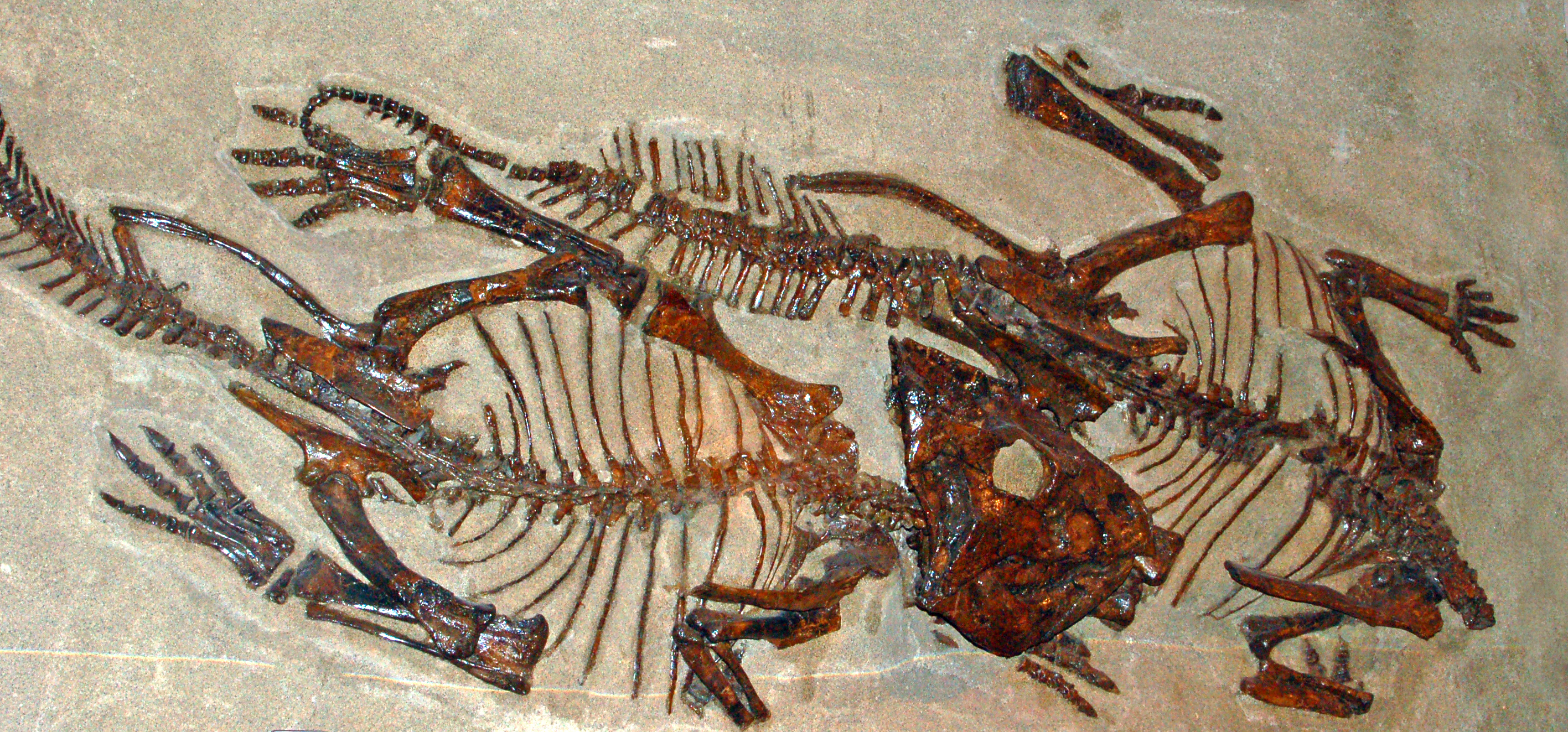
The Late Cretaceous neoceratopsians (Euceratopsia), however, seem to have been quadrupedal because of increasing relative skull size. Additionally, these dinosaurs have lower jaws in which rotation of the dentaries is prevented and motion of the lower jaw is up-and-down and backwards. Among the Late Cretaceous groups is transcontinental (Asia and North America) Leptoceratopsidae, including North American Prenoceratops, Montanoceratops, and Leptoceratops, and Asian Udanoceratops. Another is the transcontinental (Asia and European) Protoceratopsidae, including Mongolian Protoceratops (literally hundreds of skeletons (including hatchlings and embryos), eggs, and nests are known from this Mongolian dinosaur) and Bagaceratops.

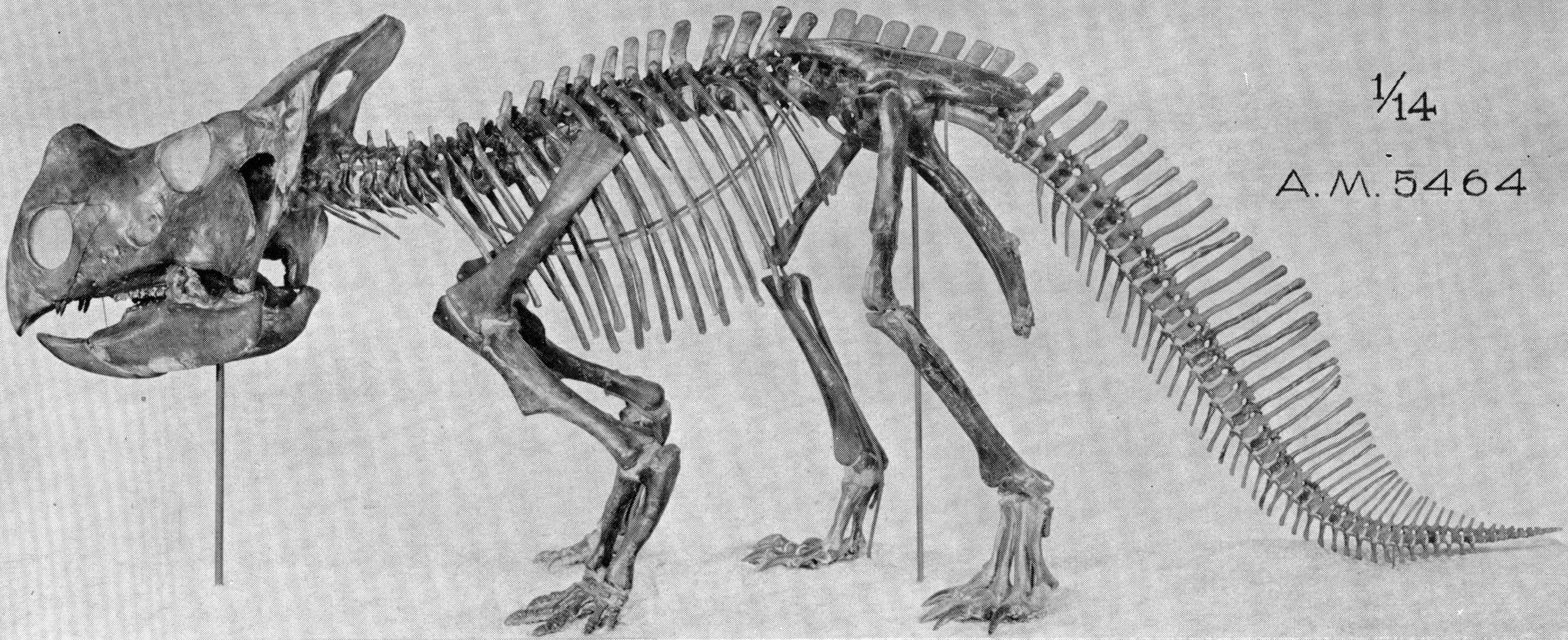


Collectively, Protoceratopsidae + Ceratopsoidea form the clade Coronosauria ("crowned lizards"). Coronosaurs have an enlarged frill and enlarged skull, and consequently were obligate quadrupeds. The frill is enlarged but not thickened, so most of the expansion was not for muscle attachment. It may have served for visual display.
Hungarian Ajkaceratops was first known only from the front of a snout; it appears to have a rostral bone fused to premaxillae, which would suggest it was a neoceratopsian (but one with a very unusual morphology.) Newer specimens shows that fossils once considered a rhabdodontid ornithopod "Mochlodon vorosi" are really from Ajkaceratops. In 2025 a new, and currently controversial, hypothesis was published: Ajkaceratops and Albanian Ferenceratops (previously a species of the rhabdodontid Zalmoxes) were really European derived neoceratopsians! While some reconstructions show these as essentially frill-less (like non-neoceratopsian ceratopsians), we actually do not have the parietal and squamosal (the main frill bones) preserved, and the proposed position as ceratopsoids certainly advocates for the presence of a large frill.
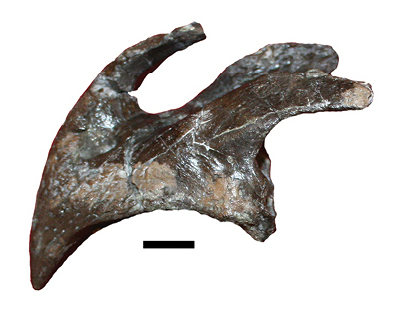

Regardless of whether the Ajkaceratops-clade belongs in here or not, the remaining ceratopsians all form the clade Ceratopsoidea. More primitive ceratopsians were generally small: 1-3 m, and no heavier than a sheep or pig at most (Udanoceratops being an exception). The ceratopsoids were all larger: cow-to-elephant sized. Ceratopsoids had postorbital horns sticking from the eyebrow over the eyes. Cow-sized Zuniceratops of western North America and Asian Turanoceratops and Asiaceratops represent primitive ceratopsoids. The remaining forms are the Ceratopsidae proper.

The horns of ceratopsoids may have had both a defensive function (against predators) and a display function against other ceratopsids. These displays may have been species recognition, sexual, or dominance displays; and could have been merely visual or may have involved direct combat.
Ceratopsidae, the Horned Dinosaurs
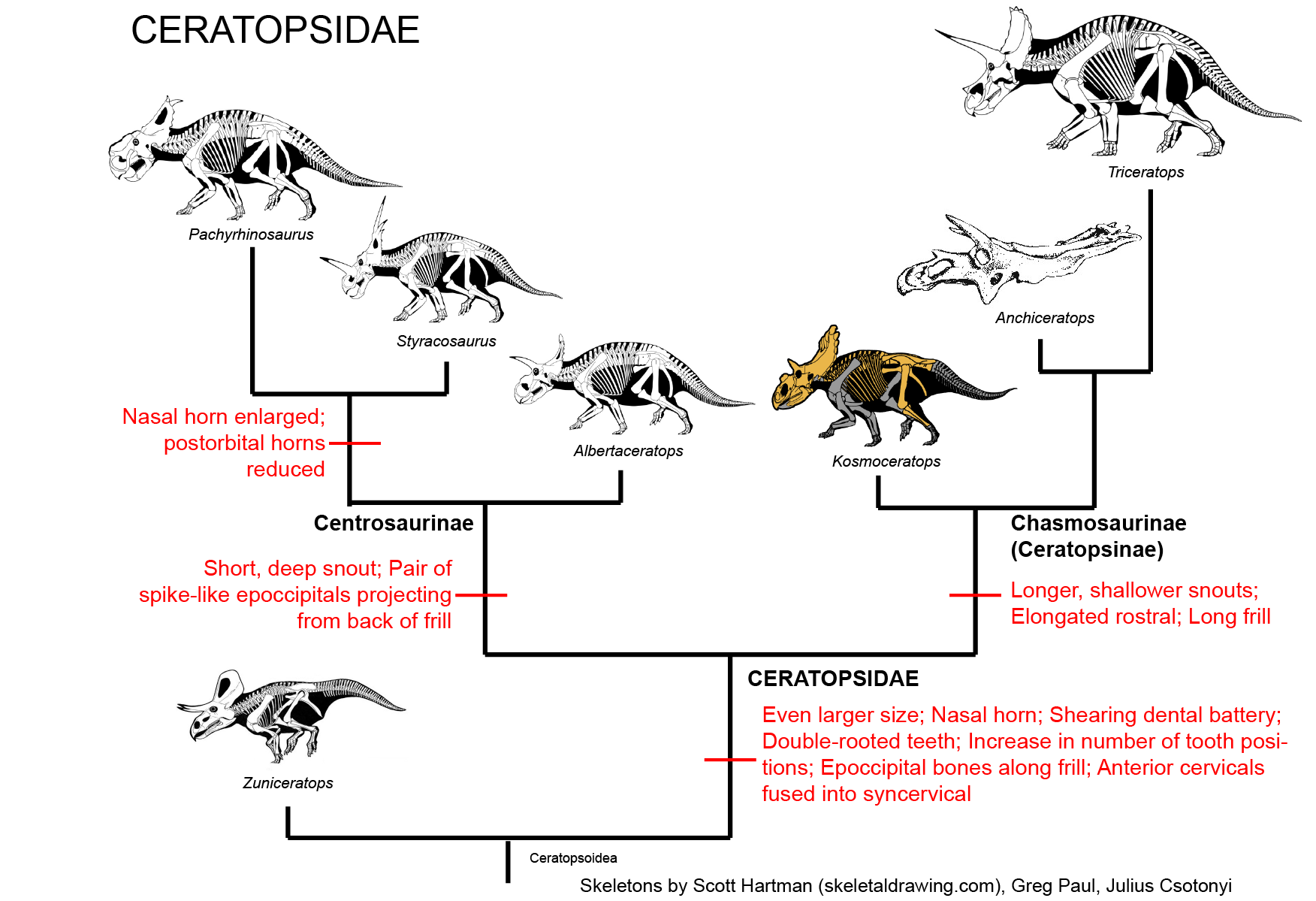
Simplified cladogram of Ceratopsidae
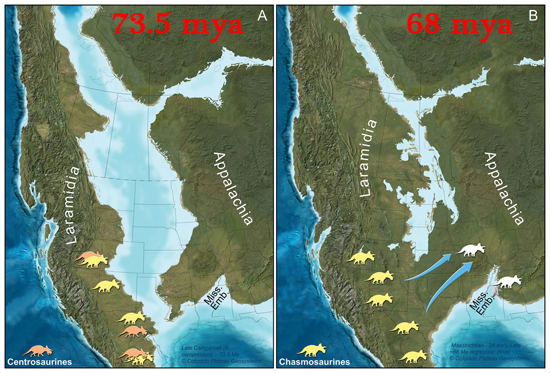
True Ceratopsidae is the most speciose and specialized branch of Marginocephalia. This clade is restricted to the last twenty million years or so of the Late Cretaceous. (Maybe. Turanoceratops from about 92 Ma of Uzbekistan may be a true ceratopsid.) Up until 2009 it seemed clear that all members of Ceratopsidae proper were from western North America, but (questionably) Turanoceratops and (unquestionably) the centrosaurine Sinoceratops document the presence of this clade in Asia. Additionally, teeth of ceratopsids have been described from the end of the Cretaceous in eastern North America. Yet in that restricted time and space they underwent a major radiation. We have complete skeletons of several species; complete skulls of even more; growth series; skin impressions; and trackways.


Ceratopsids are characterized by the following specializations:
- Further increase in size (essentially hippo-to-elephant size)
- Nasal horn on the midline
- Teeth with double roots
- Increase in number of tooth positions
- Development of a shearing dental battery: closely interlocked teeth forming a continuous cutting surface. Since ceratopsians retain the ancestral "scissor" jaw motion and "wrap around overbite", this cutting surface (powered by massive jaw muscles) could shear through even the toughest vegetation
- Complex teeth, with five different tissue types (more than any mammal, and second only to hadrosaurids). The differential properties of the different tooth parts means that they retained their strong shearing ability even as the teeth wore away
- Small ossifications along the edge of the frill (epoccipitals)
- Fusion of the anterior cervicals into a syncervical

Ceratopsids include some definite herd dwellers. Ceratopsids are rivaled (and in some formations exceed) only by hadrosaurids in their abundance in the Late Cretaceous of western North America.
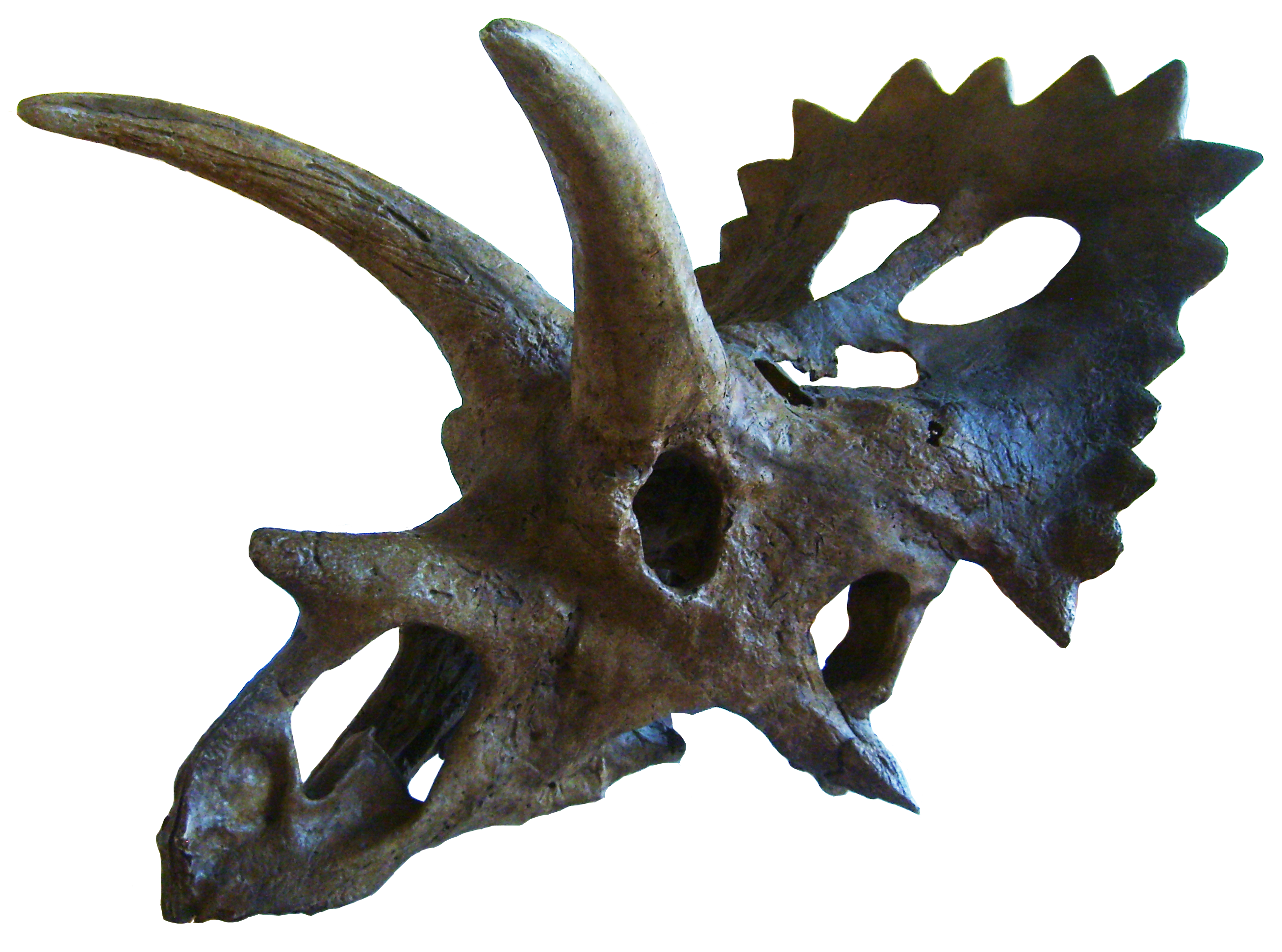
There were two major subclades of Ceratopsidae: Centrosaurinae and Chasmosaurinae (The latter group is sometimes called "Ceratopsinae" to some paleontologists. However, it is no longer certain that the fragmentary Ceratops is definitely closer to the chasmosaurines than the centrosaurines, so in this course we will use "Chasmosaurinae".) It was once easy to distinguish these two groups based on their horn patterns: in centrosaurines the nasal horn was large and the postorbitals reduced or lost; in chamsosaurines the nasal horn was small and the postorbital horns were (with one or two exceptions) long.
Unfortunately, the discovery of Zuniceratops and the basal centrosaurines such as Xenoceratops, Albertaceratops and Diabloceratops (and several others) have muddled that.

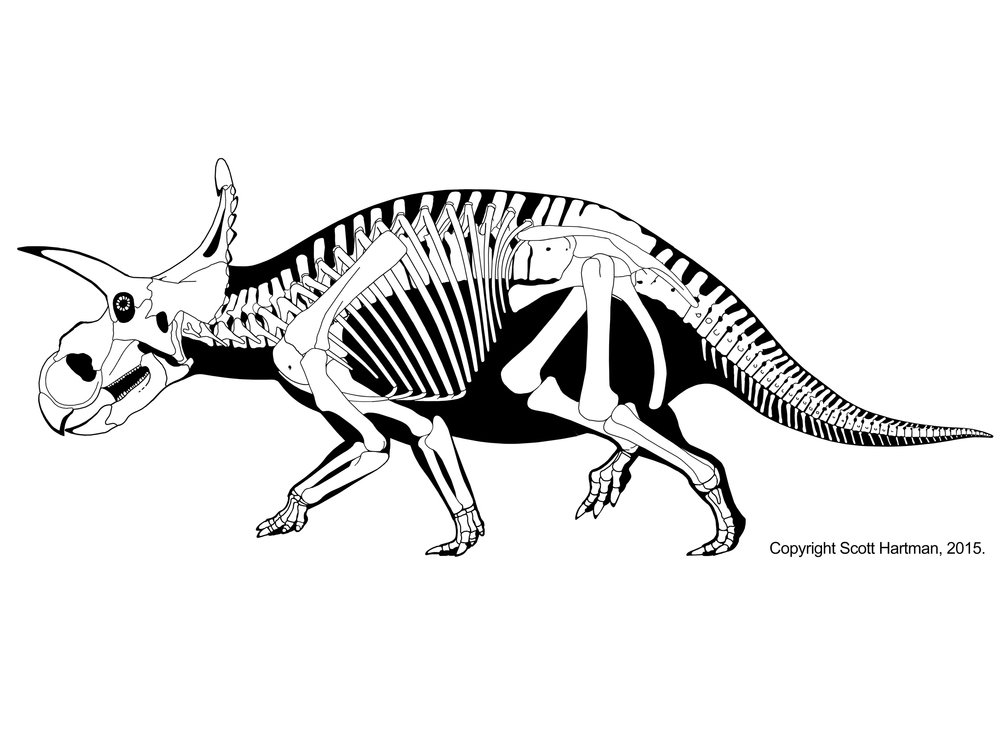

Under our current understanding, long postorbital horns are characteristic for Ceratopsoidea as a whole, so the fact that Chasmosaurinae retain them is simply a primitive feature.
Instead, we know recognize Centrosaurinae by the presence of:
- A relatively short, deep snout
- A pair of long horns sticking out of the back of the frill (in advanced centrosaurines, these might curve inwards or downwards)
- and a number of features of the narial region we won't deal with here
Avaceratops, Furcatoceratops, Nasutoceratops, Xenoceratops, Diabloceratops, Wendiceratops, Lokiceratops, Xenoceratops, Albertaceratops, and the aforementioned Asian centrosaurine Sinoceratops are among the most primitive centrosaurines.
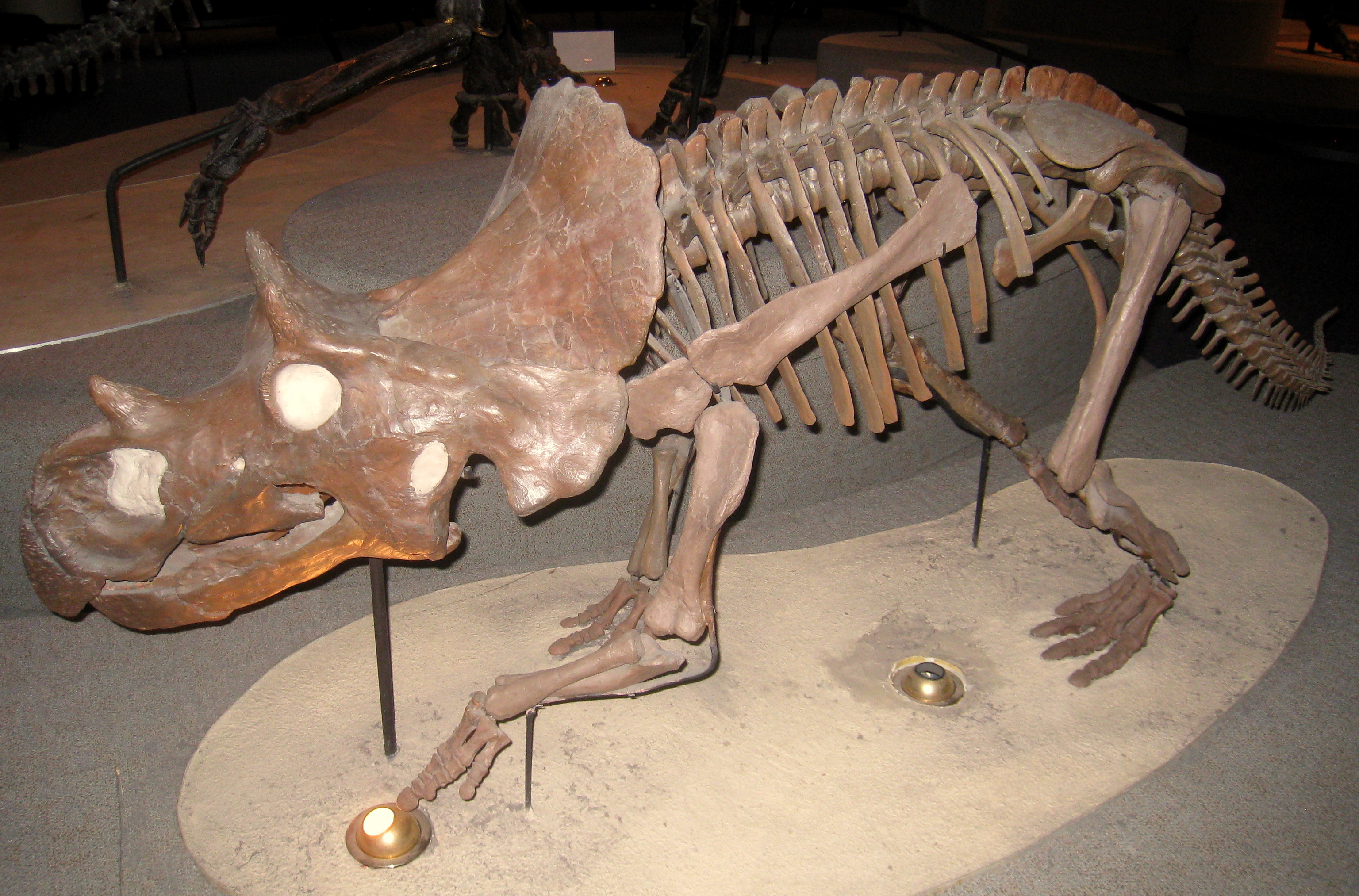
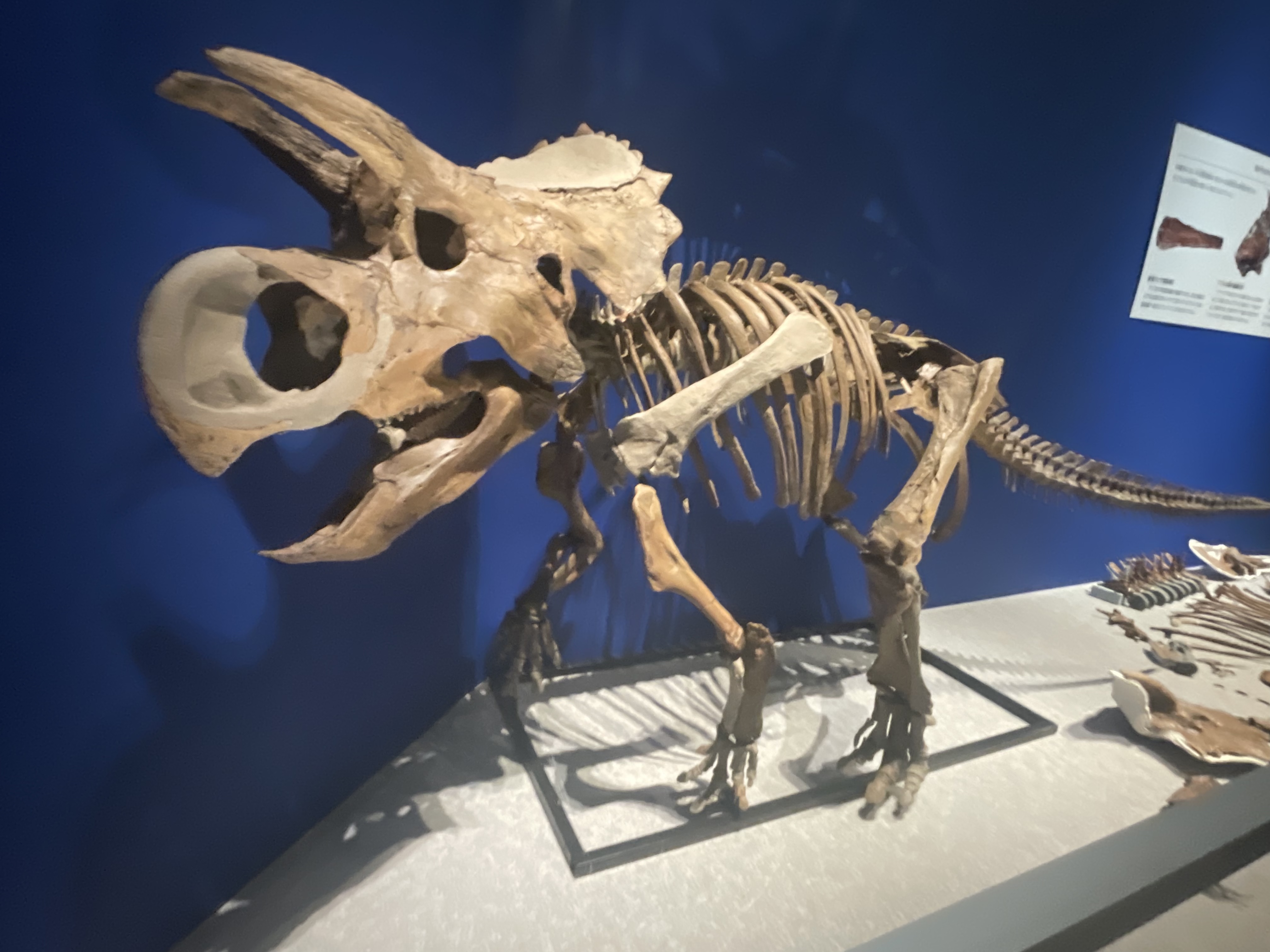
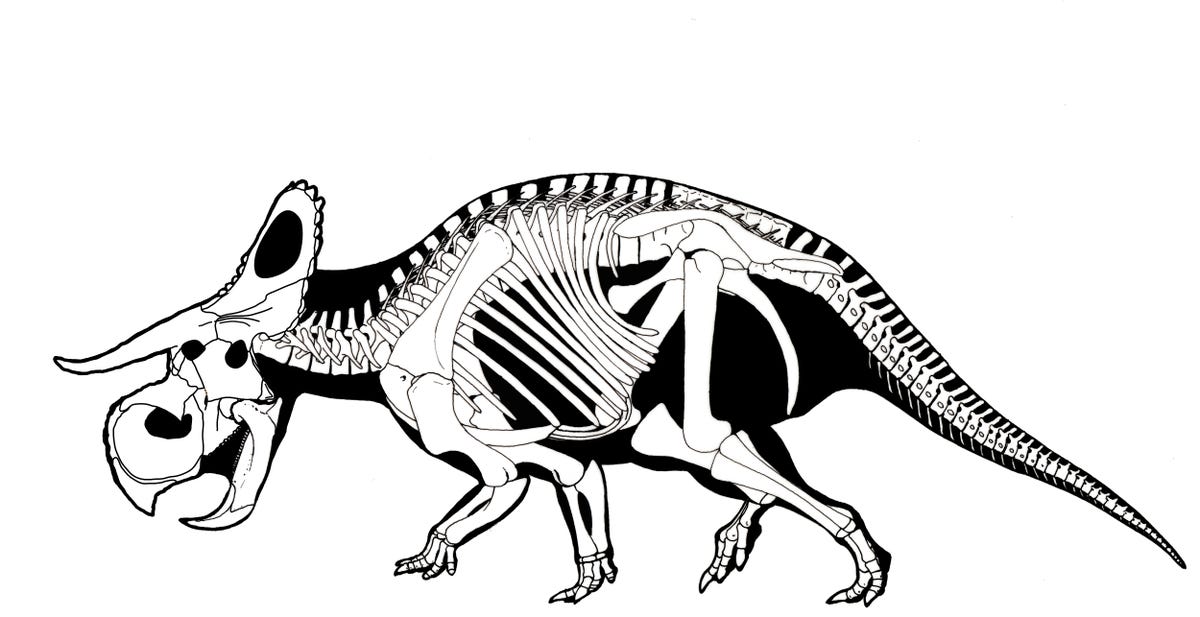


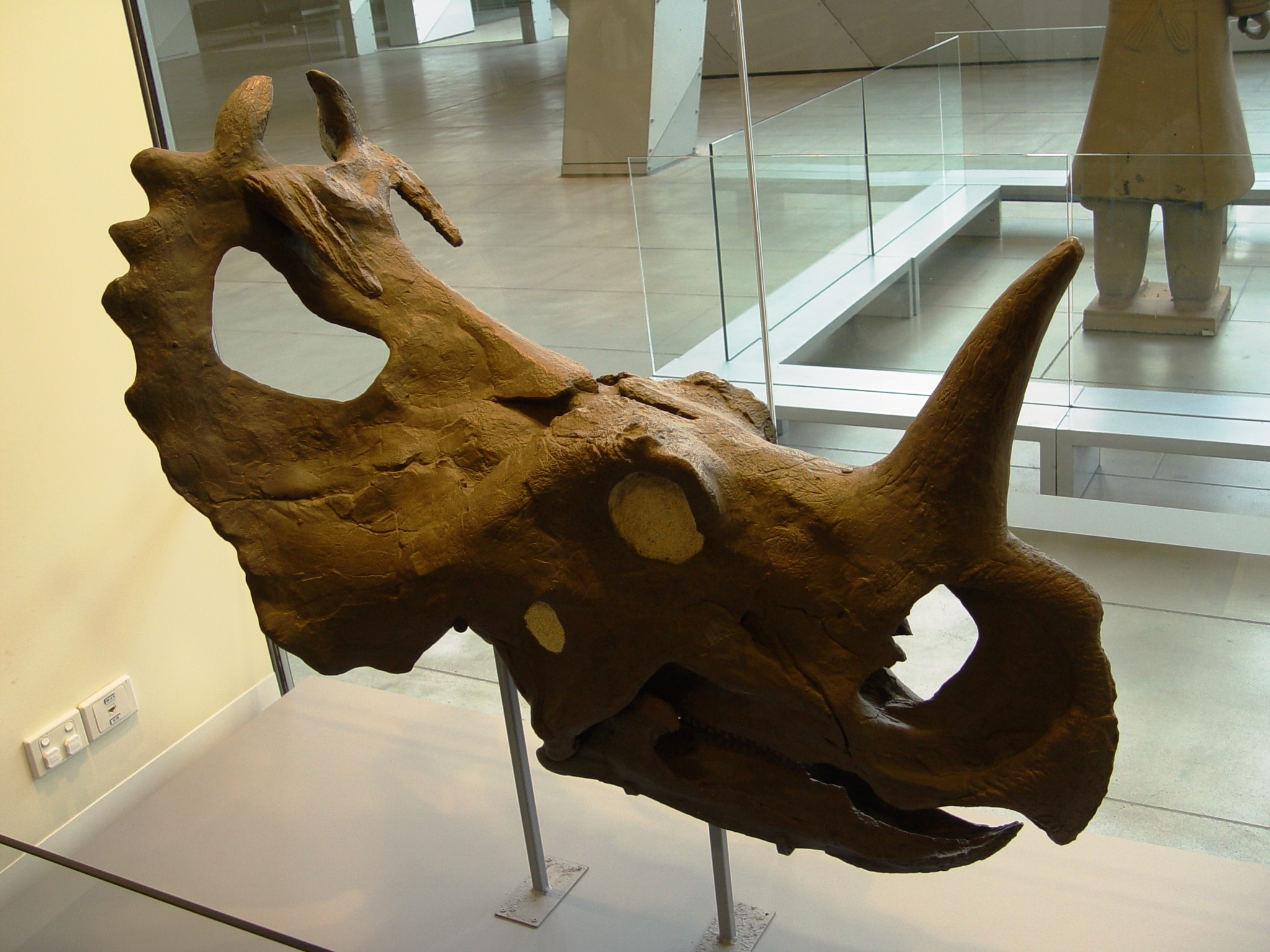
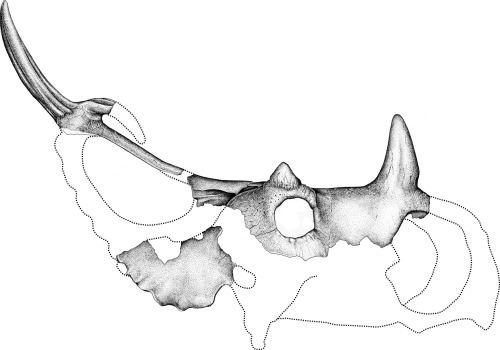
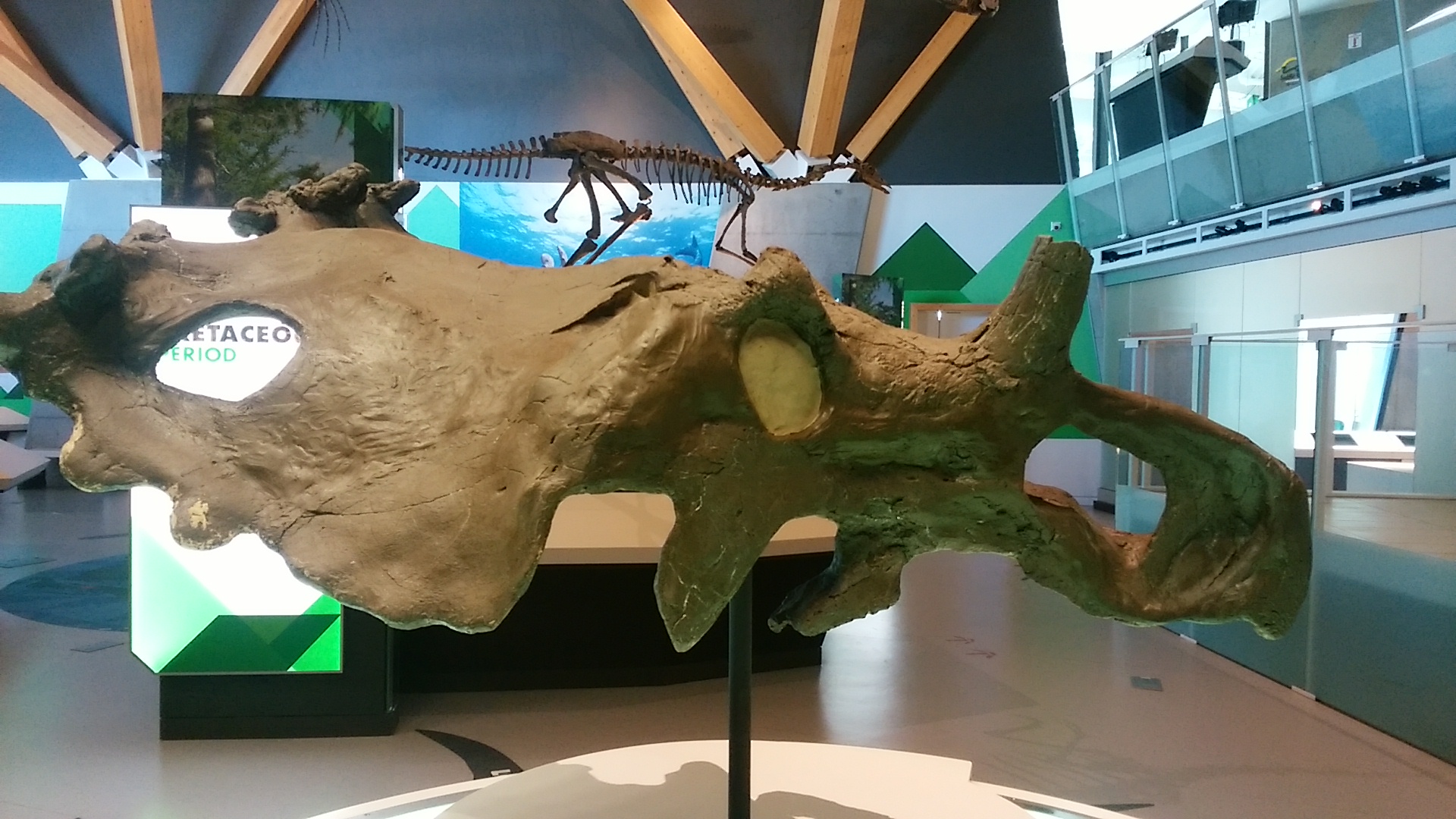
The derived clade Eucentrosaura includes the closely related Centrosaurus, Spinops, and Coronosaurus plus sword-horned and spike-frilled Styracosaurus ovatus and Styracosaurus albertensis, all of which share a powerful nasal horn. Among the eucentrosaurs is the clade Pachyrhinosaurini, containing hook-horned Einiosaurus; and a great radiation of lump-nosed species (the Pachyrostra), including the genera Achelousaurus; and several species of Pachyrhinosaurus, last and largest centrosaurine.


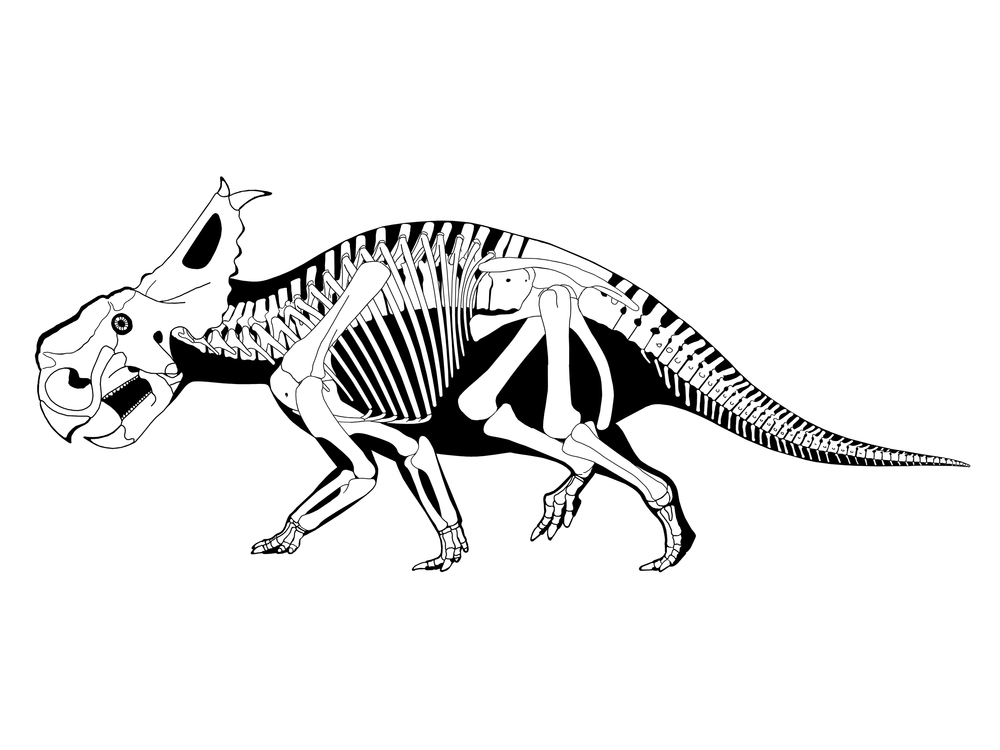
Chasmosaurinae is characterized by:
- Longer shallower snouts
- Elongate rostral bones
- and their own set of narial features we won't deal with here
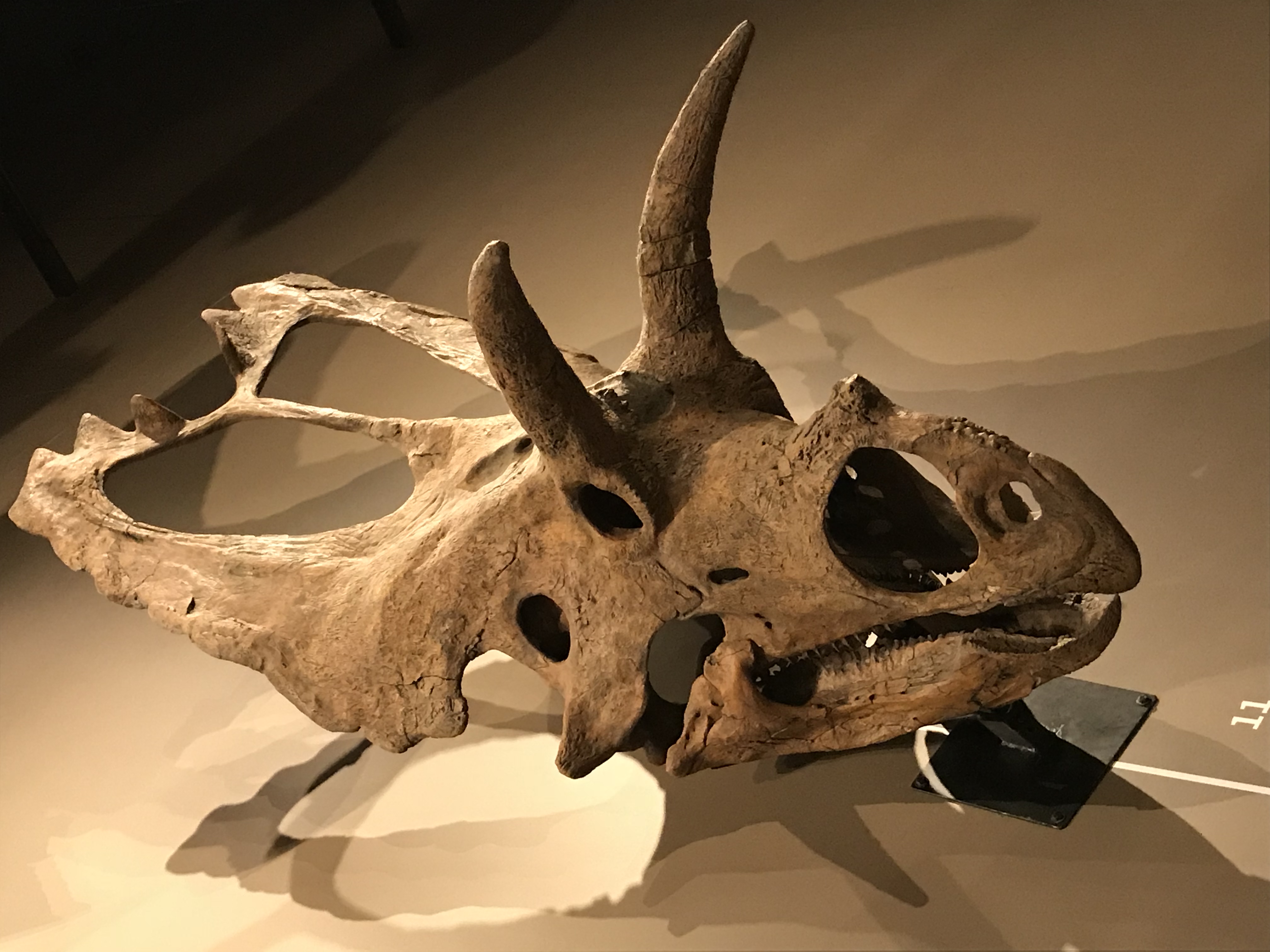
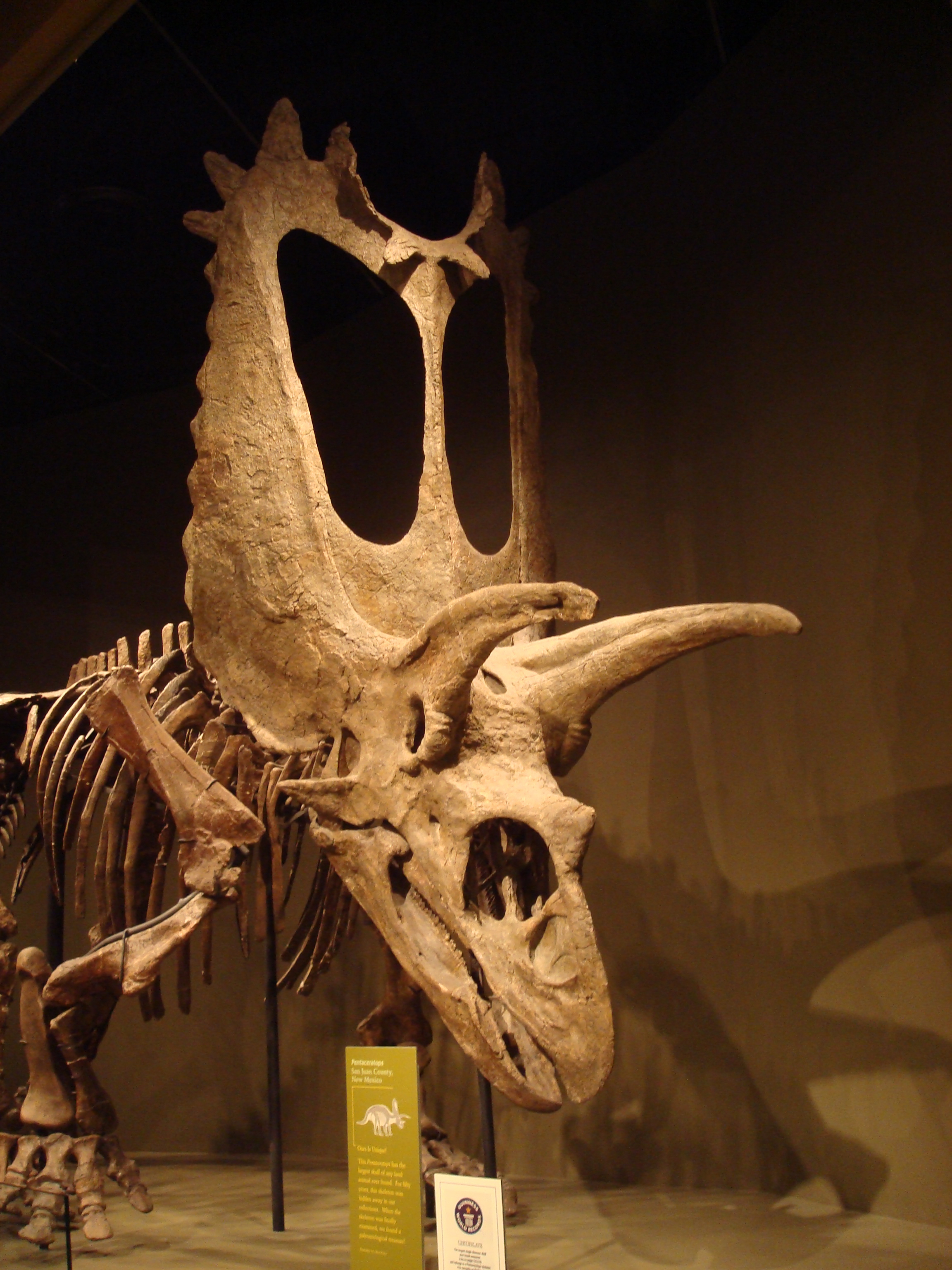
Chasmosaurinae includes the newly described basal form Medusaceratops (found in the same bonebed as the centrosaurine Albertaceratops); the various species of Chasmosaurus; and Agujaceratops; Pentaceratops; Anchiceratops, Arrhinoceratops, and their enormously-horned Mexican relative Coahuilaceratops; Regaliceratops (convergent on the centrosaurines in its snout shape and elongated nasal horn); and the latest Cretaceous giants Titanoceratops, Ojoceratops, Eotriceratops, Torosaurus, Triceratops, Nedoceratops (formerly "Diceratops"), and little Tatankaceratops. Some authors consider all of these separate taxa, with the older Titanoceratops, Ojoceratops<, and Eotriceratops close to the ancestry of the others. Alternatively, "Tatankaceratops" and "Nedoceratops" may be the juvenile and subadult (respectively) of Triceratops and/or Torosaurus. Furthermore, it has been proposed that "Torosaurus" itself may simply be the fully adult form of Triceratops, so it may be that instead of four genera (Tatankaceratops, Nedoceratops, Triceratops, Torosaurus) in the latest Cretaceous of western North America, there was simply Triceratops.






If you have a spare hour, you can see the following debate as to whether Torosaurus is an adult Triceratops:
Ceratopsids were a major component of the large bodied herbivore fauna in western North America (and probably the wetter parts of Asia) until the very end of the Cretaceous.
Evolutionary Trends in Marginocephalia
Feeding adaptation transformations
- Pachycephalosaurs have relatively unspecialized snouts and teeth, and so were probably nipping browsers
- Basal ceratopsians increased their jaw power and evolved the cropping rostral bone
- The frill of neoceratopsians greatly increased their jaw muscle power
- Shearing dental batteries in Ceratopsidae gave them one of the most powerful bites to evolve among amniotes
Locomotory changes
Pachycephalosaurs, basal ceratopsians, and basal neoceratopsians were bipedal; increased skull size forced advanced neoceratopsians onto all fours, such that coronosaurs were obligate quadrupeds.
Size trends
Most pachycephalosaurs, basal ceratopsians, and basal neoceratopsians were small (all in the 1-3 m range, smaller than humans); increased size in pachycephalosaurs only occurs at the very end of the Late Cretaceous. Advanced neoceratopsians show an increase earlier, culminating in the major size increases at the base of Ceratopsoidea, at the base of Ceratopsidae, and independently in Centrosaurinae and Chasmosaurinae. For most of its history, Ceratopsia consisted of only small dinosaurs.
Social behavior in Marginocephalia
Both pachycephalosaurs and ceratopsians seem to have used their heads in within-species interactions. In particular, visual display structures (marginal osteoderms, domes, frills, horns, etc.) and possible combat features (thickened skulls, horns) are present in both clades, and some of these only appear at fully adult sizes. We'll examine these more in the third section of the course.