Improved Model of Outer Core 1D Structure
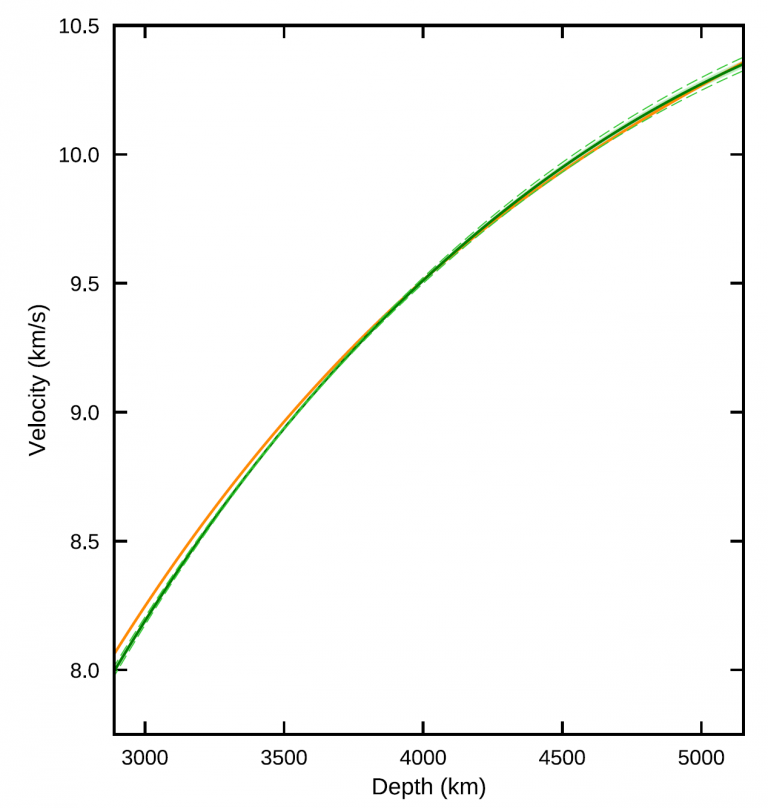
We have published a new model of 1D structure of the outer core, parameterized using two different equations of state: Irving_Cottaar_Lekic_2018 Brief highlights: We infer the seismic properties and equation of state of the outer core using Earth’s oscillations We address a longstanding discrepancy …
Quaking the Delaware
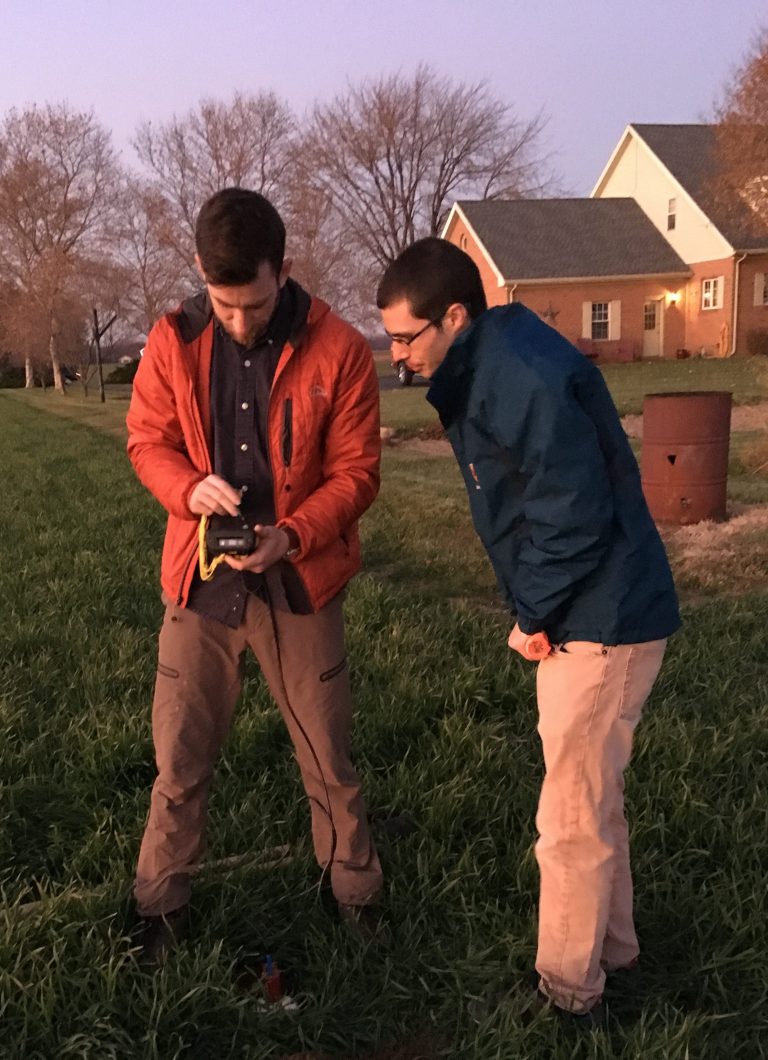
Graduate students at the University of Maryland Seismology Lab sprung into action following the M4.1 earthquake that struck Dover, Delaware on November 30, 2017. The very next day, they were out in the field, deploying seismometers that would be recording aftershocks for the next 6 weeks. Thank you …
Things to consider when interpreting Sp receiver functions…
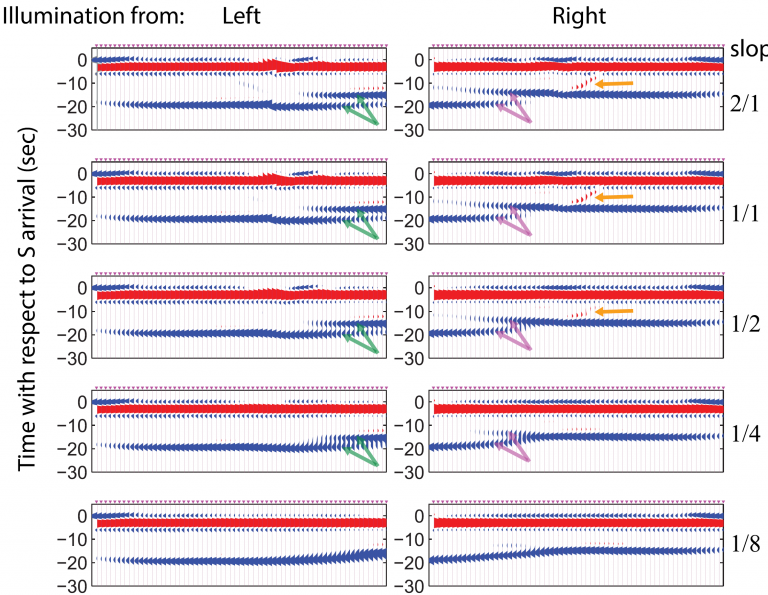
Conversions of shear waves (S) to compressional waves (P), often analyzed as Sp receiver functions, are useful for studying upper mantle layering, and have been used to map upper mantle seismic impedance interfaces in various tectonic settings. Recently, common conversion point stacking of Sp …
About those amplitudes…
It is well known, at least among tomographers, that our images of the Earth’s interior are washed out. Lateral variations in seismic velocities are likely to be weaker in our models than in the actual Earth due to explicit and implicit regularization needed to obtain a solution to our …
Improvement in P-wave tomography due to EarthScope
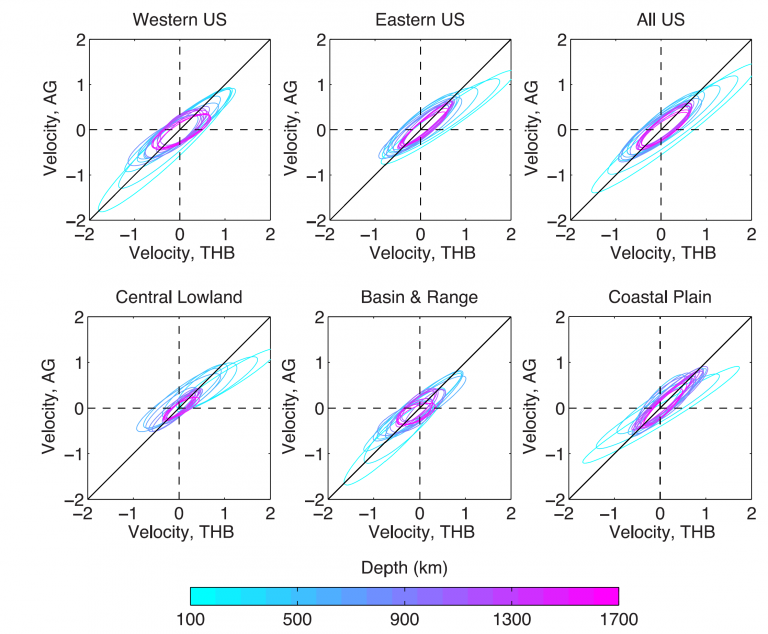
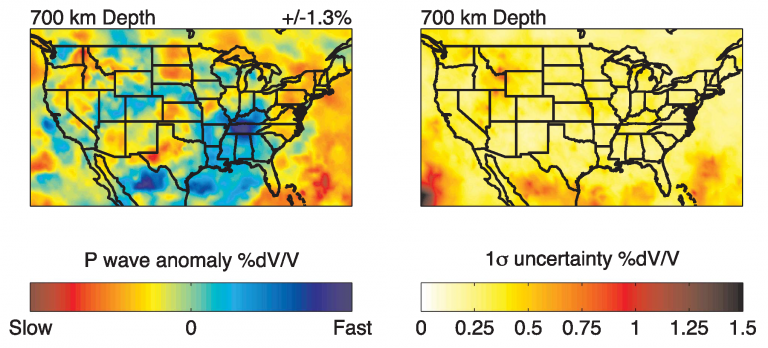
The EarthScope project has been described as the Apollo program of the solid Earth community. It has enabled an unprecedented investment in seismic instrumentation, and the creation of a uniform and high-quality network covering the United States. Data collected by this network transformed our …
Reference Model of LLSVP Morphology
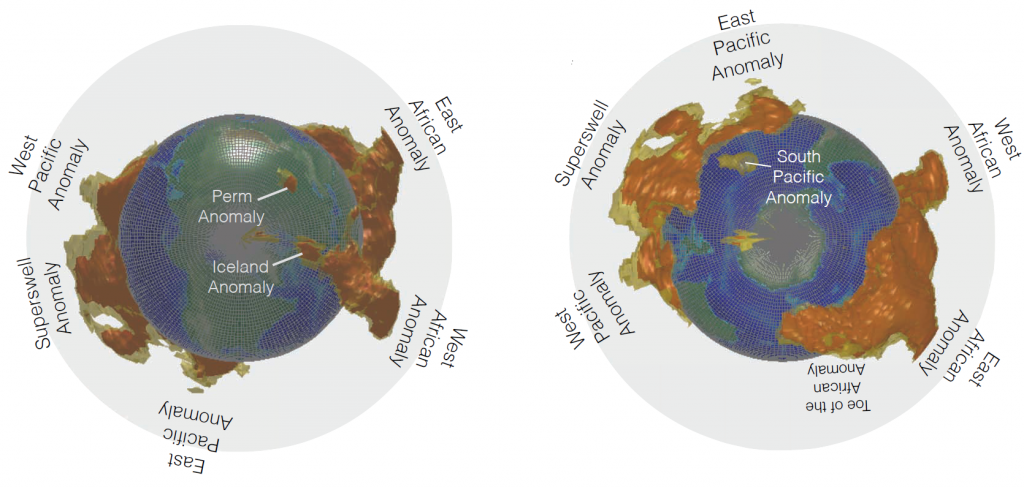
Using depth-dependent clustering analysis of global Vs and Vp tomographic models, we have constructed a new reference model for LLSVP shape and volume. We obtain new, much larger estimates of the volume/mass occupied by LLSVPs—8.0 % ±0.9 (μ ± 1σ) of whole mantle volume and 9.1 % ±1.0 (μ ± 1σ) of …
3D Reference Earth Model
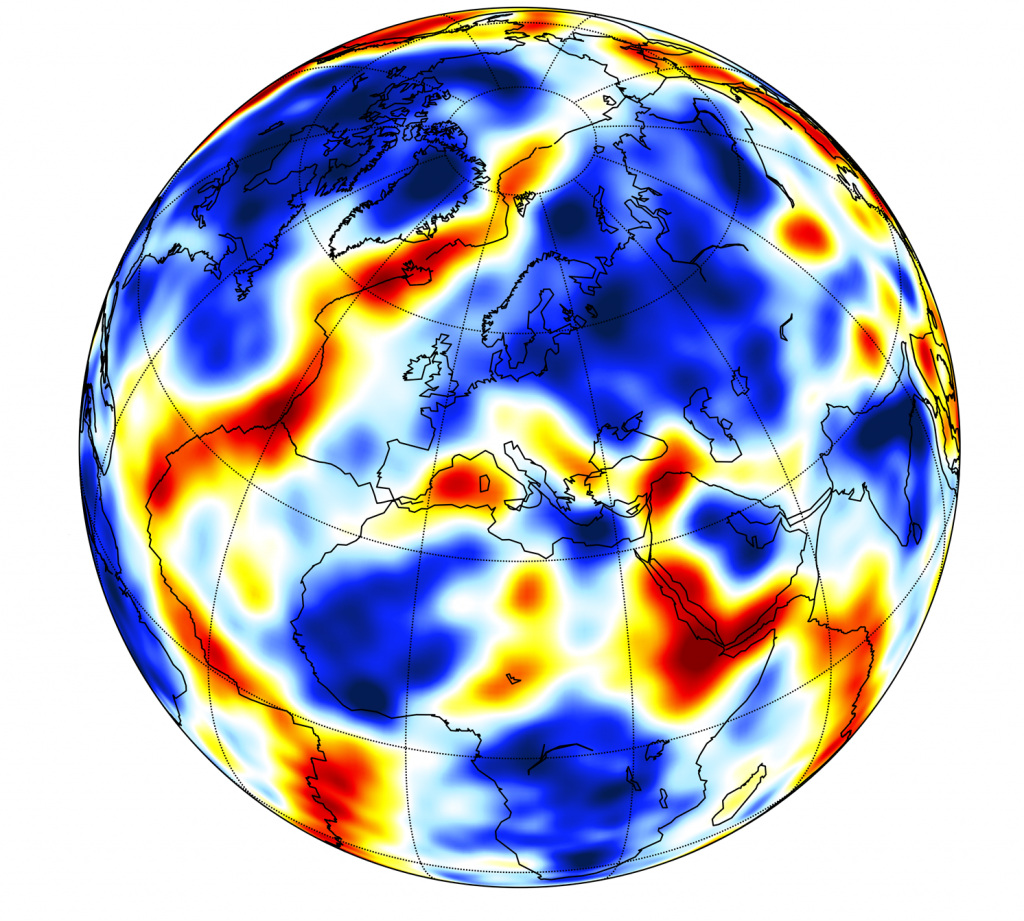
REM-3D is a project funded by the National Science Foundation and carried out by Raj Moulik, Ved Lekic, Barbara Romanowicz, and Adam Dziewonski. If you have questions, please do not hesitate to contact us. You might find the answer you are looking for in our new FAQ section. The aim of the project …
Viscosity increase in the Earth’s mid mantle
Together with collaborators Max Rudolph at Portland State University and Carolina Lithgow-Bertelloni at University College London, we used a novel inversion framework to detect the presence of an increase in viscosity in the Earth’s mid mantle. As Science magazine put it: A mysterious mid-mantle …
Lithospheric Structure of the Western United States
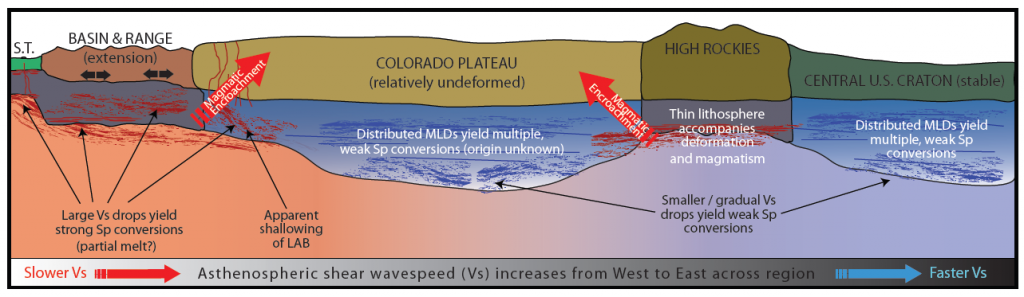
Using data from the EarthScope Transportable Array, we observed and modeled conversions of S waves to P waves across velocity contrasts within the lithosphere across the Western United States. You can read more about our findings in Lekic and Fischer, 2013 and Hopper et al. 2014, but this cartoon …
Lithospheric thinning beneath rifted regions of Southern California
Conversions of teleseismic shear (S) waves to compressional (P) waves across velocity interfaces (such as the Moho or the lithosphere-asthenosphere boundary) allow us to map out variations in plate thickness across Southern California. Anomalously thin lithosphere is observed beneath rifted …